Start with one cheese you really care about
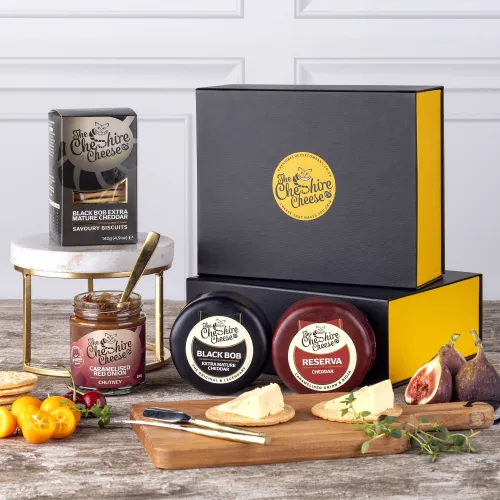
The most common mistake is treating a cheeseboard as a collection of afterthoughts. Buy six average cheeses and the board feels dutiful; buy three good ones, anchored by something genuinely exciting, and it becomes worth talking about. That anchor — your showstopper — should be something with character: a properly aged raw-milk cheddar, a ripe washed-rind that fills the room, a crumbly blue with real intensity. Everything else plays in relation to it.
Build for contrast rather than similarity. A soft, bloomy rind alongside something firm and nutty, or a young goat's cheese beside a deeply aged hard cheese — these differences are what keep people reaching back in. Three to five cheeses is usually the right range for a gathering; beyond that, the board starts to overwhelm.
Temperature is the detail most people get wrong
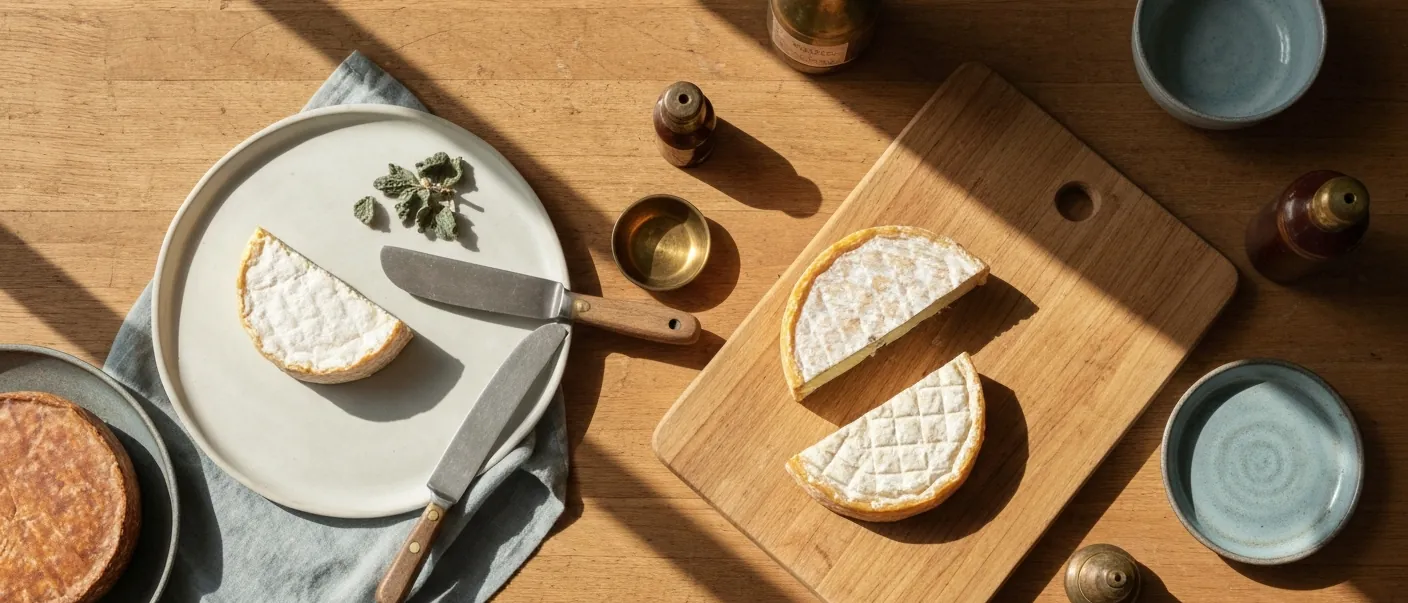
Cold cheese is muted cheese. Straight from the fridge, the fat in a hard cheddar or a creamy brie hasn't softened enough to release full flavour — you taste the texture more than the cheese itself. Taking everything out around an hour before serving is the standard guidance, and it makes a noticeable difference, particularly with soft and semi-soft styles that change almost visibly as they come to room temperature.
Harder cheeses take slightly longer to open up; softer ones move quickly. On a warm day, keep an eye on anything very ripe — a runny camembert-style can go from perfect to collapsing in short order.
Accompaniments should push back, not match
The logic is the same as for the cheeses: contrast. Sweet things cut through fat and salt — a good chutney, a drizzle of honey, some dried fruit or fresh grapes alongside a salty blue. Acidic pickles do the same job for richer cheeses, where sweetness might just compound the heaviness.
Crackers are often treated as an afterthought. A thin, neutral cracker lets the cheese do the talking; a seeded or malted one becomes part of the flavour conversation. Offering two styles — something plain and something with a little more character — gives people a genuine choice. Fresh bread works well too, especially alongside softer cheeses where a cracker might feel too brittle.
- Fresh or dried fruit — grapes, figs, apple slices, or dried apricots depending on what's in season
- Honey — particularly useful alongside blue cheeses and aged hard cheeses
- Chutney or preserve — choose one with some sharpness rather than pure sweetness
- Neutral crackers and something with more character — adds visual variety as well as flavour range
- Cornichons or pickled walnuts — often overlooked, always appreciated
Arranging the board
A rough mild-to-strong order helps guests who don't know the cheeses — they can start gently and work towards the more assertive end without blunting their palate on a powerful blue first. The practical priority is spacing: cheeses need enough room to be cut without disturbing their neighbours, and strong-flavoured ones, particularly anything washed-rind, are worth keeping physically apart from the mildest options.
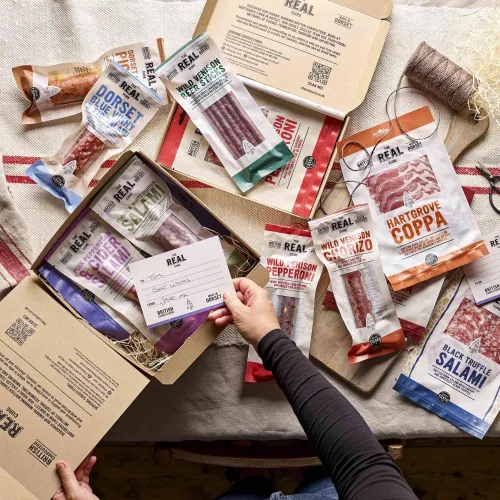
Odd numbers tend to look more natural than even. Fill gaps with accompaniments rather than adding another cheese you're less convinced by. A small dish of honey, a cluster of grapes, a folded stack of charcuterie if you're going in that direction — these fill space in a way that adds rather than dilutes.
The board as a whole
Before you buy, ask two questions: is there something soft, something hard, something bold? Do the accompaniments offer sweetness, sharpness, and something to carry it all on? A board built around those principles — chosen deliberately, served at room temperature — will outperform one that simply has more on it.