Why food works
Flowers wilt on the commute. Wine is complicated (more on that shortly). A well-chosen food gift has a quality most leaving presents lack: it gets used, and the person thinks of the giver when they use it. The trick is choosing with specificity rather than reaching for whatever the nearest deli stacks near the counter.
Two approaches are worth taking seriously. The first is something regional — tied either to where the person is heading or to where they are from. The second is something aspirational: the good version of a thing they already love, or a tasting set that opens up a territory they have never quite explored. Both require you to know something about the person, which is exactly what makes them land.
The regional angle
If a colleague is retiring to the Scottish Borders, a serious local cheese or a jar of Seville orange marmalade from a maker nearby connects to the chapter they are starting. If someone is going back to Yorkshire, good forced rhubarb from the triangle — that small cluster of farms between Wakefield, Morley and Rothwell that supply much of the world's early-season crop — says something a generic hamper never could. The logic works in reverse too: someone leaving London for the first time might appreciate something they will genuinely miss, a Neal's Yard cheese or a Borough Market-style artisan preserve.
Retiring colleagues are entering a phase where they have more time to read labels, look up producers and appreciate provenance. A regional food gift becomes a conversation they can have at their leisure.
Something to grow into
This approach suits someone who already cooks or eats well and is about to have considerably more time to do both. A tasting set from an independent producer — six single-estate olive oils, a flight of raw-honey varieties from different British landscapes, a selection of aged vinegars — invites comparison and curiosity. A subscription to a cheese box or a seasonal veg delivery is a different kind of gift: it keeps arriving, reminding the person of their colleagues every few weeks for months.
Alternatively, consider the good version of something ordinary. If the person drinks a particular tea every morning, find the finest version from an independent merchant. If they care about olive oil, a single cold-pressed bottle from a serious producer costs roughly the same as a forgettable bottle of wine and will almost certainly be more appreciated. Match the gift to what is already meaningful to them, then sharpen it.
Practical realities
A workplace leaving gift faces constraints a personal gift does not. Your colleague is getting on a train or bus with whatever you hand them. Anything requiring refrigeration — a whole soft cheese, smoked fish, fresh charcuterie — asks them to manage a cold chain on public transport. Shelf-stable goods are the sensible default: preserves, biscuits, chocolate, cured goods in sealed packaging, loose-leaf teas, quality honeys.
The dietary question is unavoidable. A quiet word with someone close to the leaving person before you finalise anything is not excessive — it is considerate. Nut allergies, religious dietary requirements, vegetarian or vegan diets are not unusual in any office, and a gift someone cannot eat is worse than no gift at all. If you have no way to check, lean towards plant-based options free from the most common allergens; the range of high-quality choices there is considerable.
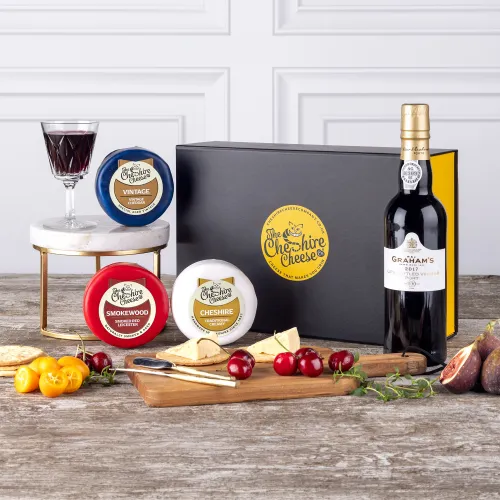
On alcohol: it is only a good answer if you know the person drinks and has preferences. Assuming everyone appreciates wine or whisky is a narrower assumption than it might seem. If you are confident in their tastes, something specific — a bottle from a small English winery, a single malt from a region they have visited — is far better than a generic choice. If not, food is the safer and often more interesting option.
Shared gifts versus personal ones
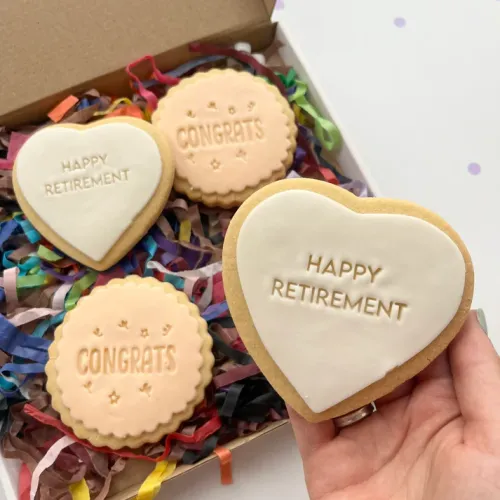
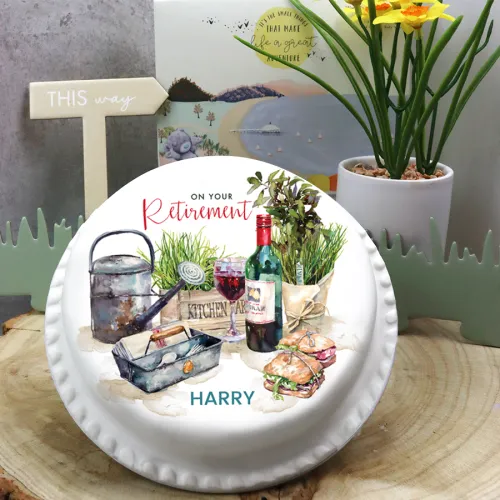
There is a meaningful distinction between what the team eats at the send-off and what the person takes home. A celebration cake, a spread of artisan charcuterie and cheese for the leaving lunch, a tin of something from a good bakery: these are communal purchases, different in kind from a personal gift. Conflating them — buying one large hamper and calling it both — usually means neither job is done properly.
Where budget allows, the cleanest solution is a modest shared item for the send-off and a separate personal gift for the individual. Our longer pieces on hampers and corporate gifting cover the shared-occasion side in more detail. What is worth saying here is that a personal food gift does not need to be expensive to feel considered — it needs to feel chosen, which is a function of attention rather than spend.