What spirits actually do over time
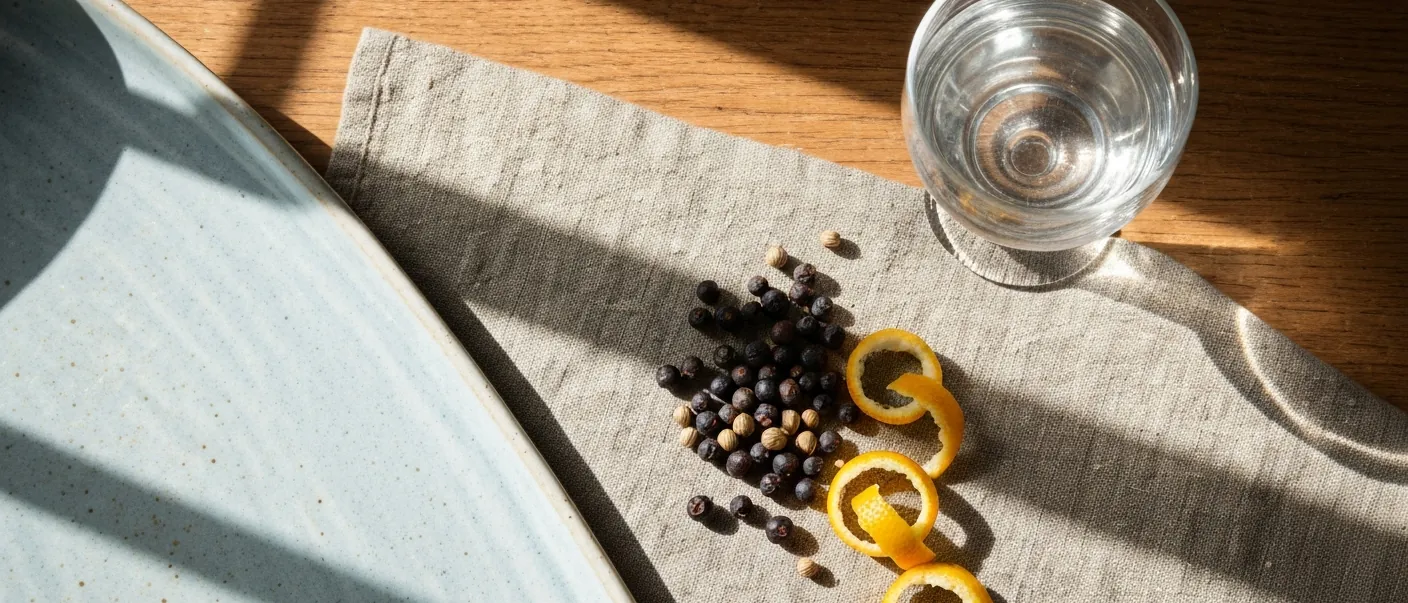
The short answer is that spirits don't go off in the way that milk or fish does. The alcohol content keeps bacteria at bay, so an old bottle of gin poses no safety risk. What does change, gradually and quietly, is character. The aromatics — the juniper, citrus peel, coriander seed, or whatever botanical signature defines a particular gin — are volatile compounds, and they don't love exposure to air. Once a bottle is opened and oxygen gets in, that slow fade begins.
It's rarely dramatic. A gin you opened last month will taste almost identical to how it started. One that's been sitting half-full on a shelf, loosely stoppered, for a couple of years may taste noticeably flatter — technically fine, but missing the brightness that made it interesting in the first place.
Opened versus unopened
An unopened bottle is effectively stable indefinitely. Unlike wine, spirits don't continue developing in the bottle, but they also don't deteriorate. A gin bought today and kept properly will taste the same in five years. There's no urgency to a sealed bottle — treat it as a long-term resident of the drinks cupboard without any concern.
Once opened, the calculus shifts. Most guidance suggests drinking an opened bottle within roughly a year for the best expression of its character. That's not a hard rule — gin at eighteen months open isn't ruined — but it's a reasonable horizon to have in mind, particularly for bottles you're not working through quickly. A small bottle that sees regular use will always outperform a large one that's treated as a special-occasion reserve and opened four times a year.
How to store bottles properly
Two things matter most: light and position.
- Keep bottles upright. Unlike wine, which benefits from horizontal storage to keep a cork moist, spirits should stand on their heads — that is, upright. High-proof liquid in prolonged contact with a cork can degrade it, and a degraded cork lets in more air than you want.
- Keep them away from light. Ultraviolet light accelerates the breakdown of aromatic compounds. A dark cupboard is ideal. A sunny windowsill or a backlit bar display may look appealing, but it's hard on flavour over time.
- Temperature stability matters more than coolness. A consistently cool spot is better than a spot that swings between warm and cold. You don't need to refrigerate gin — most people prefer it at room temperature until it's mixed or poured over ice — but avoid storing it near a cooker or radiator.
Beyond those basics, the original cap or stopper is worth preserving. A tight seal makes a meaningful difference if a bottle is going to sit for months between pours.
Cream liqueurs are a different matter entirely
Everything above applies to standard spirits — gin, whisky, rum, vodka, and so on. Cream liqueurs are the exception, and a significant one. They contain dairy, which means they do have a genuine shelf life. Always follow the label on any cream-based liqueur; refrigeration after opening is usually advised, and the best-before guidance printed on the bottle should be taken seriously rather than treated as a suggestion.
A note on novelty gins
The category has expanded considerably, and some modern gins — particularly those with added fruit, sugar, or colour — behave slightly differently to a classic London Dry. A heavily sweetened, fruit-forward gin may have more in common with a liqueur than a traditional spirit in terms of how it changes once open. If you're ever uncertain about a bottle that seems unusual in its composition, the label is the first place to look. Any reputable producer will indicate if there are storage or consumption requirements beyond the norm.
For the vast majority of gins — the dry, botanical, clear spirits that fill most people's cabinets — the rules are simple and forgiving. Store upright, out of the light, seal it well, and drink it with some regularity. Gin is robust. It just rewards a little attention.