What makes a good Eid food gift
Both Eid al-Fitr — which marks the end of Ramadan — and Eid al-Adha are occasions for celebration, generosity and sharing. A well-chosen box of sweets or a carefully assembled hamper communicates warmth in a way that a voucher simply doesn't.
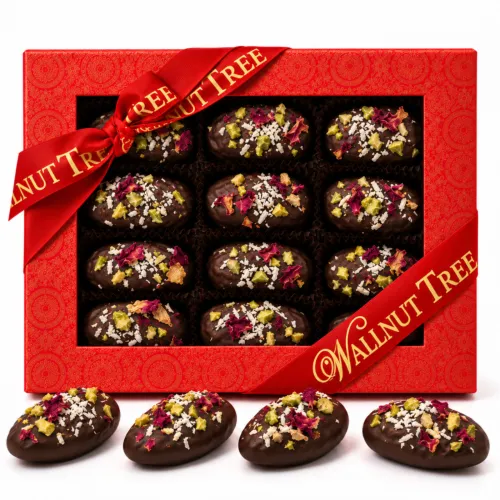
Dates are the most universal choice, eaten to break the Ramadan fast and deeply embedded in Eid symbolism. Stuffed dates — filled with pistachio paste, almonds or sweetened cream — are a popular gift form, often arranged in lacquered boxes that double as keepsakes. Baklava, in all its regional variations, travels well and photographs beautifully, which matters when gifts are shared across households. Turkish delight remains a classic, though quality varies enormously; look for pieces made with real fruit or rose water rather than artificial flavouring.
In South Asian households, mithai — a broad family of sweets made from milk solids, sugar and nuts — is the expected gift. Barfi, ladoo, halwa: these are specific things tied to particular occasions and regional identities. If you know the family well, ask what they'd actually like rather than guessing.
Checking halal status
Not all sweets sold by mainstream British retailers are halal-certified. Gelatine is the most frequent issue — it appears in some Turkish delight, marshmallow-based confectionery and jellied sweets, and unless packaging specifies bovine halal gelatine or a plant-based alternative, it is likely pork-derived. Alcohol-based flavourings appear in some chocolates and baked goods, often listed simply as "flavouring". Look for a recognised halal certification mark, or buy from specialist halal confectioners where every ingredient's status is part of their offer. Avoid alcohol entirely.
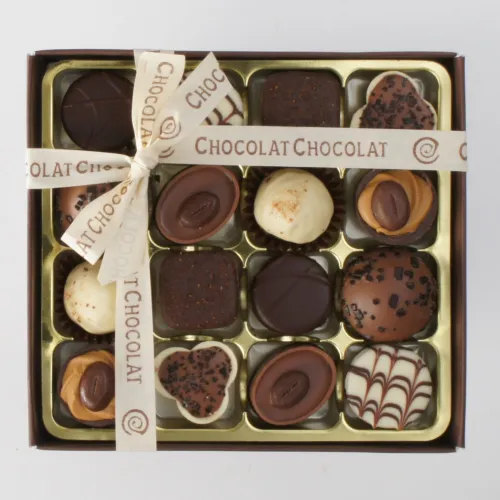
Artisan British chocolates are increasingly common as Eid gifts, and many are halal by default — no gelatine, no alcohol — though it is always worth confirming. Nut assortments and dried fruit are generally straightforward; check whether packaging lines are shared with allergen-containing products if that is relevant to the recipient. For specific dietary or health concerns, the Food Standards Agency and Allergy UK are reliable starting points.
Presentation is part of the gift
Plain packaging, however good the contents, reads as an afterthought. Gift boxes, ribbons and hampers in jewel-toned or metallic packaging suit the occasion — this is a celebration, and the wrapping signals that the giver understood that.
A hamper combining dates, baklava or Turkish delight, a good box of chocolates and perhaps some nuts creates a generous, varied gift without requiring the giver to source everything separately. Coherence matters: a hamper should look assembled with thought rather than filled to a price point. Many specialist confectioners offer seasonal presentation options around Eid; British artisan producers have become more attentive to this in recent years.
For children, Eidi — money given as a gift — is traditional alongside sweets. A small bag of chocolates or a box of decorated biscuits accompanying an envelope is a practical, well-received combination.
Ordering in time
Eid gifts require more planning than most occasions. The exact date of Eid al-Fitr is confirmed by the sighting of the new moon, with the official announcement typically coming the evening before. Eid al-Fitr 2027 is expected around 9–10 March, though the precise date remains moon-dependent — check a reliable Islamic calendar source as the time approaches. Eid al-Adha follows roughly two months later, giving a second gifting window for those who observe both occasions.
You cannot wait for the date to be confirmed before ordering. Commission or order gifts at least a week in advance — longer if you are buying from a small producer or ordering bespoke packaging. Many specialist makers open Eid pre-orders weeks ahead of the expected window, so getting on a waiting list early is worth doing. Perishable items such as fresh mithai or cream-filled dates carry delivery timing risk, so factor that in carefully when choosing a supplier.