Start here: check the NHS, not this article
This piece explains the reasoning behind official UK advice on cheese and pregnancy, but it is not medical guidance. The NHS website sets out current recommendations clearly and should be your first and final reference. What follows is the mechanism — why some cheeses are flagged and others are not — because understanding the logic helps when you are standing at a cheese counter trying to make a decision.
Why hard cheese is largely in the clear
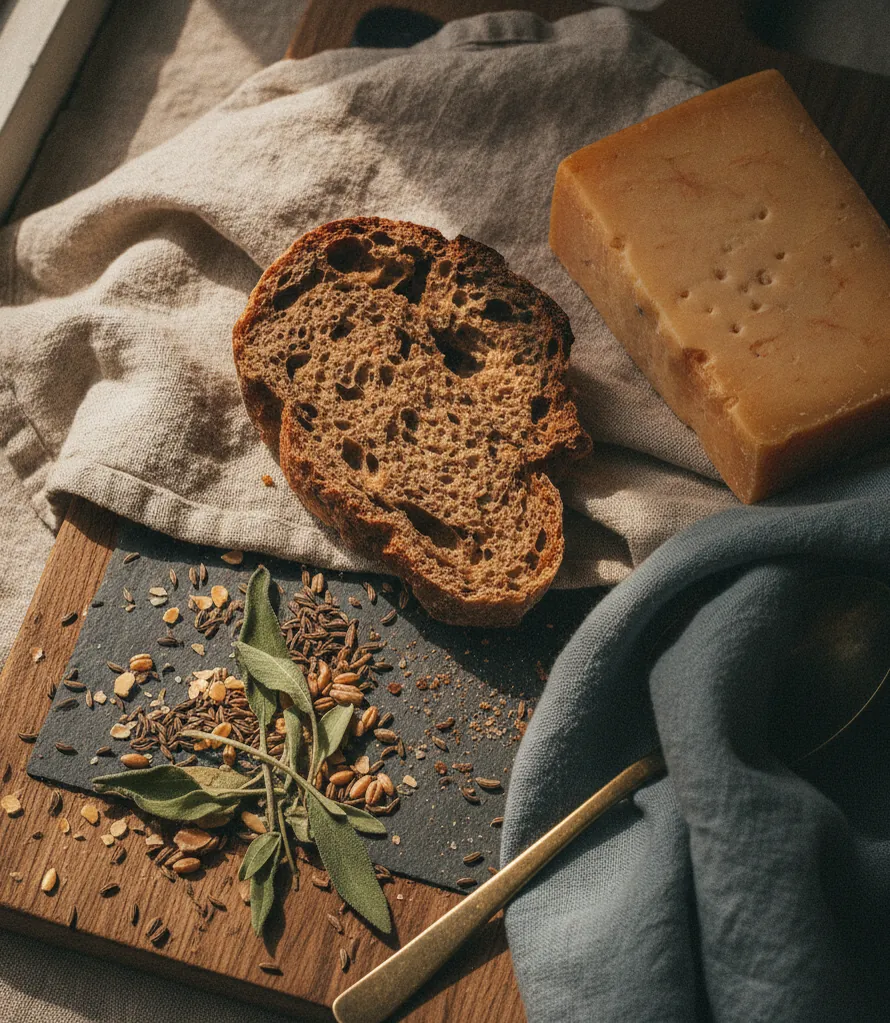
Hard cheeses — mature Cheddar, Cheshire, Red Leicester, Parmesan, Gruyère — are considered safe to eat in pregnancy regardless of whether they were made from pasteurised or unpasteurised milk. That might seem counterintuitive, but the key is what happens during the making of a hard cheese.
Hard cheeses have very low moisture content and relatively high acidity. Listeria monocytogenes, the bacterium that makes certain soft cheeses a concern, needs moisture to survive and multiply. In a hard cheese, the environment is too dry and too acidic for it to thrive. The pressing and long maturation involved drive out water progressively, creating conditions inhospitable to the bacterium whether or not the starting milk was raw.
The problem with soft, mould-ripened and blue cheeses
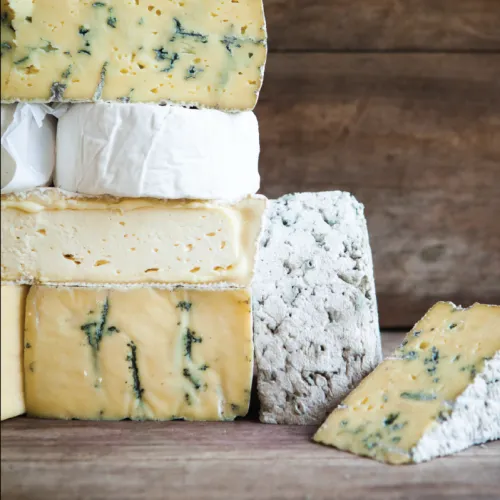
Soft cheeses are a different matter, and the reason comes down to exactly the factors that make hard cheese safe: moisture and acidity. A soft, white-rind cheese — Brie, Camembert, and their British equivalents — retains far more water than a hard cheese. The rind, produced by surface moulds, creates a near-neutral pH environment. That combination of high moisture and low acidity is far more hospitable to listeria.
Soft blue cheeses sit in the same risk category for similar reasons. The characteristic blue-green veining comes from moulds introduced during making, and the cheese is typically soft, high in moisture, and lower in acidity than hard varieties. Harder blue cheeses occupy a more ambiguous position; check the NHS guidance for the current view on specific types.
Unpasteurised soft cheeses carry compounded risk: without pasteurisation, any listeria present in the original milk has not been killed at the outset, and the soft, moist environment then allows it to persist or multiply.
Heat changes the calculation
Thorough cooking alters the risk profile significantly. Listeria is killed by heat, so a soft cheese that would otherwise be avoided becomes safe once cooked until steaming hot all the way through — not merely warm on the surface. Baked Brie, a melted blue cheese sauce, a gratin that has been properly heated through: these are different propositions from the same cheeses eaten cold from the packet. The operative word is thoroughly. A briefly warmed cheese still cool at the centre has not had sufficient heat applied throughout.
When the label doesn't tell you enough
Cheese labelling is not always as informative as it could be. A label may give the name and origin without making clear whether a cheese is soft or semi-soft, or what kind of rind it carries. If you are buying from a deli counter or specialist cheesemonger, ask. A good cheesemonger will know whether a cheese is mould-ripened, how it is classified, and whether it is made from raw milk — that is precisely the kind of knowledge a specialist exists to share. Supermarket packaged cheeses usually state whether milk is pasteurised; if you cannot identify a cheese from its label, leave it out until you can check, or until you can cook it properly.
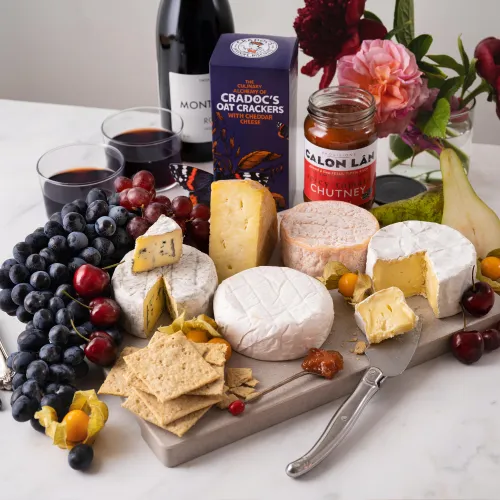
The restriction is narrower than many people assume. A well-stocked cheeseboard can still include firm, mature cheeses of real quality and variety. The caution targets a specific combination of high moisture, low acidity, and mould-ripened or unpasteurised character. Knowing why that combination matters makes it much easier to shop with confidence.