The tasting flight in disguise
Strip away the foil stars and numbered doors and what you have is a tasting flight — a structured way to try several things side by side over time. A well-run tasting flight tells you what you're drinking or eating, who made it, and why it tastes the way it does. The best adult advent calendars do exactly that. The worst give you twenty-four near-identical items with no context.
The question worth asking before you buy isn't "is this good value?" but "does this give me genuine variety, or teach me something?" Those are related but different standards, and both matter.
Size and serving: read the small print
Portion size varies enormously and is often buried in the small print. For beer calendars, 330ml cans are a proper serving. Some calendars use smaller formats, which can suit variety but feel stingy once you do the arithmetic. With gin and other spirits, 5cl miniatures are the standard tasting measure and represent a genuine single serve with mixer; anything smaller edges into novelty territory.
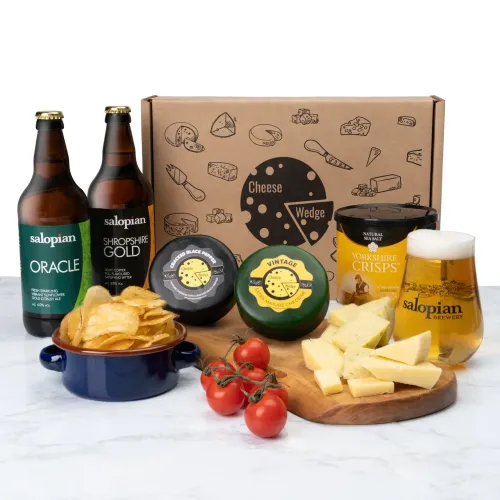
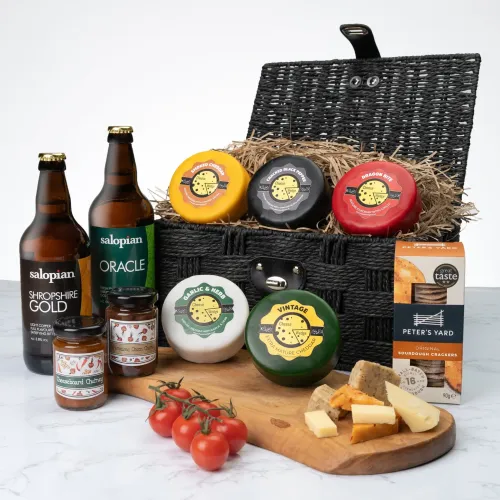
Cheese calendars are closer to a cheesemonger's tasting counter than a weekly shop, and smaller portions are fine — provided the selection is genuinely varied. A wedge of washed-rind, a hard territorial, a blue and a soft-ripened across the month gives you something to learn from. Twenty-four portions of broadly similar mild cheddar does not.
The producer question
A reliable signal of calendar quality is whether the producers are named. If a beer calendar lists the specific brewery for each can, you can look them up, seek out more of their work, and understand what you're tasting in context. If the calendar just says "craft lager" or "hoppy ale" with no attribution, the contents are almost certainly bought in bulk from wherever was cheapest that season.
The same applies to cheese. British and Irish artisan cheesemakers are small operations; a calendar that names the dairy made deliberate choices about what to include. Tasting notes, even brief ones, make the experience substantially richer. A sentence about the milk source, the region, or the style is enough to turn a piece of cheese into something worth paying attention to.
Shelf life matters more than it does for chocolate
Chocolate calendars have a forgiving shelf life. Beer, spirits and cheese do not.
Beer — particularly unfiltered or unpasteurised craft beer — often carries a best-before date measured in weeks or a few months. Check whether the calendar specifies this and consider when you'll be opening it. A calendar that arrives in mid-November with beer that peaks in December is well-planned; one where cans are already past their best on arrival is not.
Cheese calendars need a fridge — not a cool garage or a utility room that gets cold at night, an actual refrigerator. A full calendar is a substantial block of carefully packaged dairy, so factor in the space before ordering for a household where the fridge is already under pressure in December.
Spirits have far less shelf-life urgency, which makes gin calendars more forgiving — though miniatures can dry out quickly once opened, so drink them promptly.
Running the value maths
Divide the calendar price by the number of doors, then compare that per-unit figure with what the same thing costs bought outright. A beer calendar that works out at considerably more per can than the same brewery charges in a good bottle shop is levying a premium for the advent format. That may be worthwhile for the experience, but you should know that's what you're paying for.
For cheese, the comparison is trickier because portions are smaller than a typical retail wedge, but the principle holds. If the per-portion cost implies you're paying well over the odds for cheese with no provenance attached, the calendar is trading on its packaging more than its contents.
Calendars where the per-unit cost is roughly in line with retail, the producers are named, and there is genuine variety across the doors tend to be the ones people recommend to friends the following year. That is probably the most reliable quality signal of all.