A brewing town first
Before anything else, Wrexham is a brewing place. The town developed a significant association with beer-making — lager in particular — at a time when most of Britain was still wedded to ale. The reasons were practical: reliable soft water, a large industrial workforce, and enough commercial ambition to look beyond local habit. Wrexham's claim to an early role in British lager history is genuinely unusual for a Welsh town of its size, and it sets the place apart from the rest of the country's food and drink map.
The brewing connection shaped the town's character, its pub culture, and the way food and drink are understood here as part of working life. Good beer remains woven into what Wrexham does.
The land on either side
The county borough sits in north-east Wales, and the countryside around it does much of the quiet work behind the region's food. To the east, the Maelor lowlands — flat, fertile, close to the English border — support dairy herds and beef cattle. The milk feeds into Welsh dairy traditions; the beef is the solid, grass-fed kind that a good butcher's counter deserves. To the south-west, the Berwyn foothills bring different character: sheep country, with lamb that carries the slight wildness of upland grazing.
None of this is dramatically promoted in the way that Welsh lamb from the higher mountains tends to be. But the produce is there, and anyone buying from local butchers or the market will encounter it without much effort.
The covered market
Wrexham's covered market is the kind of institution that quietly defines a town's relationship with food. Markets of this sort — permanent, roofed, independent — are increasingly rare, and their role as a daily food resource rather than a weekend event makes them distinct from the farmers' markets that tend to attract more attention.
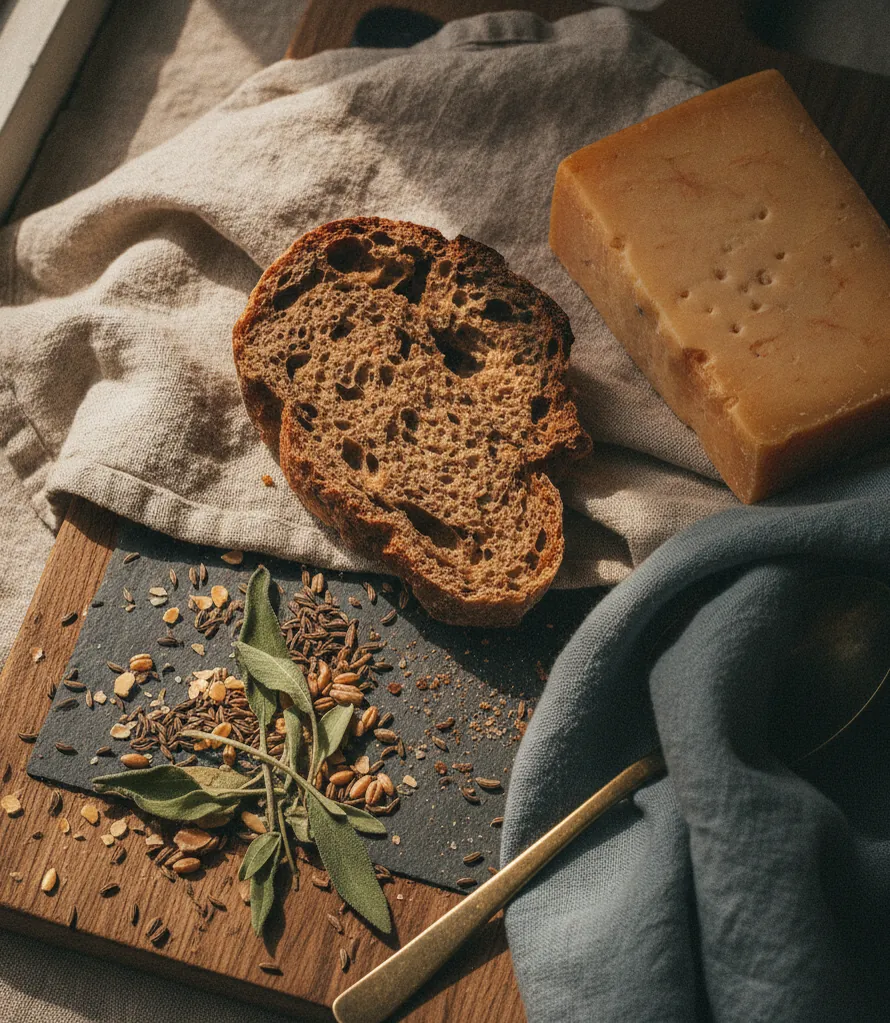
Inside, you find the accumulation of a market-town food culture: bread bakers, butchers, cheese, Welsh cakes cooked on a bakestone. The Welsh cake is worth pausing on. Flat, griddle-cooked, spiced with mixed spice and studded with currants, it is one of those genuinely regional things that hasn't been much diluted by commercialisation. Buying them fresh and still warm from a market stall is how they're meant to be eaten — nothing added, nothing changed.
The market also reflects Wrexham's border position. This is not emphatically Welsh in the way that Gwynedd or Ceredigion is; the cultural and culinary pull of Shropshire and Cheshire is real. You'll find Cheshire cheese treated as a local product — which, geographically, it almost is — and the general food habits here have always crossed the border without making much fuss about it.
The border effect
Sitting on the boundary between Wales and England does something to a place's food identity. Wrexham holds both traditions at once rather than resolving a contradiction. Cheshire, just across the line, has its own strong dairy culture and its eponymous cheese, one of Britain's oldest named varieties. Shropshire adds further lowland farming character. The result in Wrexham's market and independent food shops is a practical pluralism: Welsh lamb and Cheshire cheese on the same counter, with nobody thinking that odd.
This is not self-conscious fusion. It is geography doing what it always does — making borders porous and larders more interesting.
What to look for when you visit
Start at the covered market and work outward. Welsh cakes, beef and lamb from local butchers, and dairy produce drawing on both Welsh and Cheshire traditions are the things most worth seeking. For drink, the town's brewing history provides a useful frame: Wrexham took beer seriously long before craft ale made that fashionable, and the pub culture reflects it.
The food here is not built around a single famous product or a Protected Designation of Origin. It is a regional larder assembled from good farmland, a working-town market tradition, and a border position that has always made the food supply more varied than the headlines suggest.