Land made from water
The black peat soils of the Cambridgeshire fens are the result of centuries of drainage — a flat, engineered landscape that can feel more Dutch than English on a grey winter morning. What that effort produced is some of the most productive arable ground in Britain. The soil holds moisture, warms quickly in spring, and delivers a richness that tilts everything grown in it towards intensity of flavour. It is not picturesque farming country in the way that the Cotswolds or the Lake District is, but it is extraordinarily productive, and that productivity has shaped a distinct regional food identity.
Fenland celery and the art of earthing up
The most formally recognised of Cambridgeshire's food specialities is Fenland celery, which carries Protected Geographical Indication status — the same designation that protects Champagne or Cornish Pasties. That status is grounded in a growing method that is genuinely unusual. Plants are grown in open trenches and progressively banked up with the surrounding peat as they develop, a technique called earthing up. Excluding light from the stems produces the characteristic pale, almost white colouring and a nutty, slightly sweet flavour that differs markedly from the supermarket celery most people know.
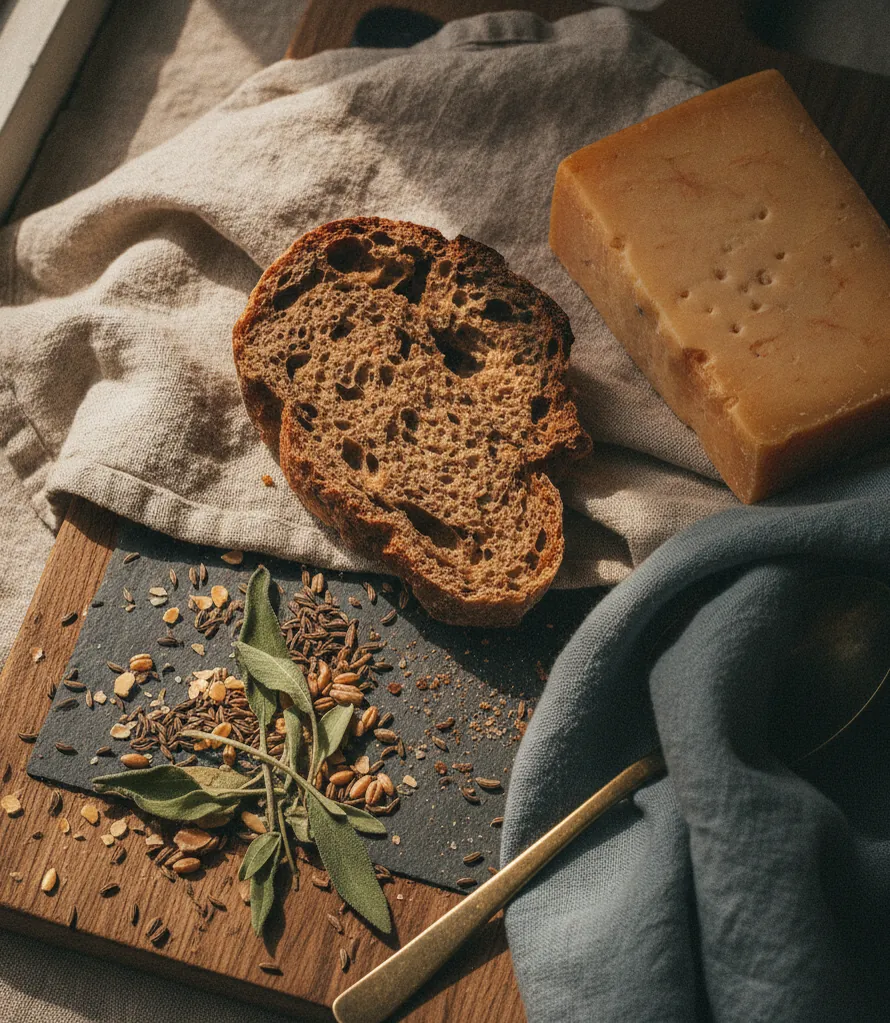
The season runs broadly through autumn and into winter — Fenland celery is cold-weather produce, and a touch of frost is generally considered to improve it further. Traditionally it is eaten raw, broken into sticks and served with cheese; the combination of its mineral crunch against a crumbly Cheddar or a wedge of Stilton is one of those regional pairings that makes immediate, obvious sense. Finding it outside the region takes effort, which is part of the point of the PGI designation: it exists to keep the thing tied to the place that made it.
The eels of Ely
The city of Ely sits on what was once an island rising from fenland marsh, and its name is commonly traced to the eels that teemed in those surrounding waters. In the medieval period, eels were so abundant and so valuable that they were used as a form of currency — rents and tithes were paid in them, recorded in quantities that give some sense of how central the eel was to the local economy.
The eel's place in Cambridgeshire's food story is now largely historical. European eel populations have collapsed across the continent, and the creature is now a protected species in serious decline. Eel fishing in the fens is a shadow of what it once was. That history still matters, though — it explains why the landscape was valued and settled in the way it was, and why Ely became the significant centre it did. The food culture of a place is not only what you can eat there today; it is also what the land once made possible.
Wisbech and the soft-fruit country
The area around Wisbech, in the north of the county close to the Lincolnshire border, developed into a substantial fruit-growing region during the nineteenth and twentieth centuries. The same fertile peat soils and relatively dry, sunny summers that the flat, open landscape allows made it well suited to strawberries, raspberries, blackcurrants, gooseberries and a range of orchard fruits.
Much of that fruit has historically gone into jam and preserves manufacturing, an industry with deep local roots. The soft-fruit season still draws seasonal workers to the area each summer, and farm shops and pick-your-own operations keep a direct connection between the land and the local table alive, even as the wider agricultural industry has consolidated considerably.
Cambridge and its Chelsea buns
Cambridge city itself contributes something rather different and altogether stickier to the county's food story. The Chelsea bun — a tightly coiled, enriched dough wound around dried fruit, sugar and spice — has a long association with the city. While the bun's name points to London origins, Cambridge developed its own strong tradition around it, with certain bakeries becoming particularly well known for their version over the generations.
A good Cambridge Chelsea bun is dense with fruit, lacquered with a sugar glaze and best eaten slightly warm. It has been sustaining students and market-goers for a very long time, and its survival against every conceivable imported pastry trend says something about how embedded it is. Some things simply belong where they are.