A region defined by contrast
The West Midlands is not obvious food country in the way that, say, coastal Cornwall or the Yorkshire Dales might be. There is no sea, no single defining landscape, no one product that the whole region rallies around. What there is instead is a productive tension between the urban and the rural — dense conurbations pressed up against some quietly fertile agricultural land — and that contrast has done more to shape what people eat here than any single tradition.
Birmingham sits at the centre of it all, a city whose food culture has been remade repeatedly by successive waves of settlement. The result is a table that is genuinely diverse in a way that goes beyond the usual claims: Brindleyplace and Digbeth are not shorthand for fine dining but for a city that has absorbed South Asian, Caribbean, Chinese and Eastern European cooking so thoroughly that the boundaries between "regional" and "adopted" have largely dissolved.
The pastoral edge
Step away from the urban core and the land changes quickly. Herefordshire lies just to the south-west, Shropshire to the north-west, Staffordshire to the north — all of them dairy and livestock country, and all of them feeding into the broader West Midlands food economy. The pastures that roll through these border counties have long supported beef and dairy herds, and much of that produce finds its way into the markets, independent shops and farm gates that serve the region's more rural communities.
Market towns such as those found across Worcestershire and the Staffordshire fringes have historically been the hinge between producer and consumer — the places where farmers brought livestock and growers brought vegetables, and where food trades took root. Many of those markets still function, some in the same locations they have occupied for centuries, and they remain a useful guide to what the surrounding land actually produces rather than what a marketing campaign might claim it does.
Black Country cooking
The Black Country — the stretch of post-industrial towns running through Wolverhampton, Dudley, Walsall and Sandwell — has its own distinct food vernacular, and it is proudly unpretentious. This is the heartland of the faggot, the grey peas and bacon served from market stalls, the chip butty eaten standing up. These are not dishes that trouble food writers very often, but they are the ones that local people will cite without hesitation as theirs.
Faggots — parcels of minced offal and pork, usually wrapped in caul fat and baked in a rich gravy — are made across Britain but are particularly associated with the Black Country and the West Midlands more broadly. They belong to a tradition of making the most of the whole animal, a practical necessity that became, over time, a point of regional pride. You will still find them on market stalls and in independent butchers throughout the area.
Grey peas, meanwhile, are a variety of dried pea cooked low and slow and served with a piece of salt or streaky bacon. The dish is simple to the point of austerity, but it has the kind of staying power that only comes from being genuinely good.
Birmingham's curry quarter and beyond
No honest account of West Midlands food could ignore the Balti. Birmingham's version of this style of cooking — a quick, high-heat curry served in the steel dish it was cooked in — developed in the city's Sparkbrook and Sparkhill neighbourhoods and has its own recognised geography, sometimes called the Balti Triangle. Whether Balti counts as a regional speciality or a British-Asian invention is a question worth sitting with rather than resolving too quickly; the honest answer is probably both.
Beyond Balti, the city's Chinatown, its Jamaican bakeries, its Vietnamese cafés and its growing number of West African restaurants have collectively produced something that resists easy categorisation. Birmingham does not have a single food identity so much as several overlapping ones, and that is more interesting than simplicity would be.
What to look for
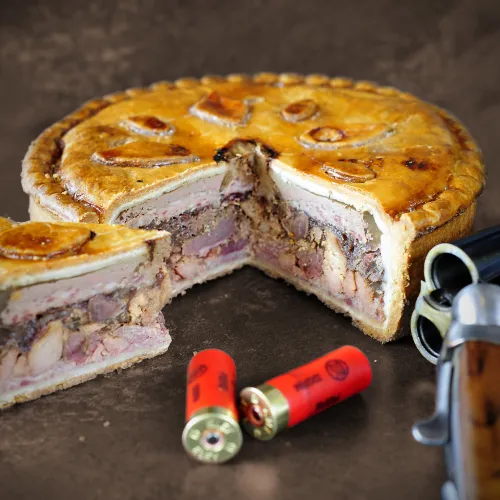
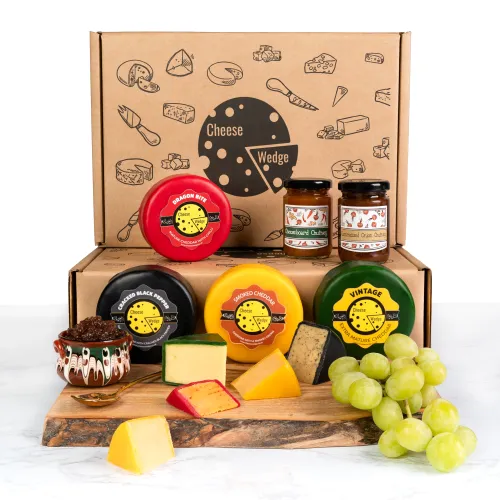
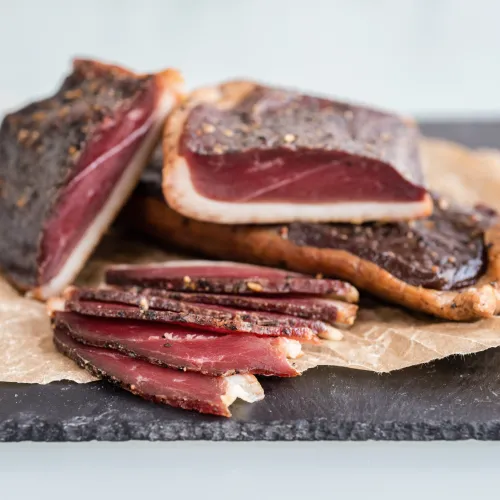
Independent producers across the West Midlands tend to cluster around a few categories: cured and cooked meats drawing on the Black Country tradition, artisan breads shaped by the city's diverse communities, cheeses made at farm level in the pastoral border counties, and preserves and condiments from small-batch makers using local fruit. Farm shops on the Worcestershire and Warwickshire fringes are worth seeking out, particularly in autumn when local apple and pear harvests come in.
The region also has a modest but genuine craft drinks scene, with independent brewers working across both the urban and rural parts of the area. Tradition here leans towards cask ale — the West Midlands has strong ties to the broader Midlands brewing heritage — though smaller producers are working with a wider range of styles.