A landscape that shapes every plate
Orkney sits at a latitude where summer daylight stretches long into the evening, and that light does something tangible to the grass. Pasture grows dense and sweet, and the cattle and sheep that graze it carry the benefit through to the meat. This is not marketing language — it is the reason Orkney beef and lamb both hold PGI status, the same protected designation used for Champagne or Parma ham, tying the product irrevocably to the place it comes from.
The islands are fertile in a way that surprises visitors expecting only wind and rock, and several Orcadian specialities exist almost nowhere else.
Bere: a grain older than the written word
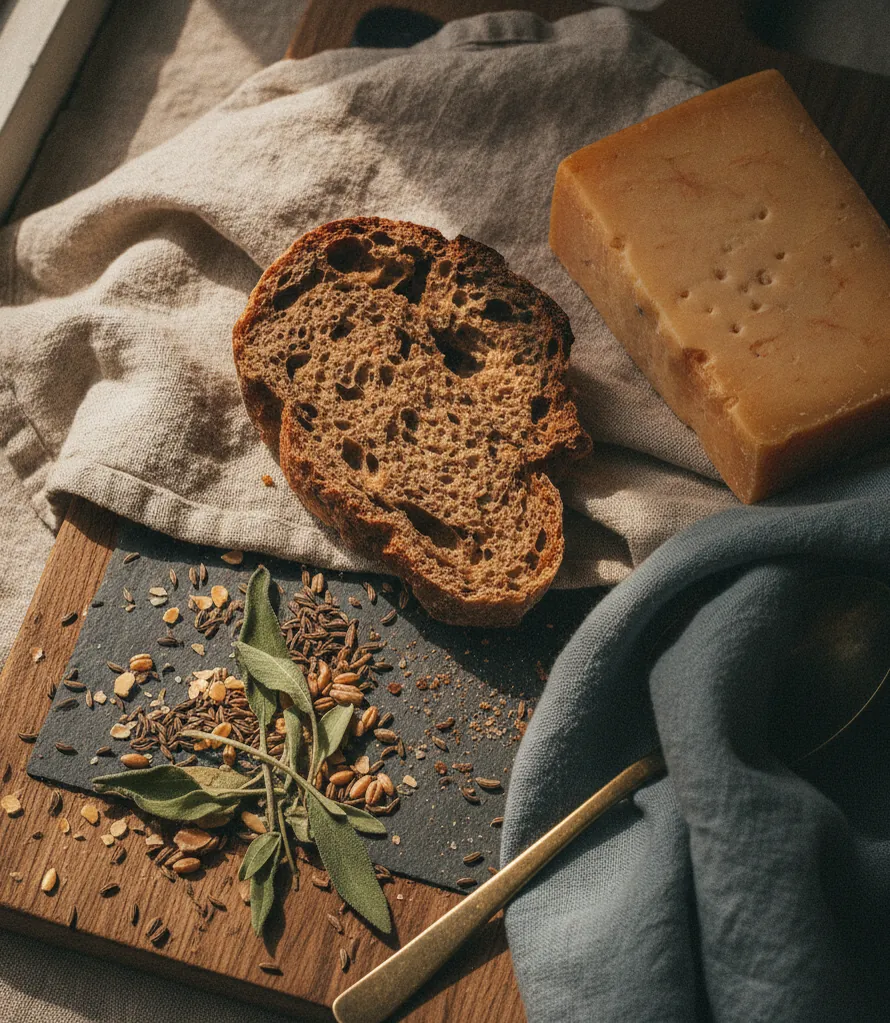
The most striking of those specialities is bere, a six-row barley landrace grown on Orkney since Neolithic times. While modern agriculture consolidated around higher-yielding varieties long ago, Orkney crofters kept growing bere — partly from habit, partly because it suits the short growing season and thin soils. It is still stone-milled today into a wholegrain flour called beremeal.
Beremeal is noticeably different from anything you would find in a supermarket: darker, slightly bitter at the edges, and carrying a depth of flavour that ordinary barley flour lacks. The traditional use is beremeal bannocks — flat, unleavened rounds cooked on a griddle — though island bakers also work it into bread and oatcakes. If you want to understand Orkney's food culture in a single ingredient, bere is probably it.
North Ronaldsay mutton: the seaweed flock
North Ronaldsay is Orkney's most northerly inhabited island, home to one of the most unusual sheep breeds in the world. A drystone dyke — built and maintained by the islanders — runs around the entire coastline, keeping the flock on the foreshore rather than the farmland. The sheep live almost entirely on seaweed.
The iodine and minerals in the kelp and wrack work through the meat, producing a savouriness that sits somewhere between conventional lamb and something altogether wilder. It is not a subtle difference: people who have eaten North Ronaldsay mutton tend to remember it. The breed is also one of Britain's rarest, which keeps the meat scarce — worth tracking down through specialist butchers or producers who work directly with the island.
Cheese and the farmhouse tradition
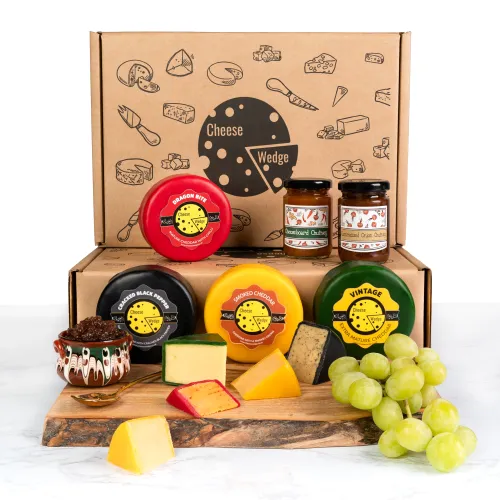
Orkney has a serious farmhouse-cheese tradition, anchored by the islands' milk and skills passed between producers over generations. The most prominent example — Orkney Scottish Island Cheddar, which holds its own PGI — is covered in our dedicated article. The broader point is that the same long grass and clean pasture that produce the beef also feed a dairy culture worth paying attention to.
Cheese made on these islands tends to be firm, well-flavoured, and produced in relatively small quantities. It travels well as a gift and holds its character in a way that more industrial cheddars do not.
Whisky, beer, and the grain that connects them
The islands have a whisky-making tradition drawing on local barley and exceptionally soft water. Orcadian single malt has a following well beyond Scotland — the style tends towards heather honey and a coastal mineral note, though distillery character varies and rewards direct exploration.
Craft brewing has also taken hold, with island brewers working bere and other local grains alongside conventional malts. Bere lends its particular bitterness and depth to ales you will not find replicated on the mainland — a small but genuine expression of what this grain can do outside the bannock.
Orkney's food specialities are connected by geology, climate, and an agricultural continuity that most British regions lost generations ago. That continuity is precisely what makes them worth seeking out.