A coast that feeds itself
Argyll and Bute stretches down Scotland's western seaboard in a tangle of sea lochs, peninsulas and islands, and that geography is the point. Cold, clean Atlantic water pushes into narrow inlets, creating conditions that suit shellfish almost unreasonably well. Langoustines, scallops and oysters are not a restaurant novelty here — they are what the place has always produced, and what local fishing boats still bring in.
Much of the catch has historically left Scotland entirely. West-coast langoustines and scallops found their way to Spanish and French markets for generations, prized by buyers who understood what they were getting. That quiet export trade is one reason visitors now find it easier to eat exceptional shellfish here — the region has gradually reclaimed its own larder.
Loch Fyne and the art of the kipper
Loch Fyne is the name most people encounter first, and it has earned its reputation honestly. The loch's herring were once so highly regarded they carried the nickname Glasgow magistrates — a nod to their quality at a time when a good herring was a mark of social standing, not a budget supper. Those herrings were smoked into kippers in the smokehouses that grew up along the loch's banks, and the cold-smoking tradition has outlasted the great herring shoals themselves.
The oysters are equally well established. Loch Fyne's depth and tidal flow produce oysters with a clean, mineral character that needs nothing added — served on the shell with a wedge of lemon at most. Oyster farming here is slow work; the beds need years before they yield anything worth eating, which partly explains why loch-grown oysters carry the weight they do.
Campbeltown and the whisky that nearly vanished
At the southern tip of the Kintyre peninsula, Campbeltown sits in a category of its own. At its height the town had so many working distilleries it was described as the whisky capital of the world — a remarkable claim for a place of its size, made painful in retrospect by the industry's subsequent collapse. Most of those distilleries are long gone.
What remains matters. Campbeltown is one of only five officially recognised Scotch whisky regions, a designation that acknowledges its whiskies as genuinely distinct. The style tends towards a briny, slightly smoky character with a weight that sets it apart from Speyside's lighter expressions or Islay's more aggressive peat. The distilleries still operating there guard a regional identity that was very nearly lost altogether.
Isle of Mull: one farm, one cheese
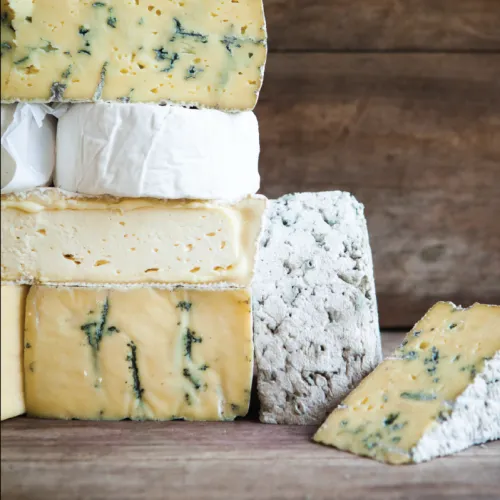
Cross to Mull by ferry and the food conversation shifts from sea to pasture. The island is home to a raw-milk cheddar-style cheese made on a single farm, and it has become one of Scotland's most talked-about cheeses — not through marketing, but through the straightforward fact that it tastes like somewhere specific.
Raw-milk cheesemaking of this kind is increasingly uncommon in Britain. Pasteurisation became the default partly for safety and partly for consistency, but what it removes is the direct connection between a herd, a piece of land and a finished cheese. Mull's version retains that link. The island's grazing — sea air, particular grasses, the farm's own practices — comes through in the final flavour in ways that a standardised process would eliminate. It is a cheese that couldn't be made anywhere else and taste the same.
Crofting, smokehouses and travelling between them
Beyond the anchor products, Argyll and Bute's food identity is bound up in a way of producing things that is small-scale by nature. Crofting — the system of small land tenure that shaped Highland and island agriculture — means food here tends to come from modest holdings rather than industrial operations. That isn't romantic affectation; it's a structural reality that shapes what's available and how it's produced.
Smokehouses are scattered throughout the region, some operating from buildings that have been curing fish for well over a century. Techniques vary — some use traditional cold-smoking over oak or whisky-barrel chips, others have adapted — but the underlying logic is the same: preserving an abundant catch in a way that improves it. Smoked salmon from this coast has a character quite different from farmed fish cured quickly under industrial conditions.
Travelling through Argyll and Bute to eat well means accepting that the best things are often in unexpected places: a farm shop at the end of a single-track road, a fishmonger on a pier, a smokehouse that looks from the outside like a working shed. The food trail rewards people who take the ferry and ask around.