Dairy country, through and through
East Ayrshire sits in the south-west of Scotland, running inland from the Firth of Clyde and rising towards the Galloway hills. It isn't coastline or city food that defines it — it's grass. The area's mild, wet climate suits dairy farming with unusual consistency, and that has shaped what people here have made and eaten for generations.
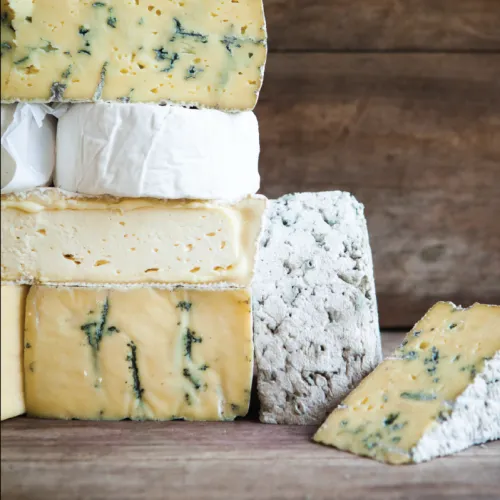
The most direct expression of that dairy tradition is Dunlop cheese. Named for the village in the north of the area, Dunlop is a mild, close-textured Scottish cheese made from full-fat cow's milk — historically from the Ayrshire breed, whose milk has a high butterfat content and a relatively sweet, creamy character. We've covered Dunlop in detail in its own article, but it belongs here too, as the anchor of East Ayrshire's food story. It fell out of production for much of the twentieth century and has since been revived by a small number of committed makers. Finding it at a local farm shop or farmers' market remains the best way to taste what it actually is, rather than what it used to be.
The Ayrshire bacon cure
Less well known outside Scotland — and underappreciated even within it — is Ayrshire bacon. This is a genuinely distinct cure, different in method and result from the Wiltshire style covered separately on this site.
Wiltshire bacon is cured on the bone and carries a slightly sweeter, fuller flavour from a longer brine. Ayrshire bacon starts from a boned and rolled loin. The pork is pressed into a tight cylinder before curing, producing circular rashers of even thickness with a clean, mild flavour and very little fat on the outer edge. The cure itself is gentle — closer to what butchers call a pale cure — so the meat holds its own flavour rather than being dominated by salt or smoke.
Those round rashers are the most visible sign of the cure and the detail most useful when buying. Circular bacon rashers from a Scottish butcher or deli are almost certainly Ayrshire style. When cooked, the texture is firm without being dry, and the lower fat content means it doesn't shrink dramatically in the pan. Alongside the Wiltshire cure, it illustrates how regional curing traditions across Britain diverged to suit local breeds, local tastes, and local ways of using the whole animal.
Beef, lamb, and the upland farms
The ground rises as you move east and south through East Ayrshire, towards the moorland edges of Galloway. This rougher terrain suits beef and sheep rather than dairy, and the farms here contribute to a broader tradition of good-quality Scottish red meat that rarely carries a postcode in the way that Highland beef or Borders lamb might.
Farm shops around Kilmarnock and along the Doon and Irvine valleys are the best point of access — working farms with retail attached rather than destination food halls. Provenance here is the producer standing behind the counter, not a printed label. Farmers' markets operate on a regular seasonal pattern; check schedules locally before visiting, as dates vary year to year.
Burns Country and traditional Scottish food
Robert Burns was born in Alloway, on the southern edge of what is now East Ayrshire, and his presence in local culture is not merely commemorative — it keeps a particular strand of Scottish food tradition genuinely alive. Burns Suppers, held in late January, mean haggis, neeps and tatties are as current here as anywhere in Scotland. Cock-a-leekie soup, Scottish oatcakes, cranachan made with local cream and raspberries, and tablet — a dense, grainy Scottish confection quite different from English fudge — remain part of how people eat at celebrations rather than being purely nostalgic.
This matters because it sustains makers. Small producers of tablet, bakeries maintaining traditional recipes, and butchers who still prepare haggis properly are easier to find where demand is cultural rather than merely touristic.
What to look for when you visit
East Ayrshire rewards unhurried food shopping. Farm shops and independent butchers are where the specificity lives — Dunlop cheese, Ayrshire bacon, and properly made haggis are all better sourced from a counter than a supermarket shelf. The Kilmarnock area has a reasonable concentration of independent food businesses for a town of its size.
Approaching from the coast or from Glasgow, think of East Ayrshire as a provisioning stop rather than a detour. The food here is not showy. It is, though, rooted — in breed, in cure, in landscape, and in a literary culture that has always taken its supper seriously.