A landscape that shaped what grows here
North and South Lanarkshire sit in Scotland's central belt, and most people pass through rather than stop. The Clyde Valley's south-facing slopes catch more sun than the surrounding uplands, creating conditions for a productive agricultural tradition that the wider landscape doesn't hint at. The uplands frame a different story: the Southern Uplands to the south are classic sheep and beef country — exposed, rough-pastured, shaped by centuries of livestock farming. Those two landscapes between them explain most of what makes Lanarkshire's food identity distinct.
The Clyde Valley and its soft fruit
For much of the twentieth century, the Clyde Valley was Scotland's principal source of tomatoes and soft fruit, grown under glass in a concentration of market gardens that made the most of the valley's microclimate. The glasshouses are largely gone, but orchards and berry fields remain, and the area's reputation for Clydesdale plums and soft fruit in season is still real and worth pursuing.
Raspberries have always done well in Scottish conditions — cooler summers slow the fruit's ripening and concentrate flavour in a way warmer growing regions rarely match. In summer you can still find local berry produce at farm shops and Lanark's market. The tradition is quieter than it once was, but it hasn't disappeared. If you're in the area in late summer, seek out what's being grown locally rather than assuming a supermarket will stock it — much of the best produce moves through markets and farm gates.
Garden centres and a handful of working orchards are the most visible remnants of what was once a much larger horticultural industry. We've covered the broader soft-fruit traditions of central and eastern Scotland in our piece on Scottish raspberries, which puts the Clyde Valley's growing history into wider context.
Lanark Blue: Scotland's sheep's-milk cheese
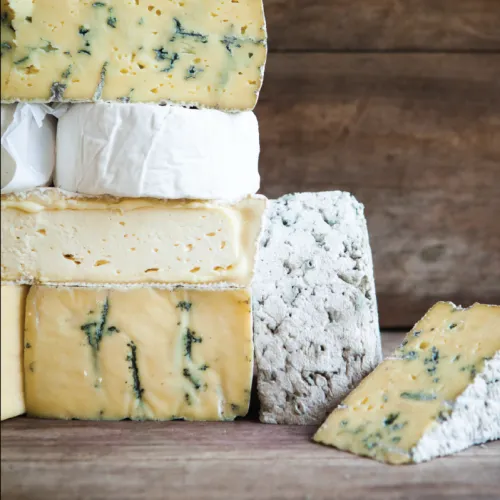
The single most distinctive food Lanarkshire has produced is Lanark Blue — a blue cheese made from ewes' milk. That combination is genuinely unusual in a British context. Most UK blue cheeses use cows' milk; ewes'-milk blues are rare enough that Lanark Blue stands apart not just within Scotland but across British cheesemaking as a whole.
The cheese draws on Lanarkshire's upland sheep-farming tradition. It is richer and more complex than a standard cows'-milk blue, with the slight sweetness ewes' milk often carries alongside the sharpness of the blue cultures. It isn't mild, but it isn't aggressive either — the balance makes it work well with something sweet on a cheeseboard. Our sheep's-milk cheese article covers the broader tradition of ewes'-milk cheesemaking in Britain, including how Lanark Blue is made and what to look for when buying it.
Lanark's market and how to find the food
Lanark has a long-running market tradition. The town's market remains one of the better places to find locally produced food — seasonal soft fruit and berries, meat from upland farms, and occasionally the cheese itself. Markets like this are where regional food identity tends to be most legible: you see what's actually being grown and raised nearby rather than what the supply chain has standardised.
Check current market days and times before visiting, as these can shift seasonally. The Clyde Valley also has farm shops and orchards worth stopping at if you're driving through — they give a clearer picture of what the valley produces than any list can.
What holds it together
Lanarkshire's food identity isn't built around a single flagship product. It's more layered: the soft fruit and orchard produce of the Clyde Valley, the sheep and beef of the uplands, a long-running market town, and one rare cheese. None of these is widely famous, but taken together they describe a place with a genuine agricultural character — one that rewards paying attention to what's in season and what's made locally.