A county shaped by its estuary
The Dee explains almost everything about Flintshire's food. The estuary stretches broad and tidal along the county's eastern edge, and for generations the communities along it have worked its sands for cockles and other shellfish. It is unglamorous, physical work — out at low tide, back before the water returns — and the cockles it produces have the clean, briny flavour that only wild-gathered estuary shellfish carry. This is not a supermarket product. It moves through local markets and stalls that have been in the same family for a long time.
The wider shellfish tradition on the Dee follows the same pattern: modest, practical, tied to the rhythm of the tide rather than to any food trend. That is partly why it tends to be overlooked in broader discussions of Welsh food, which often focus on the drama of the coast further west or the valleys to the south. Flintshire's estuary food is quieter, but no less rooted.
Salt marsh lamb from the estuary edge
Where the Dee sands give way to land, the grazing begins. The salt marshes along the estuary edge produce lamb with the same character that has made similar grazing elsewhere so prized: a faint mineral salinity in the meat, tenderness from animals covering varied, unimproved ground, and a depth of flavour that intensively farmed lamb does not replicate.
The mechanism is consistent wherever salt marsh lamb is found. Grass and herbs growing on ground regularly washed by tidal influence carry minerals into the animals that graze them, and this works through into the flavour of the meat. We have written elsewhere about Gower's salt marsh lamb and how that tradition earned protected status — Flintshire's estuary edge operates on the same principle, though without the same formal recognition. The lamb is worth seeking out through local farm shops and Mold market, where producers bring their animals' meat directly.
Border country and the dairy tradition
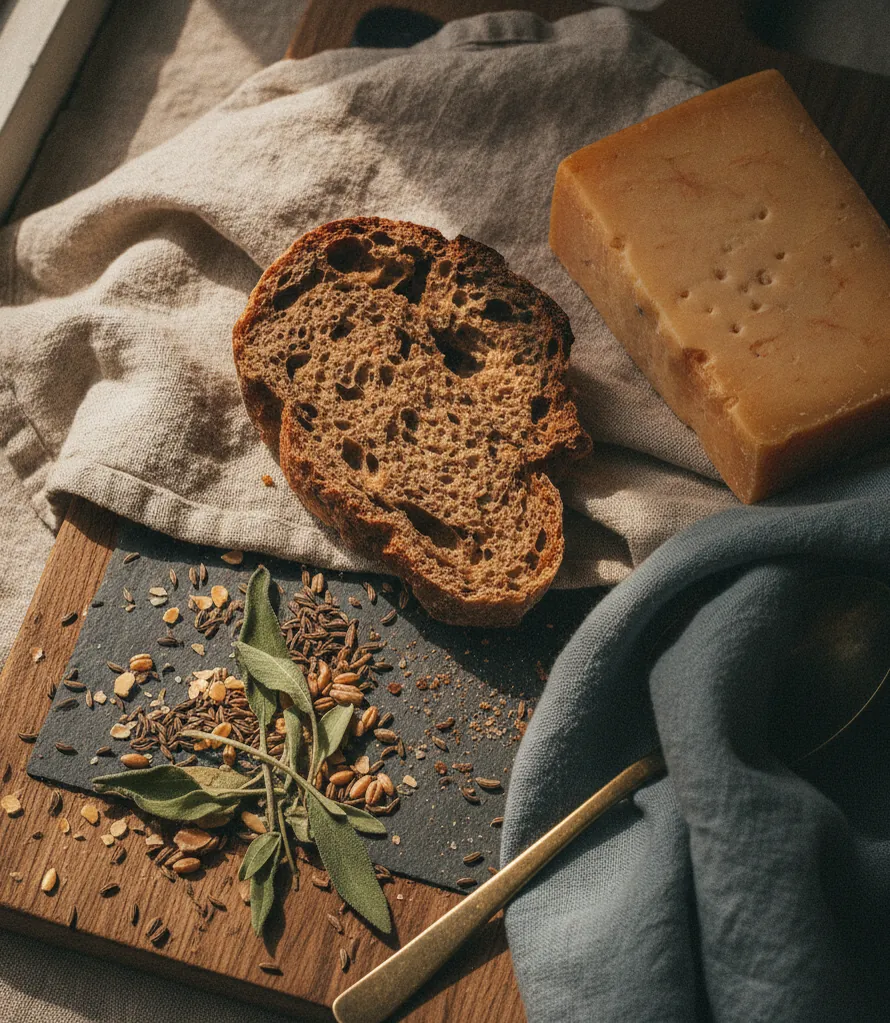
Move back from the estuary and Flintshire flattens into a lowland plain that merges almost imperceptibly into Cheshire. The border here has never been a hard culinary boundary. Dairy farming on both sides feeds into the same traditions, and Cheshire cheese — crumbly, slightly saline, one of Britain's oldest named cheeses — has long been as much a part of the larder in Flintshire farmhouses as anything distinctly Welsh.
That shared character is the honest story of border food. Good milk from well-managed lowland herds, modest arable farming on the plain, and the practical exchange of produce across a boundary that farmers and market traders have crossed for centuries: this is what the county's dairy and grain culture looks like. Farm shops around the Mold area reflect this mix — Welsh and border produce sitting alongside each other without any need to choose sides.
Welsh baking at the border
If the dairy tradition leans toward Cheshire, the baking pulls firmly back toward Wales. The border counties have long been where Welsh domestic baking culture — bara brith, Welsh cakes, the fruit-laden breads that sustained agricultural households — met the influence of English market towns just across the county line. In Flintshire, that tension is still legible. Welsh cakes cooked on a bakestone, bara brith made with tea-soaked dried fruit and a little spice: these appear on market stalls and at farmhouse teas in a way that is genuinely local rather than performed for visitors.
Mold and Holywell, the county's two main market towns, are where this comes together most clearly. Both have regular markets that function as proper local-buying infrastructure — the sort of place where a farmer brings surplus, a baker sells what they made that morning, and the range of produce reflects what is actually grown and made in the surrounding area. If you want to understand what Flintshire eats, these markets are the most direct route.
What holds it together
Flintshire's food identity does not resolve into a single famous product or a protected designation. It is a layered thing: estuary shellfish, salt marsh lamb, border dairy, Welsh baking — each element drawing from a different part of the county's geography and history. The Dee runs through all of it. The salinity in the cockles, the mineral depth in the marsh lamb, the particular character of the lowland soil — the estuary has been shaping what this county tastes like for a very long time.