A county at the meeting point
Stirling occupies one of the most geographically varied parts of Scotland. To the south, the land flattens into fertile carse — rich, heavy soils left by ancient estuaries — while to the north and west the ground climbs quickly into upland country, where rough grazing runs between lochs and moorland. Few Scottish counties contain both lowland arable farmland and true highland grazing within the same boundaries.
The River Forth winds through the heart of it, and the Forth valley has long been some of the most productive agricultural ground in Scotland. Dairy farming is well established here, the lush carse pasture lending itself naturally to cattle. Arable cropping — cereals, brassicas, soft fruit — forms part of the farming mix, particularly on the better-drained soils south and east of Stirling town.
Upland grazing
Move north into the Trossachs and the Loch Lomond fringe and the farming changes character entirely. This is sheep and beef country, where slower-growing, hardier breeds graze extensively. Upland-reared lamb and beef from this kind of terrain carry genuine depth of flavour — a consequence of varied, unimproved pasture and the unhurried pace at which the animals mature. It is the sort of meat that food-minded shoppers actively seek out when they can find a direct supply.
Game is also part of the picture. Deer — both farmed and wild — are present in the hills, and the broader ecosystem of mixed woodland and moorland supports grouse and other game birds. These are not niche curiosities; they are a natural output of land managed as it has been for generations.
Freshwater and coastal access
Stirling's relationship with water goes beyond the Forth. The county borders Loch Lomond, and several of the river systems draining the uplands are known for salmon and trout. Freshwater fish have a long history in this part of Scotland — smoked and fresh — though wild stocks are carefully managed and the fishing tradition is artisan rather than industrial.
The proximity to the Firth of Forth means shellfish and sea fish are not far away, even if Stirling is not a coastal county in the strict sense. Suppliers and markets draw from the wider central Scotland seafood network, and the range available to cooks and traders reflects that access.
The town and its food culture
Stirling town sits on a strategic crossing point that gave it importance for centuries, and market towns of that standing tend to develop a genuine food culture — regular markets, independent traders, a habit of sourcing from the surrounding countryside. The farmers' market scene across central Scotland is reasonably active, and Stirling draws producers from the area who might otherwise require a farm-gate visit to find.
Artisan food-making — preserves, baked goods, dairy products, cured meats — has grown across rural Scotland over recent decades, and the Stirling area is no exception. Small-scale producers working with local raw materials tend to cluster around places with accessible markets and a customer base that values provenance. Stirling has both.
What to look for
Stirling's food identity is defined less by one iconic product and more by the quality of its raw materials. Fertile lowland dairy and arable farming, upland lamb and beef, game from the hills, freshwater fish, and proximity to the Forth's wider seafood network give the area genuine range.
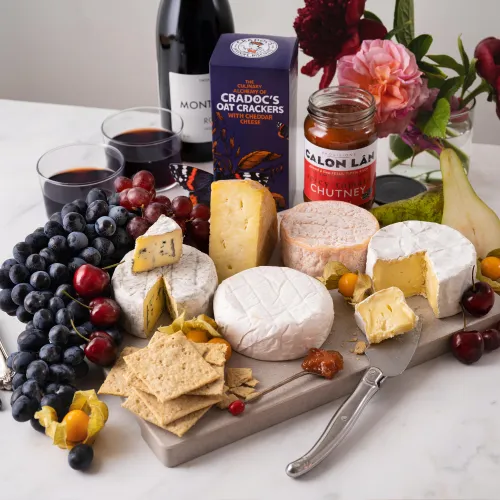
- Dairy and cheese — carse pasture supports good milk production, and smaller dairy producers operate in the region
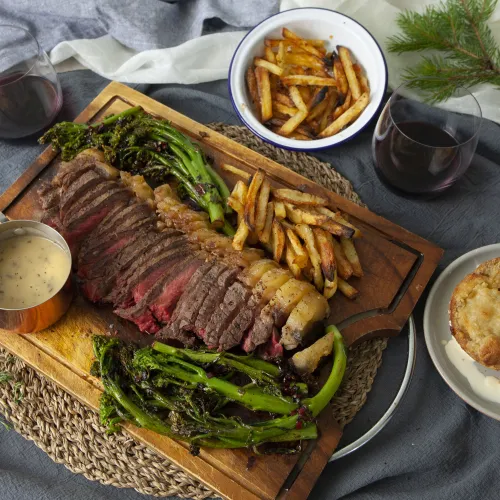
- Upland lamb and beef — slower-grown, from varied hill pasture, with the flavour that implies
- Game — deer, game birds and freshwater fish from the upland areas and river systems
- Soft fruit and seasonal produce — the Forth valley's arable land yields berries and brassicas through the warmer months
The best way to encounter Stirling's food is at source — at a local market, from a farm shop, or through one of the independent delis that stock produce from named suppliers in the area. The landscape is there in the flavour, if you know where to look.