A county of contrasts
Perth and Kinross stretches from the broad, fertile straths of Strathearn and Strathtay in the south to the high moorland and mountain passes of the southern Highlands in the north. That range — from sheltered farmland to exposed upland — means the county doesn't specialise in a single food tradition so much as hold several of them at once. It's this breadth that gives the local larder its character.
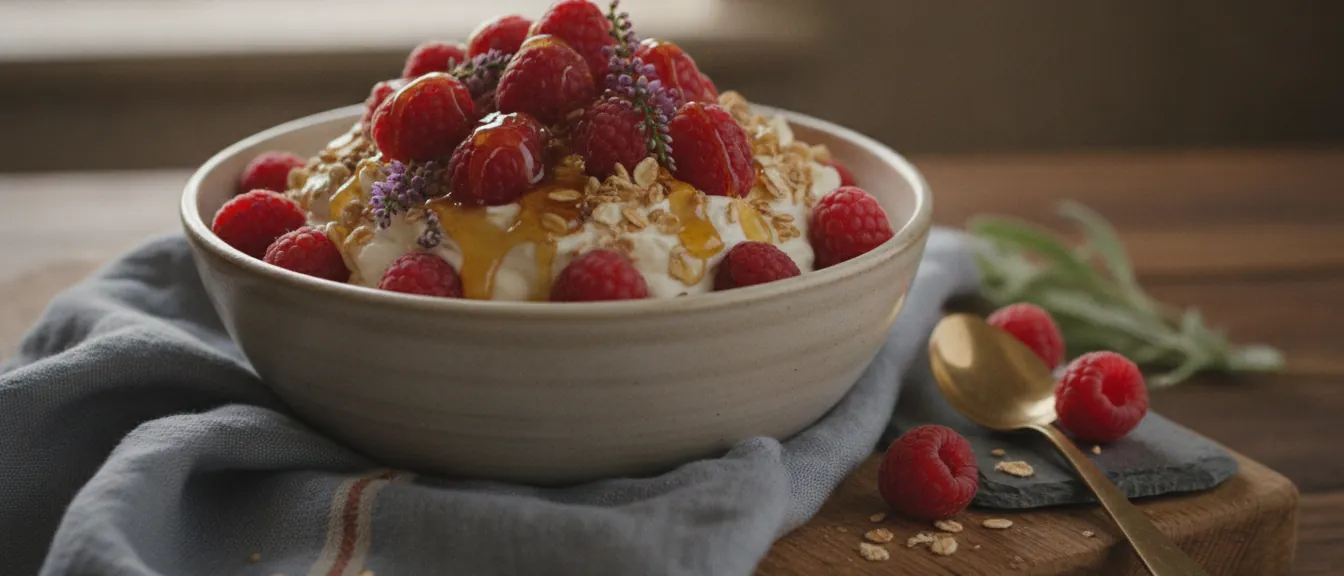
The lower ground, where the River Tay and its tributaries deposit deep alluvial soils, supports serious arable and soft fruit farming. The Carse of Gowrie, running along the southern edge of the county beside the Tay estuary, has long been considered some of the most productive agricultural land in Scotland. Strawberries, raspberries and other cane fruit grow here in quantity — the kind of growing conditions that made Perthshire soft fruit a summer fixture long before the term 'provenance' entered anyone's vocabulary.
Livestock and the uplands
Further north and east, the land rises and the farming changes with it. Upland grazing dominates, and the sheep and cattle reared on heather moorland and rough pasture tend to produce meat with the depth of flavour that comes from slow growth and a varied, natural diet. Aberdeen Angus cattle are well established across this part of Scotland, and while they aren't exclusive to Perth and Kinross, the county's grazings suit them well.
Game is woven into the food culture here in a way that's hard to separate from the landscape itself. Red grouse, pheasant, venison from both red and roe deer — these aren't specialty products in the artisan sense; they're simply what the hills produce. Driven grouse moors and deer stalking estates have shaped how land is managed across the northern part of the county, and the wild harvest that results finds its way into local butchers, hotel kitchens and farm shops with little ceremony.
The River Tay and its salmon
The Tay is one of the great salmon rivers of Britain, and that association runs deep in Perth and Kinross. Wild Atlantic salmon from the Tay carry a reputation built over centuries, though stocks and regulations around wild fish mean the trade is nothing like what it once was. The river remains central to the county's identity, even if salmon today is as likely to be discussed in conservation terms as culinary ones. Perth itself sits at the tidal limit of the Tay, and the city's relationship with the river — and the fish it holds — is one of the older threads in its food story.
Market towns and local trade
Perth is the county's main market town and commercial centre, and it functions as a hub for producers across a wide agricultural hinterland. Crieff, Blairgowrie and Aberfeldy each serve their own rural catchments, and between them they sustain a network of farm shops, weekly markets and independent food businesses that reflects the variety of what's grown and reared nearby. Blairgowrie in particular sits at the heart of the soft fruit country and has historically been associated with the berry harvest in ways that shaped local employment and seasonal life.
Farmers' markets in the county — Perth's is among the better known in Scotland — tend to bring together the full range: bakers, cheesemakers, meat producers, preserves, honey. The mix is a fair picture of what the surrounding land supports.
What ties it together
Perth and Kinross doesn't have a single flagship product in the way that, say, a coastal county might rally around its shellfish. What it has instead is range — the capacity to produce good soft fruit, upland lamb and beef, game, freshwater fish and arable crops within the same county boundary. For a food-minded visitor, that breadth is the point. The producers here are largely small-scale and shaped by specific bits of ground, which means the food tends to taste of where it comes from rather than of a brand.