A county shaped by its geography
Essex sits in a particular sweet spot for food. To the east and south, a long and intricate coastline of estuaries, creeks and tidal flats creates conditions that have sustained shellfishing for centuries. Inland, the land rolls into some of the most productive arable acreage in Britain — wide, relatively flat fields that suit wheat, barley and oilseed, with the kind of heavy, well-drained soil that East Anglian farmers have worked to their advantage for generations. Between those two worlds, pockets of pasture support dairy farming and cattle rearing. The result is a county that can credibly claim harvest from sea, field and farm within a relatively compact area.
The coast and its shellfish
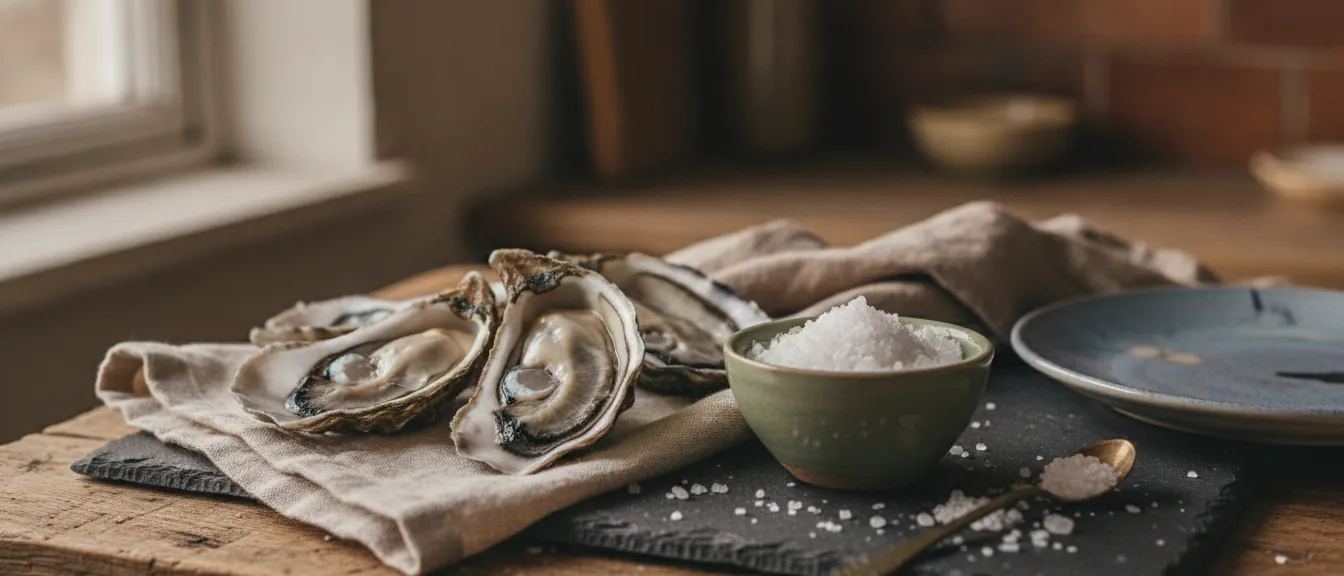
It is along the estuaries that Essex food heritage is at its most distinctive. The shallow, nutrient-rich waters off the Essex coast have long been associated with oysters and other shellfish, and the county's tidal rivers remain serious working environments rather than merely scenic ones. Native oysters in particular have a long association with this stretch of coastline — the cold, slow-growing conditions produce a flavour that is markedly different from the Pacific oysters now farmed more widely across Britain. Cockles, mussels and whelks have also been gathered here for as long as anyone can usefully trace, and the tradition of eating them simply — at a stall, with vinegar — is still very much alive in the county's market towns and coastal spots.
Arable Essex and what it supplies
The agricultural interior of Essex tends not to make headlines, but it underpins a great deal of what ends up on the table. Large-scale cereal growing dominates much of the county, supplying grain to millers and maltsters across the region. There is a growing number of smaller producers working within that arable landscape too — growers focusing on heritage grain varieties, market gardeners supplying local restaurants and farm shops, and orchardists making the most of the county's relatively warm, dry summers. Essex does not have the orchard density of Kent or Herefordshire, but fruit growing is part of the landscape in places, and soft fruit in particular thrives in the summer months.
Market towns and where to find the food
Essex has several substantial market towns that serve as practical gathering points for local produce. Colchester in the north of the county has the longest urban history in Britain and a food market culture to match. Maldon, on the Blackwater Estuary, is perhaps better known to cooks than most Essex towns — its name has become synonymous with flaked sea salt, harvested from the estuary's waters and used across restaurant kitchens and home larders throughout the country. That one product has given Essex a quiet presence on the shelves of delicatessens and food shops far beyond the county border. Beyond those two, farmers' markets and farm shops are distributed fairly widely, reflecting the density of agricultural activity rather than any single celebrated food trail.
How the county's food character is changing
Like much of the Home Counties fringe, Essex has seen a steady growth in small independent producers over the past couple of decades. Craft brewers, small-batch spirit makers, artisan bakers and specialist cheesemakers have all found a footing in the county, often drawing on local ingredients and selling through a mix of markets, farm shops and direct mail. The proximity to London matters: it creates a ready market for premium produce and enough consumer curiosity to support experimentation. What emerges is a food county that is less defined by one iconic product than by the honest productivity of its landscape — coastal, arable and pastoral all at once, and more varied than its reputation tends to suggest.