A coastline that feeds its people
The north Antrim coast is not ornamental. The waters off Portrush and Ballycastle have long supplied the region with crab, lobster, and fish landed by small fleets that still work close to shore. That proximity means seafood here tends to be genuinely fresh rather than shipped in from distant markets, and local restaurants and chippers reflect it. Ballycastle sits where the coastal landscape turns dramatic and the sea remains productive — the same geography that draws visitors also makes it a working fishing ground.
The Glens of Antrim, running down from the plateau to the coast, produce potatoes grown in this area for generations. Cool temperatures, good rainfall, and particular soils give them a floury, earthy quality that locals will defend against any rival. These are not a formal variety so much as a provenance — potatoes grown in a specific place under specific conditions, and noticeably different for it.
Dulse and yellowman
Two foods above any others define County Antrim's distinctiveness: dulse and yellowman. Dulse is dried purple seaweed, harvested from Atlantic rocks and eaten as a snack with an intensely savoury, almost smoky mineral flavour. It requires no cooking, just drying, and has been eaten along this coastline for centuries. Some compare it loosely to crisps; that undersells it. It is its own thing entirely.
Yellowman is a brittle honeycomb toffee — pale gold, deeply sweet, with a texture that shatters and then sticks. Both foods have long been sold together at the Ould Lammas Fair in Ballycastle, usually held in August. A rhyme linking dulse, yellowman, and the fair itself is so embedded locally that the foods and the event are inseparable in popular imagination. We have written separately about the Ould Lammas Fair for readers who want the full picture of that tradition. What matters here is that these are not novelty souvenirs but foods with a real history of being made and eaten in this county.
Soda bread and potato farls
No account of Antrim's food identity is complete without bread. Across the north of Ireland, soda bread and potato farls appear at breakfast as a matter of course. The Ulster Fry — which includes both — is a regional institution. The breads that anchor it are made with buttermilk and bicarbonate of soda; in their traditional form they are baked on a griddle rather than in an oven. The farl (from the Scots-Irish word for a quarter portion) is a flat, slightly doughy potato bread cooked on a dry pan. Both are still made domestically throughout Antrim, not just sold commercially, and the best versions remain homemade.
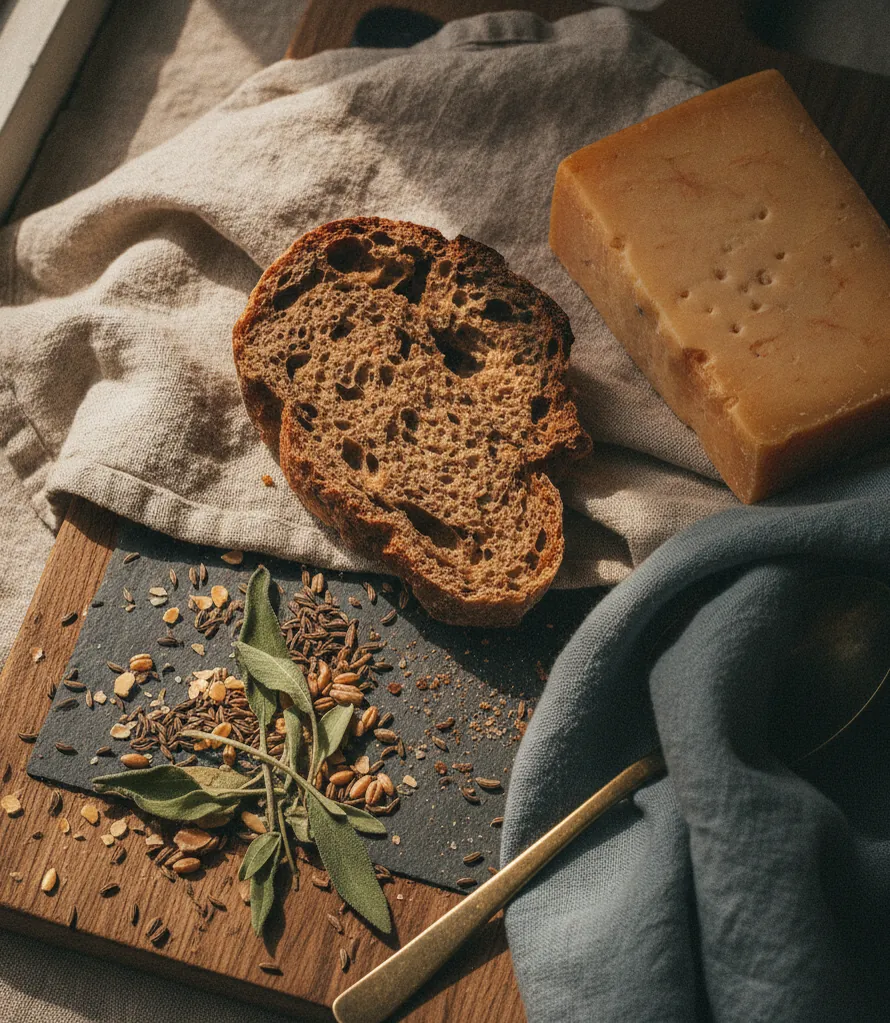
These breads matter beyond breakfast. Soda bread with butter and a piece of good local cheese, or a farl alongside smoked fish, illustrates how this food culture actually operates — practical, unfussy, rooted in what the land and sea produce.
Bushmills and the whiskey question
Old Bushmills Distillery on the River Bush is commonly described as the world's oldest licensed whiskey distillery, a claim resting on a distilling licence said to date to 1608. That claim is contested — definitions of continuous operation, and who held the licence in what form, are disputed by rivals — but the age of the site and the continuity of distilling in the area are not seriously in doubt. Irish whiskey, distilled three times and unpeated, has a lighter and rounder character than most Scotch; Bushmills produces single malt expressions shaped by local water and the triple-distillation process.
The distillery is open to visitors, and the town of Bushmills is modest in scale, which means the operation remains close to its surroundings rather than overwhelmed by them. Whatever the precise historical record, the whiskey produced here is rooted in this part of County Antrim, and that connection to place is what earns it a place in the county's food identity rather than just on a famous label.
How these things fit together
Running through all of it — the seaweed, the toffee, the coastal fish, the Glens potatoes, the griddle bread, the whiskey — is a food culture that developed in response to what was available. The north Antrim coast and the Glens are not an easy landscape. The foods that emerged from it are direct: strong flavours, durable traditions, no particular interest in refinement for its own sake. That quality, more than any single ingredient, is what makes County Antrim's food worth seeking out.