A county shaped by its edges
Within twenty minutes of Swansea's centre, terraced streets give way to the Gower Peninsula and, to the north, the Brecon Beacons. That range of terrain defines the county's food character: coastal, pastoral and upland all at once, each producing something quite different.
The coastline does much of the work. Tidal flats, estuaries and cold-water shallows around Gower and Swansea Bay have long supported shellfishing, and the sea still matters here in ways it does not in more landlocked Welsh counties. Inland, the farmland leans heavily towards grazing rather than arable — the climate is mild and wet enough for good grass, which suits dairy herds and the slow-growing lamb that upland Welsh farming is known for across the country.
Laverbread and the seaweed tradition
If Swansea is famous for a single food, it is laverbread, and that fame is deserved. Made from Porphyra umbilicalis, the dark purple seaweed harvested from Welsh shores, laverbread is nothing like its name suggests: a cooked, purée-like paste with a deep, mineral, briny flavour. Traditionally it is rolled in oatmeal and fried alongside bacon and cockles as part of a Welsh breakfast, though it appears in other preparations too.
Swansea Market has long been one of the best places in Britain to find laverbread sold fresh. Most people outside Wales encounter it only in tins, where the flavour flattens considerably. The fresh version is darker, more pungent, with a texture that makes clear it started as a living thing pulled from rocks at low tide.
Cockles form a natural pairing. The cockle beds around Penclawdd on the north Gower coast have supplied south Wales markets for generations, and local cockles remain a fixture on stalls throughout the city. Eaten simply — vinegar, brown bread — they have an unpretentious directness that fits the wider character of Swansea's food.
The market as larder
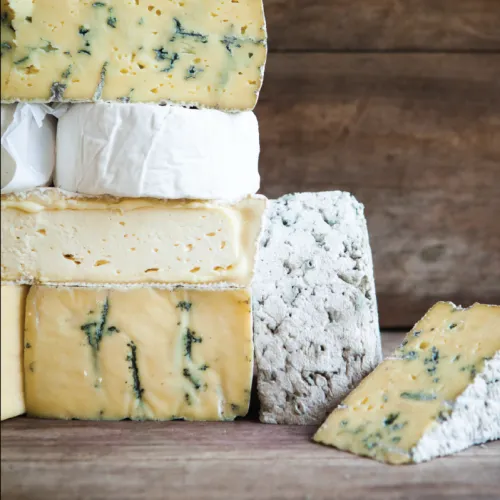
Swansea Market is one of the largest indoor markets in Wales and remains genuinely functional rather than purely touristy. Alongside laverbread and cockles, you will find salt marsh lamb, Welsh cheeses, bara brith and other traditional baked goods, and produce that reflects the county's mixed farming hinterland. Operating as a working everyday market rather than a weekend artisan event is precisely what keeps its food offer honest.
Salt marsh lamb repays attention. Sheep grazed on coastal salt marshes develop a subtly different flavour: the herbs and salt-tolerant grasses they eat work their way into the meat, giving it a mild, aromatic quality that needs very little done to it.
Dairy and the farming hinterland
North and west of the coast, the land opens into green, rain-fed pasture that Wales does exceptionally well. Dairy farming is significant across this part of the county. Swansea does not have the concentration of named farmhouse cheesemakers found in some other Welsh regions, but the milk supply underpins a broader Welsh dairy tradition that reaches the area through its markets and independent retailers.
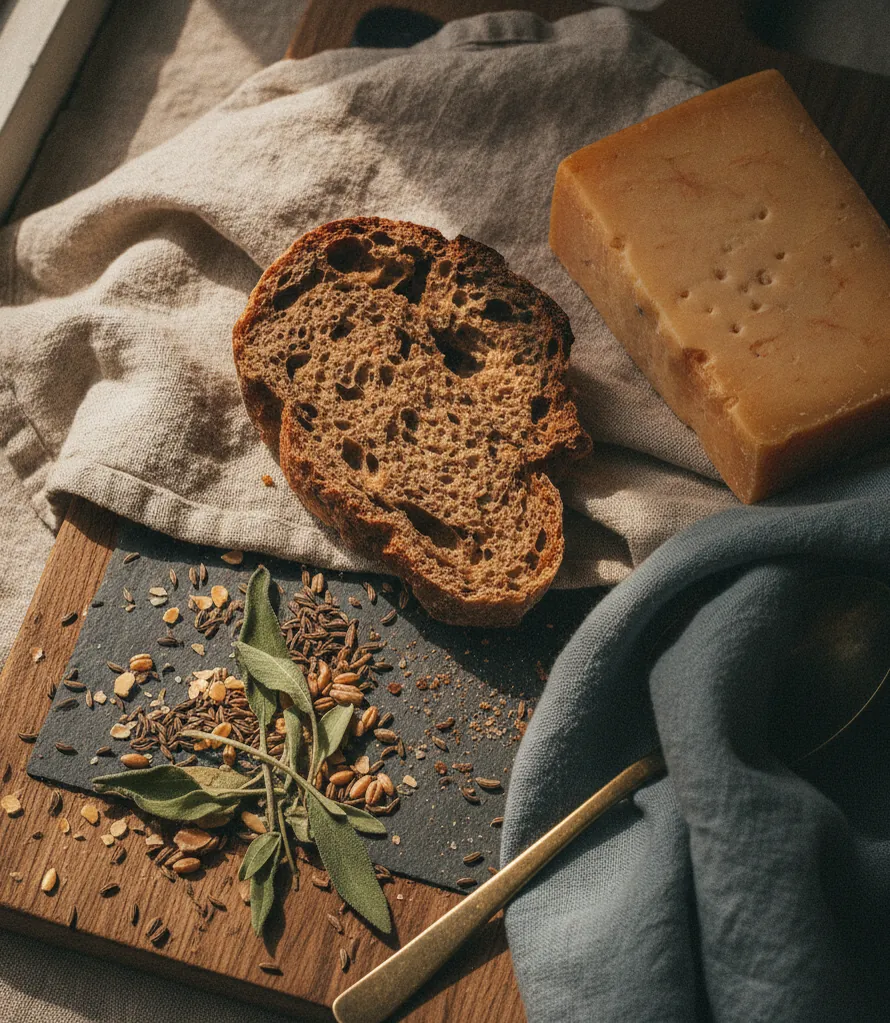
Bara brith — spiced, tea-soaked fruit bread — is as much a part of Swansea's baking tradition as anywhere else in Wales. Welsh cakes, cooked on a flat iron griddle and eaten plain or with butter, appear on market stalls and in bakeries throughout the city. Neither is unique to Swansea, but both are made and sold here with the matter-of-fact regularity of genuine local foods rather than heritage novelties.
What to look for when you visit
The most direct way into Swansea's food culture is through its market, ideally on a weekday morning when stallholders are most attentive. Fresh laverbread and cockles are the things hardest to find in good form anywhere else. Beyond the market, the Gower Peninsula has a growing number of small producers — farm shops, small-scale smokehouses, growers working the milder coastal microclimate — and the peninsula rewards unhurried exploration rather than a fixed itinerary.
What Swansea's food tradition shares with much of Wales is a preference for directness over elaboration. The best of it is rooted in what the land and sea produce, and that makes it more durable than it might first appear.