A county that made its name in cheese
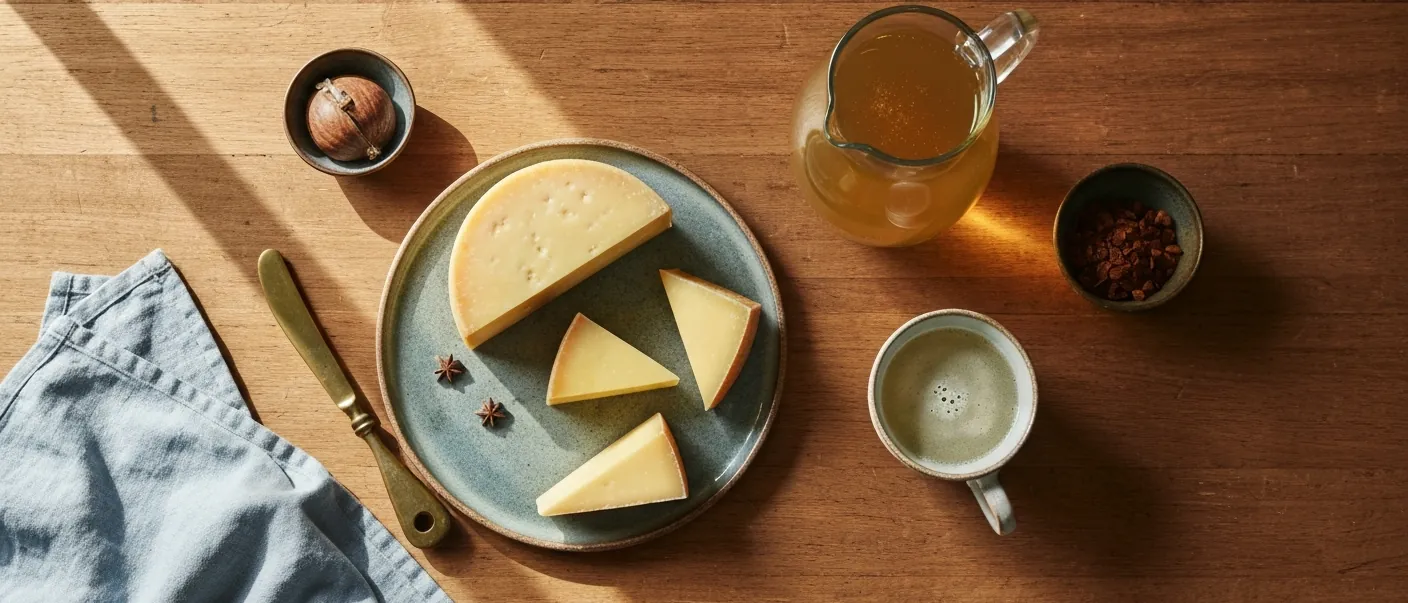
Cheddar is the most copied cheese style on the planet, yet the original still comes from the village that gave it its name. The Cheddar Gorge in Somerset's Mendip Hills provided cool, humid caves where wheels of cheese were left to mature at a naturally regulated temperature. That environment — limestone caves, not a factory or controlled unit — shaped both the texture and the character of the cheese.
The broader designation of West Country Farmhouse Cheddar carries PDO status, meaning it can only be produced in Somerset, Devon, Dorset, or Cornwall by traditional methods. Within Somerset, the craft of making a properly aged, cloth-bound Cheddar remains very much alive. The difference between one of these and a mass-produced block is substantial: the rind, the crumble, the long finish that proper ageing produces. The county's cheesemakers work to standards most industrial producers cannot replicate.
Cider, scrumpy, and something stronger
Somerset sits at the heart of England's cider-making tradition. Orchards of bittersweet and bittersharp apple varieties — tannic, sharp, and astringent, quite unlike eating or cooking apples — spread across the county's levels and hillsides. These qualities make them well suited to fermentation.
Scrumpy represents the rougher, farmhouse end of Somerset cider: flat, cloudy, potent, made in small batches with no particular concern for consistency. It is a genuinely distinct tradition — cider made for drinking locally, often from a single farm's blend, with no apology for its strength or lack of polish.
Beyond cider, Somerset produces Somerset Cider Brandy, which holds PGI status. Made by distilling local cider and ageing it in oak, it has more in common with Calvados than with most British spirits. The ageing softens the raw apple character into something rounder and more complex. It has a small but devoted following.
The land behind the food
The Somerset Levels — the flat, waterlogged plain between the Mendips and the Quantocks — have shaped the county's food culture as much as its hills. Dairy thrived here because the land could support rich grazing even when too wet for arable farming. That is why Somerset became cheese and butter country, and why its food identity remains overwhelmingly built around milk and orchards.
The county's mild, wet climate suits the slow grass growth that good dairy depends on. Cattle graze on permanent pasture for much of the year, and that diet is reflected in the depth of flavour in the milk — and therefore in the cheese, butter, and cream produced from it.
Glastonbury and the independent food scene
Glastonbury has long attracted visitors interested in provenance and small-scale production, and the town's food scene reflects that. Around the festival season, independent producers and market traders gather here in a way that feels more concentrated than in many comparable Somerset towns. The food fringe around the famous festival draws producers from across the region, offering a solid cross-section of independent Somerset food and drink. It is not a fixed, year-round institution, so check what is on before visiting with food in mind — usually held in June, but confirm dates on the official site.
Eating Somerset's specialities
There is a logic to combining Somerset's produce that goes beyond the obvious. A properly aged farmhouse Cheddar, a glass of dry Somerset cider, some good bread — these things were made in the same landscape and sit well alongside one another. The flavours are complementary because the underlying ingredients share the same soil and climate.
Cider brandy is often taken as a digestif or used to dress a sharp apple dish. West Country Farmhouse Cheddar with PDO status is available from specialist cheesemongers across Britain, and a growing number of Somerset cider makers and cider brandy producers sell directly — usually the most reliable route to something made at a standard that supermarket ranging rarely reaches.