The potato that earned protected status
Pembrokeshire early potatoes hold PGI — Protected Geographical Indication — status, meaning the name is legally tied to a defined area and no potato grown elsewhere can use it. The mild, frost-light winters of the far south-west Welsh coast allow growers to get seed into the ground earlier than almost anywhere else in Britain. The resulting potato comes out of light, sandy soils with a thin, papery skin and a flavour that fades fast once lifted. The point of them is freshness — eaten close to harvest, simply, with the skins left on.
The season runs roughly from late spring into early summer. Buying from a local farm stall or market is the surest way to get the real thing at its best; once longer supply chains enter the picture, that edge is easily lost.
Farmhouse cheese from working farms
Caerfai Farm, near St Davids, makes cheese from the milk of its own herd — a straight-line connection between animal, land and finished product that defines what farmhouse cheese is supposed to mean. The cheese tends toward the traditional Welsh style: firm, close-textured, in the broad family of Cheddar, with its own character shaped by the pasture and the specific culture used.
Caerfai is not the only producer doing this in the county. A small number of farms have continued or revived on-site cheesemaking, each working with their own milk and, in several cases, with organic certification. The results are not uniform — which is exactly the point.
Milford Haven and the sea's long reach
Milford Haven was once among the most significant fishing ports in Wales, and the town's layout and architecture still reflect an industry that shaped it deeply. The herring trade was historically central: salted and smoked fish moved out of the port in large volumes, and the natural deep-water harbour made it a base for vessels working further offshore.
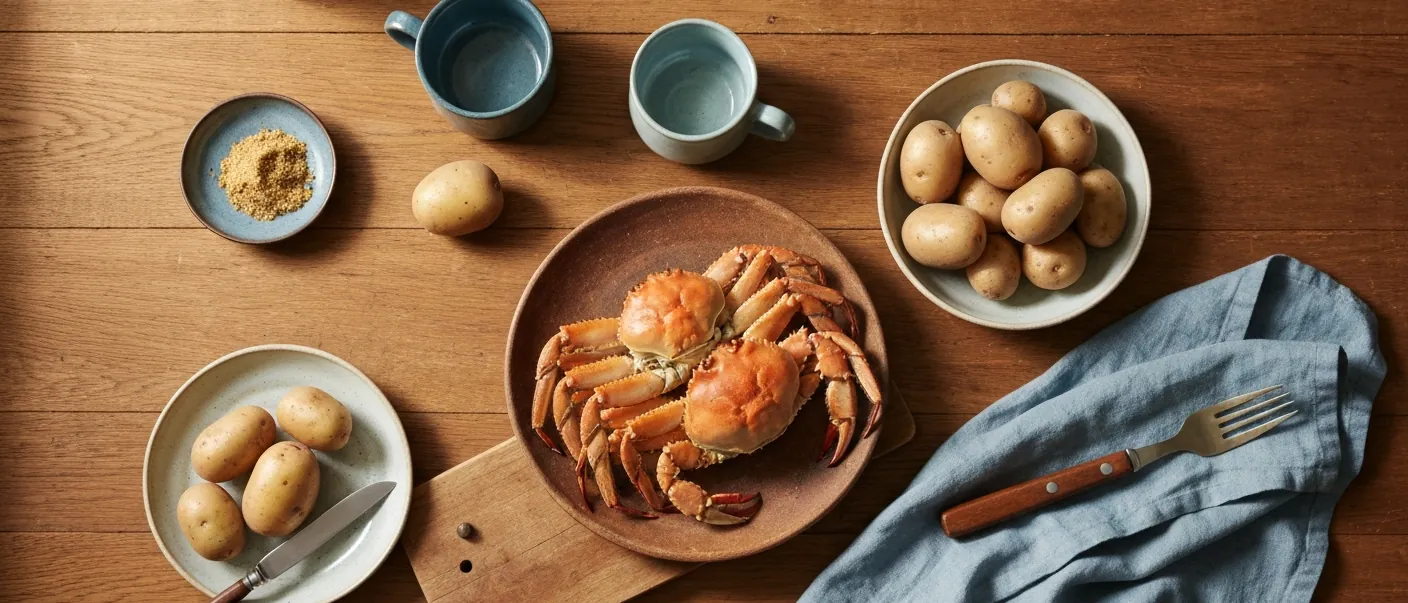
Fishing has contracted substantially since its peak, as it has at most British ports. The connection to the sea remains real, however. Local crab and lobster from the rocky inshore waters reach tables through direct sales from fishermen, fishmongers who know their suppliers by name, and restaurants that make short provenance a deliberate part of what they offer.
Salt and seaweed from the Atlantic edge
The revival of artisan sea salt production in Britain has found a natural home on the Pembrokeshire coast, where clean Atlantic water and a genuinely remote landscape have attracted small-scale producers working without industrial shortcuts. Pembrokeshire sea salt is typically harvested in small batches, with the mineral character of the water coming through in the finished flakes.
Seaweed has moved, in recent years, from the margins to something approaching mainstream interest. Laverbread — laver seaweed cooked down to a dark, intensely savoury purée — is the Welsh coastal tradition most people encounter first, and it remains a genuine part of local food culture here rather than a nostalgic curiosity. Traditionally eaten with bacon and cockles at breakfast, it has also found its way into the kitchens of chefs working with local ingredients more broadly. Other seaweed varieties are now being harvested from Pembrokeshire waters and dried, milled or prepared for sale — an extension of a foraging tradition that never entirely disappeared, even when it fell out of fashion.
What holds it together
Pembrokeshire's food character is not the product of a single defining ingredient or industry. It comes from a mild maritime climate, a farming landscape that has kept small-scale mixed production alive longer than many parts of Britain, and a coastline that offers both wild harvest and the conditions to do things differently. The PGI potato and the farmhouse cheese sit alongside the smoked fish history and the seaweed revival without contradiction — all are expressions of the same place, read through different eras and different hands.