The cake that predates the biscuit tin
Banbury cakes are one of those regional oddities that most people have heard of and remarkably few have eaten. Oval, flaky, and filled with spiced dried fruit — currants in particular — they bear a family resemblance to an Eccles cake but are older in recorded tradition and distinctly their own thing. The pastry is enriched and the filling leans into mixed spice and peel, giving them a warmth that suits a cold market day rather better than a summer picnic.
Banbury, in the north of the county, has been associated with these cakes for centuries. They were sold from doorways and market stalls long before modern food retail existed, and the town's name became so attached to them that any version made elsewhere feels like an imitation. Today they are genuinely hard to find outside Oxfordshire, which makes tracking down a good one feel worthwhile rather than merely nostalgic.
A sausage built differently
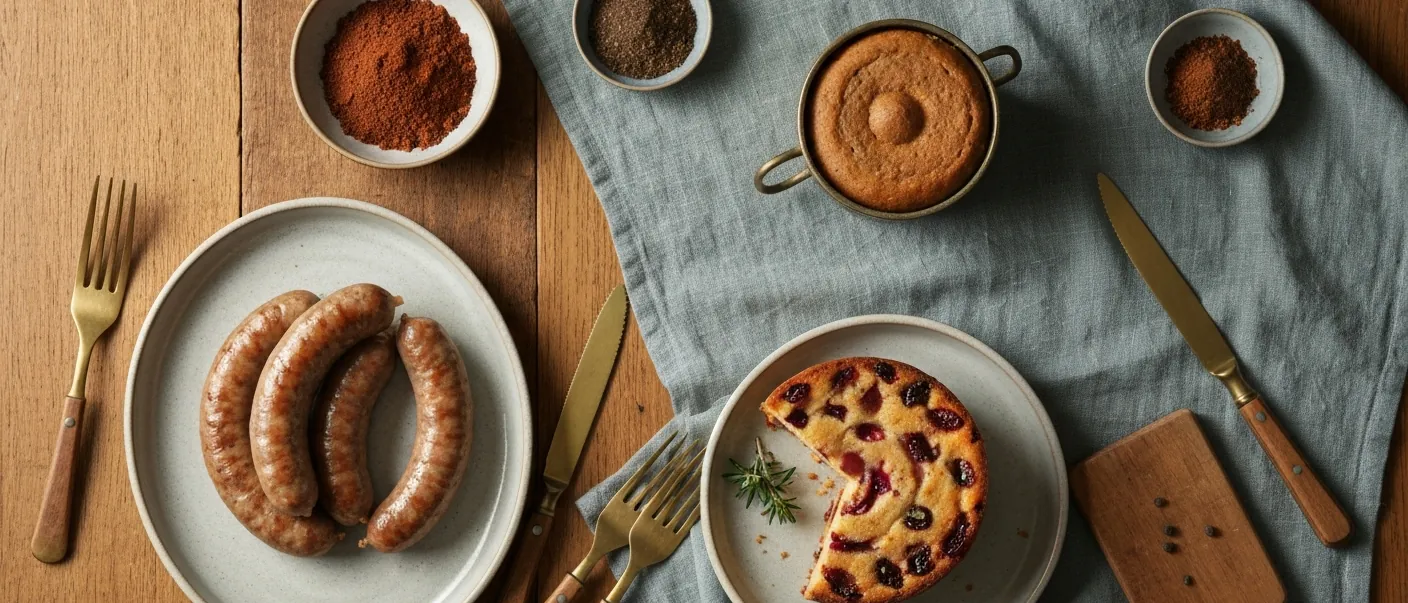
The Oxford sausage is unusual in British charcuterie because it is traditionally made without a skin. The mix — pork, veal, suet, and herbs including sage, thyme, and sometimes marjoram — is shaped by hand and cooked as an elongated patty. The veal is key: it lightens the texture and gives the finished sausage a delicacy that a straight pork banger lacks.
Very few producers still make them to the traditional recipe. Covered market butchers in Oxford have long been the place to find them, and the market itself — a working food market in the centre of the city — remains one of the better reasons to visit Oxford beyond the colleges. It is worth checking with a specific butcher before making a special trip, but the market's food culture in general is robust.
Marmalade and Frank Cooper's
Oxford's connection to marmalade is more specific than a general fondness for breakfast preserves. Frank Cooper's Oxford Marmalade has a well-documented history tied to the city. The thick-cut, slightly bitter style associated with it became a benchmark for British marmalade as the preserve moved from homemade to commercial production. Coarse shred and a balance of bitter peel against sweetness are its hallmarks — this is emphatically not a smooth or gentle marmalade.
Cooper's wife is credited with beginning production, with Frank Cooper's shop in Oxford serving as the commercial outlet. The marmalade grew famous enough to travel — reportedly carried on polar expeditions — and the name remains strongly associated with Oxford even though production has long since moved away from the city. For anyone interested in British preserves, Oxford marmalade is a useful reference point because it represents a style rather than just a brand: dark, chunky, unapologetically bitter. Many independent producers across the county and beyond still make something they would describe as being in the Oxford style.
Where to find these things now
Oxford's covered market is the most reliable starting point for anyone wanting to eat through the county's food identity. It has been a working market for well over two centuries and still functions as one — fishmongers, butchers, bakers, and cheesemongers alongside newer food businesses. It rewards a slow walk and a conversation with whoever is behind the counter.
Beyond the city, Oxfordshire's market towns each have their own food scenes, and farmers' markets across the county tend to be well-stocked with local producers. Banbury is the obvious destination for anyone serious about a proper Banbury cake, though availability varies by producer and season — as with most genuinely regional things, it pays to check before you travel.
What these specialities share is that none of them can be easily relocated. An Oxford sausage made in Leeds is just a herby sausage. A Banbury cake made in Bristol is missing the point. That specificity of place is increasingly rare in British food, which is exactly why these traditions are worth seeking out.