A county with real food identity
North Yorkshire is large enough to contain genuine contrasts — high moorland, river dales, a working coastline — and its food reflects that variety rather than presenting a single signature dish. What ties it together is a tradition of making and growing things properly, often in the same places, by the same methods, for a very long time.
Wensleydale: the dale's most famous export
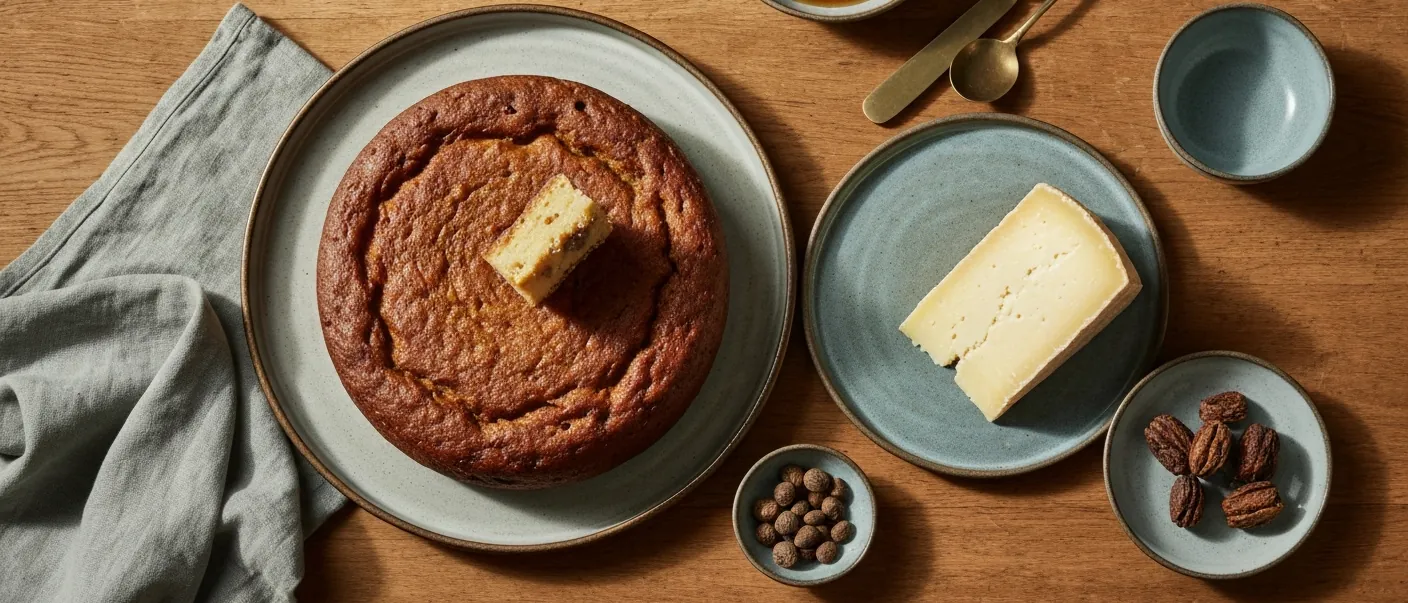
Wensleydale cheese carries a Protected Geographical Indication, which means the name is legally tied to its place of origin. The Hawes Creamery in upper Wensleydale is the heartland of production, and the cheese made there has a character that owes something specific to the local milk and the dale's cold, damp air. Young Wensleydale is crumbly and moist, with a clean, milky acidity and just a suggestion of honey — qualities that distinguish it clearly from the sharper, drier crumbles of Lancashire or Cheshire. It can be aged, smoked, or blended with fruit, though purists tend to favour it plain, eaten with fruitcake in the Yorkshire manner.
The creamery's survival has been bound up with local determination as much as commercial sense. That context matters when you are buying it: choosing genuine Hawes Wensleydale supports a living craft in the place it belongs.
Whitby kippers and the smoking tradition
Whitby's fishing heritage runs deep, and smoked fish remains one of its most tangible expressions. Kippers — herrings split and cold-smoked over oak — have been cured along this coastline for generations. The smoking process concentrates the flavour, giving the finished fish a rich, amber colour and a savouriness that pairs well with butter and good bread, or with scrambled eggs in the classic British fashion.
The best Whitby kippers are still produced by small, traditional smokehouse operations rather than large industrial curers. Seek them out from a fishmonger who can confirm the source — there is a considerable difference between a properly smoked kipper and a dyed, quickly processed imitation.
Fat rascals and the tea-room tradition
Yorkshire has always had a serious relationship with its tea rooms, and fat rascals are among the most characterful products of that culture. Somewhere between a scone and a rock cake, they are thick, fruited and generously sized — the kind of thing that requires a proper plate rather than a napkin. Traditionally decorated with glacé cherries and blanched almonds pressed into the top before baking, they have a slightly crisp exterior that gives way to a dense, spiced crumb.
Certain North Yorkshire tea rooms have become particularly associated with fat rascals, and the rivalry over who makes them best is taken with affectionate seriousness. They are most often eaten simply, perhaps with clotted cream, and always with tea — the ritual matters as much as the bun.
Malton and Masham: two towns worth knowing
Malton has earned a reputation as a food town, drawing together independent producers, a regular food market and a concentration of small artisan businesses within a compact market-town setting. It is the kind of place where you might find a good charcutier, a serious bakery and a cheese merchant within easy walking distance — rare in a town of its size.
Masham, further into the Dales, is known for its brewing traditions. Two breweries of distinct character operate in and around the town, and the local beer culture is part of the social fabric in a way that feels genuine rather than manufactured for tourism. Ales from this area tend to be well-structured and rooted in British brewing convention: not experimental for its own sake, but made with evident care.
Both towns repay a visit if you are travelling through the county with food in mind. Markets and festival events run at various points through the year; checking locally before you travel is always wise, as dates and formats shift.
Why provenance matters
North Yorkshire's food specialities are not simply regional curiosities or marketing handles. They are the result of specific landscapes, specific climates and, in most cases, specific communities that have maintained a practice over time. The PGI status on Wensleydale cheese is the formal expression of something that was always true: geography shapes flavour, and the name on the label ought to mean something.
Buying these foods from their source — or from retailers who can trace them credibly — is the most direct way to support the people and places that keep them alive. It also tends to produce the better plate.