Why Kent earned its reputation
The Garden of England is not mere flattery. Kent's chalk and clay landscape, angled towards the Continent and warmed by longer summers than most of Britain, has made it hospitable to crops that struggle elsewhere. The regional larder has real depth: not just good versions of familiar things, but ingredients specific to this corner of the south-east in ways that shape how they taste.
What follows is the handful of specialities that define Kent's food identity — the ones worth seeking out if you care about where flavour comes from.
Hops, oast houses and Kentish ale
The oast house — that distinctive conical-roofed kiln built to dry hops after harvest — is the county's most recognisable agricultural silhouette. Kent supplied the bulk of Britain's hop crop for generations, and the landscape of the Weald and the valleys around Faversham still carries the physical memory of that trade, even where hop gardens have given way to other uses.
Kentish ale holds Protected Geographical Indication status, tying the designation legally to the county's hops and the character they lend to the beer. The hops grown here have traditionally been prized for a clean, floral bitterness that shaped the style of English ale long before hop provenance became fashionable. A bottle specifying Kentish hops on the label is one where the geography is doing real work in the glass.
Cobnuts and cherries
The Kentish cobnut is a cultivated variety of hazel, grown in traditional orchards called plats. Fresh cobnuts — available for a short window in late summer and early autumn — have a milky, slightly sweet flavour quite unlike the dried hazelnuts sold in supermarkets. The pale, papery skin softens the taste considerably when the nut is fresh. Once dried, they become richer and more intensely nutty.
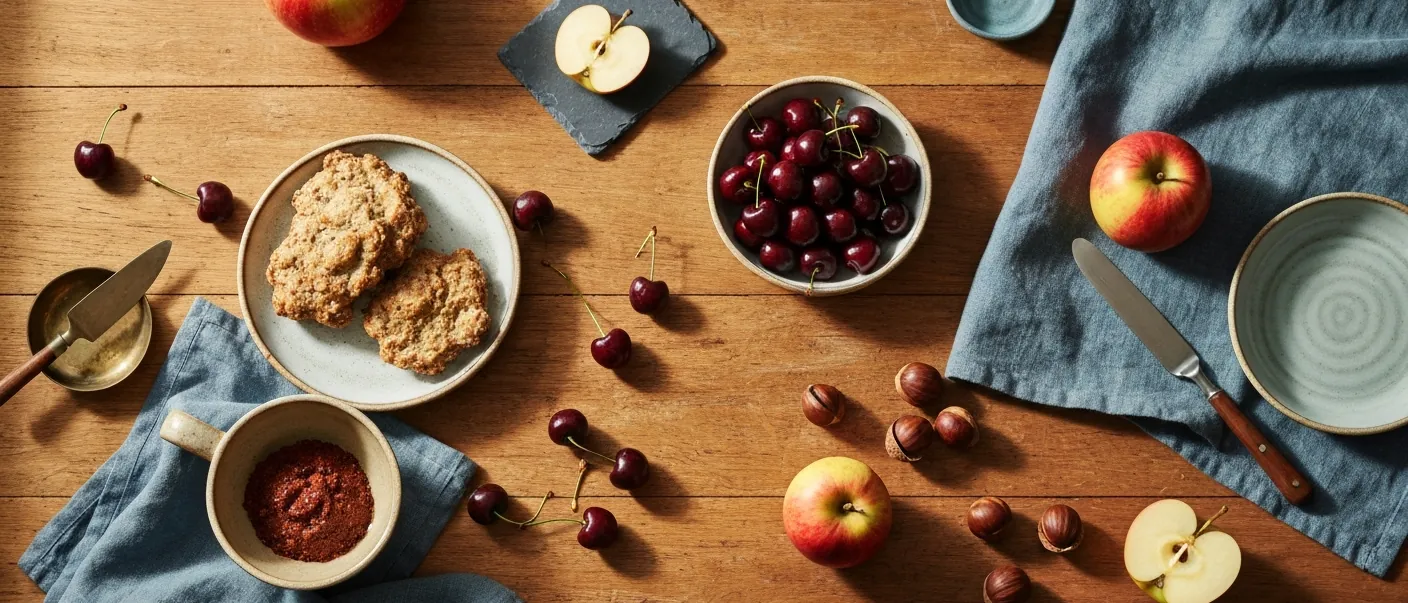
Cherries have a longer claim on Kent than almost any other fruit. The county's orchards were once so extensive that they shaped the rural economy for miles around, with whole communities involved in the harvest. Growers have adapted as tastes and economics shifted, but traditional Kentish varieties — often darker and more sharply flavoured than the large commercial cherries dominant in shops — are still grown and worth tracking down at farm shops and markets during the brief summer season.
Whitstable oysters
Few British food products carry as much accumulated reputation as the Whitstable oyster. The town on the north Kent coast has been associated with oyster cultivation since Roman times. The cold, tidal waters of the Thames Estuary give native oysters a briny, mineral quality that distinguishes them from farmed oysters produced elsewhere. They are traditionally eaten raw with nothing more than a squeeze of lemon — the most direct way to taste what the place itself contributes.
The season for native oysters follows the old rule of months containing an 'r', broadly September through April, though precise availability depends on each year's conditions. Rock oysters from Whitstable are available more widely across the year. The town's oyster festival is usually held in summer; check the official site for this year's dates.
Romney Marsh lamb
The Romney Marsh — that flat, sea-washed expanse along the Kent and East Sussex border — has been sheep country for as long as records exist. The Romney breed developed here is exceptionally hardy, suited to the damp, salty grazing of the levels. Lamb raised on the marsh carries a subtle savouriness that comes directly from the maritime grasses and plants the animals eat. It is clean and distinctly flavoured rather than gamey, and it repays careful sourcing over buying whatever is nearest.
Romney Marsh lamb tends to be available through specialist butchers and farm shops in the region, and increasingly through mail-order producers supplying outside the county. Where the provenance is specified, it is worth the attention.
_qb8b-wg(1)_chba-0y_JPGq80.webp)