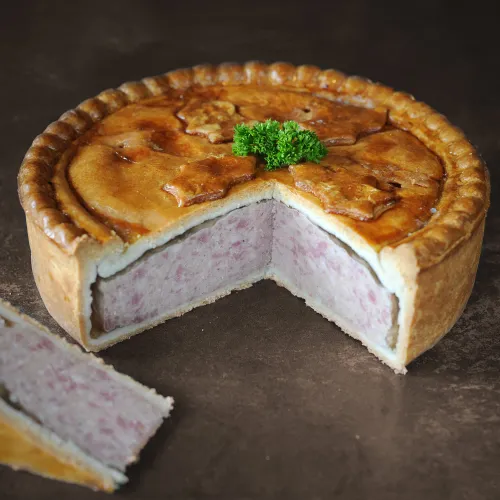
A city-region with a farming backdrop
Greater Manchester sits in the North West of England, and its food character is shaped by geography more than most people expect. To the north and east, the land rises towards the Pennines — upland grazing country where sheep have been kept for generations and the climate is too wet and cool for most arable crops. To the south and west, the terrain softens into the Cheshire Plain, one of England's great dairying landscapes. That proximity to serious dairy farming has always fed the region: good milk, cream and butter within easy reach of a large population.
Manchester grew as an industrial city, and with that came a working food culture — unpretentious, sustaining, shaped by the needs of people doing physical work. Market halls became the practical heart of how the city ate, and the tradition of buying food from traders who knew their suppliers personally has quietly persisted.
Markets as a way of life
Across the boroughs — from Bolton and Bury to Stockport and Wigan — market towns have long been central to how food moves from producer to plate. Bury Market is perhaps the most widely known, with a reputation that reaches well beyond the region. It is the kind of market where black pudding is not a novelty ingredient but simply part of the weekly shop, quality judged by regulars who have been buying from the same stalls for years.
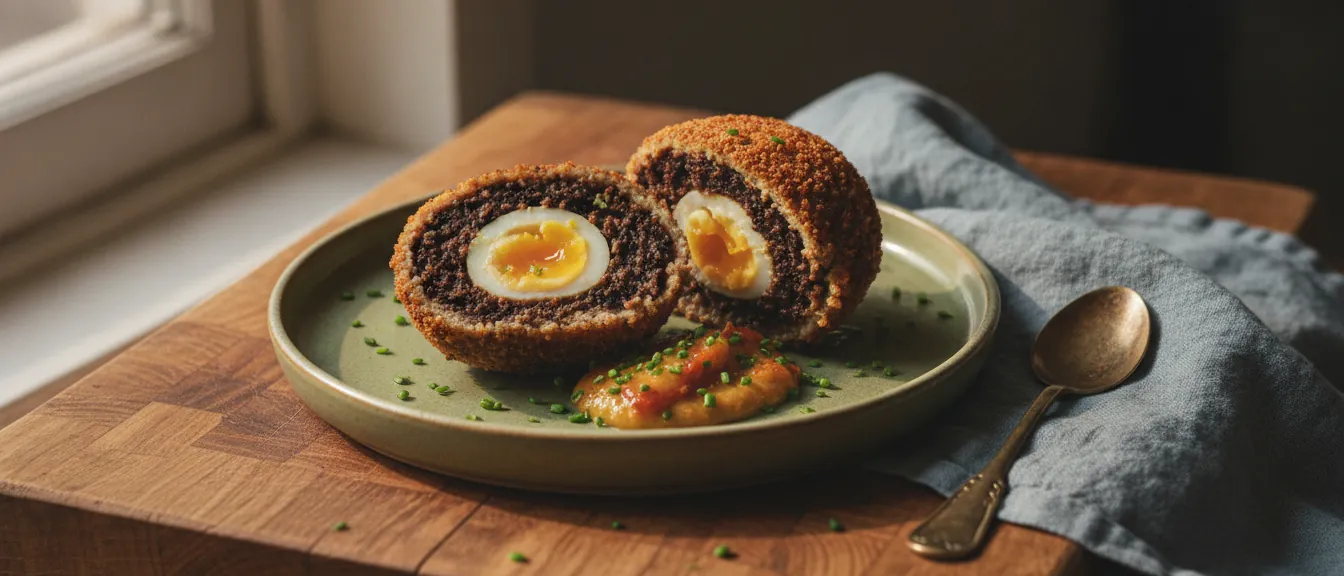
Black pudding is probably the food most closely associated with this part of the North West. Made from pork blood, fat, oatmeal and spices, it has a dense, savoury character quite unlike the versions found further south. Here it is eaten without apology: fried as part of a full breakfast, eaten cold from the hand at a market stall, or served alongside other components of a northern plate with no need for reframing. Recipes are kept close, and the result is a product with a strong regional identity.
The dairy influence
Because the Cheshire Plain begins almost at Greater Manchester's southern edge, dairy has always been the dominant agricultural influence on the region's larder. Farms benefit from reliable rainfall and rich pasture, and the tradition of using that milk well runs through the food culture here. Independent dairies and small-scale producers working with local milk are part of the regional landscape, even if they rarely seek the spotlight.
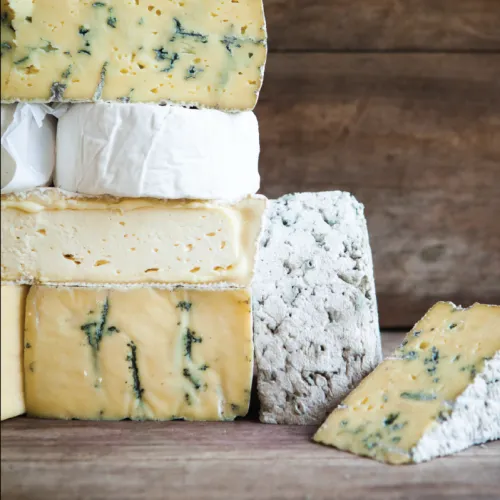
Cheese-making has historically been more of a Cheshire and Lancashire pursuit than a Greater Manchester one, but the region's position between those two counties means that both Lancashire's crumbly, buttery styles and Cheshire's firmer, saltier character have long been part of what people here eat and cook with.
A food scene shaped by migration
Any honest account of Greater Manchester's food identity must acknowledge how profoundly the city has been shaped by successive waves of migration. Communities from South Asia, the Caribbean, China, the Middle East and across Europe have each brought their own food traditions, and those traditions have become woven into how the city eats. The curry restaurants of Rusholme, the Chinese quarter in the city centre, and independent shops scattered across every borough are not separate from Greater Manchester's food story — they are central to it.
This layering of influences means the region's larder is genuinely plural. Local producers are as likely to be making exceptional flatbreads or specialist spice blends as they are to be curing bacon or potting Lancashire cheese. It makes the region harder to summarise than a purely rural county, but considerably more interesting to eat in.
What to look for
The independent food scene rewards curiosity rather than a checklist. Borough markets, farm shops on the edges of the upland areas, and specialist food quarters within the city all carry producers working with care and local knowledge. A few things are worth seeking out:
- Black pudding from a market trader with a known local following — the difference between a well-made northern black pudding and a supermarket version is considerable.
- Dairy products from small producers drawing on Cheshire Plain milk — cream, butter and fresh cheeses appear from farms that sell direct or through local markets.
- Breads and baked goods from independent bakeries, particularly those drawing on the region's tradition of plain, honest baking alongside the newer sourdough culture — both are worth exploring.
Greater Manchester lacks the single iconic produce identity of a coastal fishing county or a famous wine region. What it has instead is a food character built from industrial pragmatism, serious market culture, first-rate dairy farming on its doorstep, and the accumulated cooking knowledge of a genuinely diverse urban population. That combination is harder to put on a label, but it makes for a more complex and rewarding food landscape than the region usually gets credit for.