The cream tea and why it matters
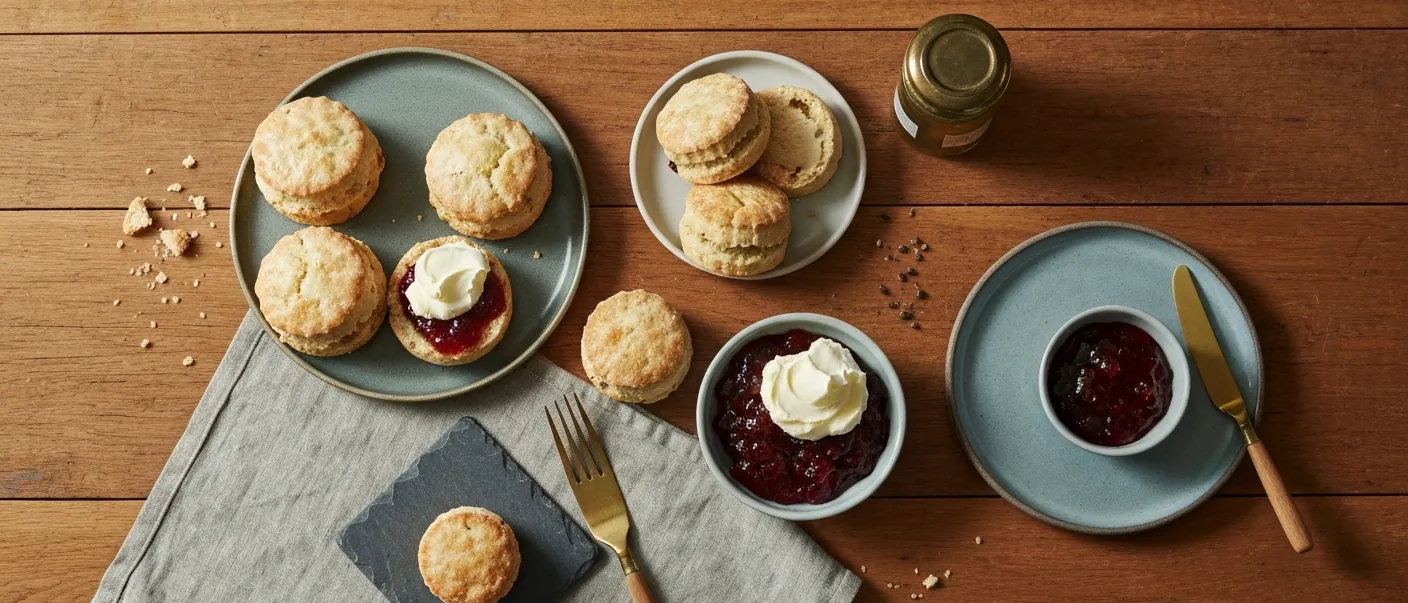
Order a cream tea in Devon and the protocol is clear: clotted cream goes on the scone first, jam on top. Cornwall does it the other way round. This is not a trivial distinction to people who live on either side of the Tamar, and the Devon method has its defenders in the texture argument — the thick, faintly crusted clotted cream acts as a base, letting the jam sit without sliding. The debate tells you something real about how seriously the county takes its dairy.
Clotted cream comes from a slow, gentle heating of full-fat milk, which causes the cream to rise and thicken into golden, slightly grainy clusters. Devon's lush pastureland — kept green by reliable Atlantic rainfall — has long supported cattle farming that produces rich, high-fat milk. That geography is what makes clotted cream a Devon product in any meaningful sense, rather than just a commercial category.
Devon splits
Less famous than the cream tea but equally tied to the county, the Devon split is a soft, slightly sweet white bread roll, split open and filled with clotted cream and jam. Some versions carry a dusting of icing sugar on top. Lighter than a scone and less dense than a brioche bun, it occupies a quiet but distinct place in the local baking repertoire. You'll find them in village bakeries and farm shops across the county, though they rarely appear on national menus — which is part of their appeal.
Cider country
Devon is serious cider-making territory. The county has a long history of apple orchards, and traditional farmhouse cider — cloudy, still, often bracingly dry — is still pressed by small producers using local varieties that rarely appear in supermarkets. These bittersweet and bittersharp apples are bred for cider rather than eating, with names that reflect their regional roots. The resulting ciders range from light and delicate to deeply tannic and almost vinous. At a farm shop or farmers' market, it's worth asking what's made on the premises — the difference between a mass-produced cider and something pressed a field away is not subtle.
Crab from the southern coast
The waters around Salcombe and Dartmouth are productive ground for brown crab, and the catch landed along Devon's south coast has a strong local following. Brown crab from these waters tends to have a good ratio of white to brown meat — the white from the claws, sweet and firm; the brown from the body, richer and more mineral. Traditionally eaten simply with bread and butter, or dressed in the shell, Devon crab needs little doing to it. Buying directly from harbour fishmongers, where the crab has often been landed that morning, makes a significant difference to what ends up on the plate.
Devon Blue and the county's cheese
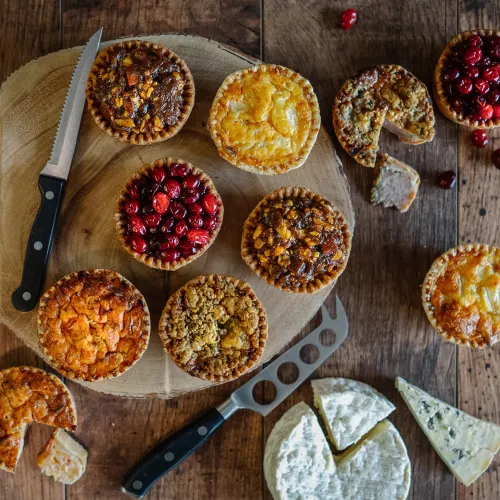
Devon Blue is a cow's milk blue cheese with a creamy, relatively mild character compared to stronger blues such as Stilton or Roquefort. It crumbles well but holds its shape, making it equally at home on a board alongside West Country cheddar or alone with a glass of local cider. Devon has a modest but genuine artisan cheese scene — good grass, good milk and a deep tradition of dairy farming create conditions that serious cheesemakers can work with.
Where to find it all together
The Dartmouth Food Festival brings much of this together in one place, usually held in October — check the official site for this year's dates before planning a visit. It draws producers from across the county and beyond, offering a concentrated introduction to what Devon makes. Outside festival season, farm shops, harbour fishmongers and the county's better delicatessens carry the same producers year-round, often with more time to talk about what they're selling and why.