A feast rooted in the harvest's end
Halloween in Ireland and Northern Ireland is older than the imported imagery of carved pumpkins and plastic cobwebs. The festival marks the end of the harvest season — the larder newly stocked, the cold closing in — and the foods that grew up around it reflect that exactly: hearty, cheap to make, built from what the land had just given. Three dishes dominate: champ, colcannon and barmbrack, each carrying its own quiet ritual.
The link between Halloween food and fortune-telling runs through much of the wider tradition. Across Britain, soul cakes were baked and exchanged as part of the season's observances; in Ulster and across the island of Ireland, the divination happened at the dinner table itself, with charms pressed into food and fate decided by who found them.
Champ and colcannon
Both dishes start with mashed potato, but they are quite different things. Champ is smooth and direct: floury potatoes beaten with butter, hot milk and a generous handful of chopped scallions stirred through so their gentle sharpness cuts the richness. A well of extra butter melted in the centre is traditional. It exists because it works and because the ingredients were always to hand.
Colcannon takes that same potato base and folds in cooked cabbage or kale, giving the mash a rougher texture and an earthier flavour. The name comes from the Irish cál ceannann, meaning white-headed cabbage, though kale is equally common depending on what was growing. It is the more celebratory of the two at Halloween, partly because of the charm tradition: a ring, a coin or some small object was buried in the pot before serving, and whoever found it in their portion could expect the fortune it promised — a marriage, a windfall, good luck in the year ahead.
The charm tradition was never solemn. It was a game, something to make children lean over their bowls and adults pretend to chew carefully. The specifics varied from household to household and from one generation to the next — some families included a piece of cloth, said to predict poverty, alongside the more cheerful ring and coin.
Barmbrack
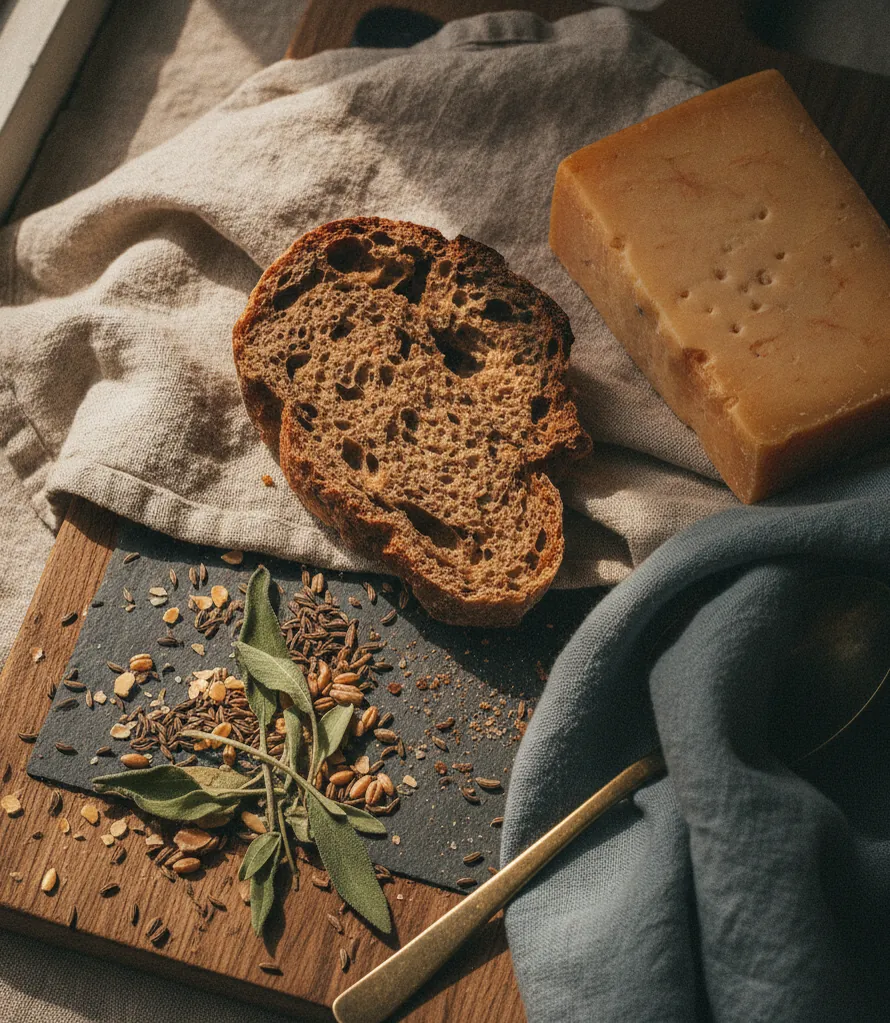
If colcannon is the savoury heart of the Halloween table, barmbrack is its sweet counterpart. The word barm refers to the froth from fermenting ale, once used as a leavening agent, and the loaf is yeasted rather than chemically raised — which puts it in a different category from the soda breads we have written about elsewhere. The dough is enriched with dried fruit soaked until plump, then baked into a dense, sticky loaf with a characteristic spiced sweetness.
At Halloween, barmbrack carries the charm tradition too. A ring baked into the loaf was the most common inclusion; finding it meant a wedding in the coming year. Other objects — a small coin, a piece of cloth, a stick — each carried their own meaning. Commercially made barmbracks sold around Halloween in Northern Ireland and the Republic often still include a plastic ring in the wrapping, a nod to the tradition even when baking the real thing into the loaf has become impractical.
Eaten sliced and spread with butter, barmbrack sits somewhere between bread and cake. It is less sweet than a tea loaf in the English sense, and the yeast gives it a slight chew that distinguishes it clearly from a quick bread. The fruit — usually a mix of sultanas and raisins, sometimes with peel — carries the flavour, along with whatever warming spices the baker favours.
What these dishes share
Champ, colcannon and barmbrack are not elaborate. None requires unusual ingredients or specialist technique. What they share is a connection to a specific moment in the year — the narrowing of the light, the clearing of the fields — and a sense that food can carry something beyond sustenance. The fortune-telling element is the most visible expression of that, but it runs deeper: these are dishes that gather people around a table and make the occasion feel distinct from an ordinary Tuesday in October.
Hiding charms in food at a seasonal feast is not unique to Ireland. The parallels with English soul cake customs, and with the coin in a Christmas pudding, suggest a broader instinct across these islands to mark the turning of the year with food that holds a little mystery. In Ulster, that instinct found its most distinctive form in a bowl of green-flecked mash and a sticky, fruit-heavy loaf.