A honey that behaves like no other
Most honey flows. Leave a jar on its side and the contents will slowly migrate; tip it and it pours. Ling heather honey does neither, because it isn't quite a liquid in the conventional sense. At rest, it forms a gel. Stir or agitate it and it loosens into something pourable. Leave it alone again and the gel structure reassembles. This property has a name – thixotropy – and in the world of honey, ling heather (Calluna vulgaris) is the only British variety that exhibits it so strongly.
The difference is structural. Where blossom honeys are dominated by fructose and glucose suspended in water, ling heather honey contains an unusually high concentration of proteins, including one called grayanin, which form long chains that lock the mass into a loose but resilient lattice. Heat or mechanical action breaks those chains temporarily. Rest rebuilds them.
Why the extractor won't work
Conventional honey extraction relies on centrifugal force. A frame of capped comb is uncapped, slotted into a spinning drum, and the honey flings outward through the open cells. It works beautifully for almost every honey a beekeeper might harvest. For ling heather, it fails completely. The gel grips the inside of each wax cell and simply does not release under spin. You can run the extractor as long as you like; the comb will come out still full.
There are two ways around this. The older method is pressing: the whole comb – wax and all – is wrapped and squeezed until the honey is forced through. It works, but pressing destroys the comb, which the bees then have to rebuild from scratch. The alternative is a mechanical loosener, sometimes called a heather honey loosener, which presses hundreds of fine pins through the comb to break the gel structure cell by cell before spinning. Either way, the process is slower, more labour-intensive, and harder on equipment than standard extraction.
That extra effort is the principal reason ling heather honey commands a price several times higher than an equivalent jar of blended blossom honey. The work involved at harvest isn't a quirk of artisan production – it's an inescapable consequence of the honey's chemistry.
The bubbles are a feature, not a flaw
Open a jar of genuine ling heather honey and hold it to the light. You'll see small air bubbles distributed through the mass – a frosted, slightly opaque quality quite unlike the clear amber of a set rape honey or the translucent flow of a liquid acacia. Those bubbles are trapped during pressing or agitation and held in suspension by the very gel structure that makes extraction so difficult. In any other honey, bubbles suggest fermentation or poor handling. In ling heather honey, they are characteristic – a reliable marker of authenticity that experienced buyers look for rather than worry about.
The colour runs from amber through to a deep russet-brown depending on when in the flowering season the honey was gathered and how much heather pollen it carries. The flavour is emphatically its own: slightly bitter, with a mineral intensity and a long finish that some find reminiscent of dried fruit or even a peaty whisky. It is not a subtle honey, and it is not meant to be.
Getting the hives to the moor
The other factor shaping the cost and rarity of ling heather honey is straightforward geography. Ling heather flowers late in the British beekeeping year – broadly late summer into early autumn, after most other nectar sources have faded. The moorland where it grows in useful quantities is remote: upland areas of Scotland, northern England, Wales, and parts of the West Country. Beekeepers who want to work heather must move their hives.
This is called transhumance – the seasonal migration of hives to follow a flowering crop – and for heather it means loading colonies onto vehicles, driving them up to exposed moorland sites, and collecting them again once the bloom is over. The window is short. A poor summer, an early frost, or an unseasonably wet August can reduce the harvest to almost nothing. That uncertainty, combined with the extraction difficulty, means supply is inherently limited from one year to the next. Finding a reliable source is worth the effort.
We've looked at how single-flower honeys develop their distinct characters elsewhere on the site, and at why honeys crystallise at such different rates – both worth reading alongside this if you want the fuller picture. Ling heather, it's worth noting, crystallises more slowly than most British honeys precisely because its gel structure provides a kind of stability; even so, expect the texture to shift over time.
Buying and using it well
Because pressing destroys the comb, you will rarely find ling heather honey sold cut-comb as you might with a summer blossom variety. Most is jarred, and the thixotropic set means it can look stiff and dense in the jar even when perfectly fresh. A spoon will release it easily enough.
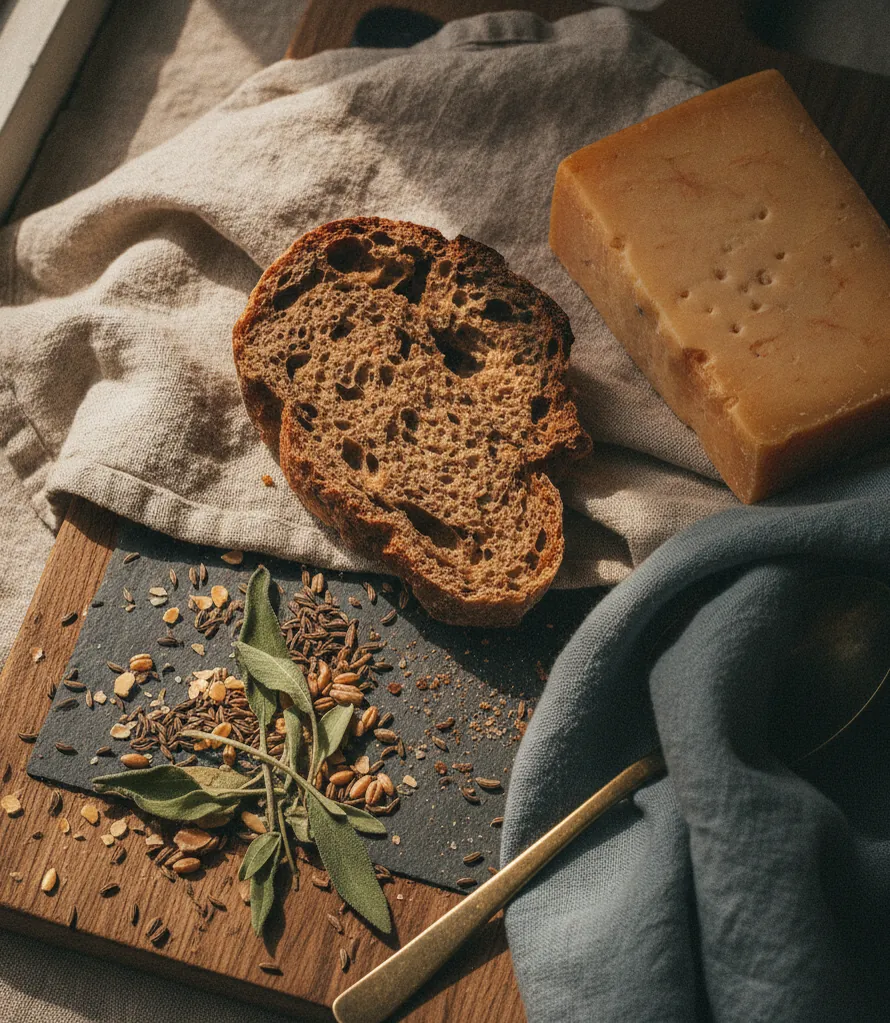
Traditionally it is eaten simply: spread thickly on oatcakes or good bread, stirred into porridge, or served alongside a strong cheese where its bitterness can hold its own. It is too characterful to disappear into a sauce, which is really the point – this is a honey you taste, not merely sense.
When buying, look for single-origin labelling that specifies ling heather rather than a generic moorland or heather blend (which might include bell heather, Erica cinerea, a different plant with a more conventional honey). The bubbles should be visible. The set should be firm but not rigid. And the price, frankly, should make you pause – if it doesn't, it probably isn't the real thing.