The process in plain terms
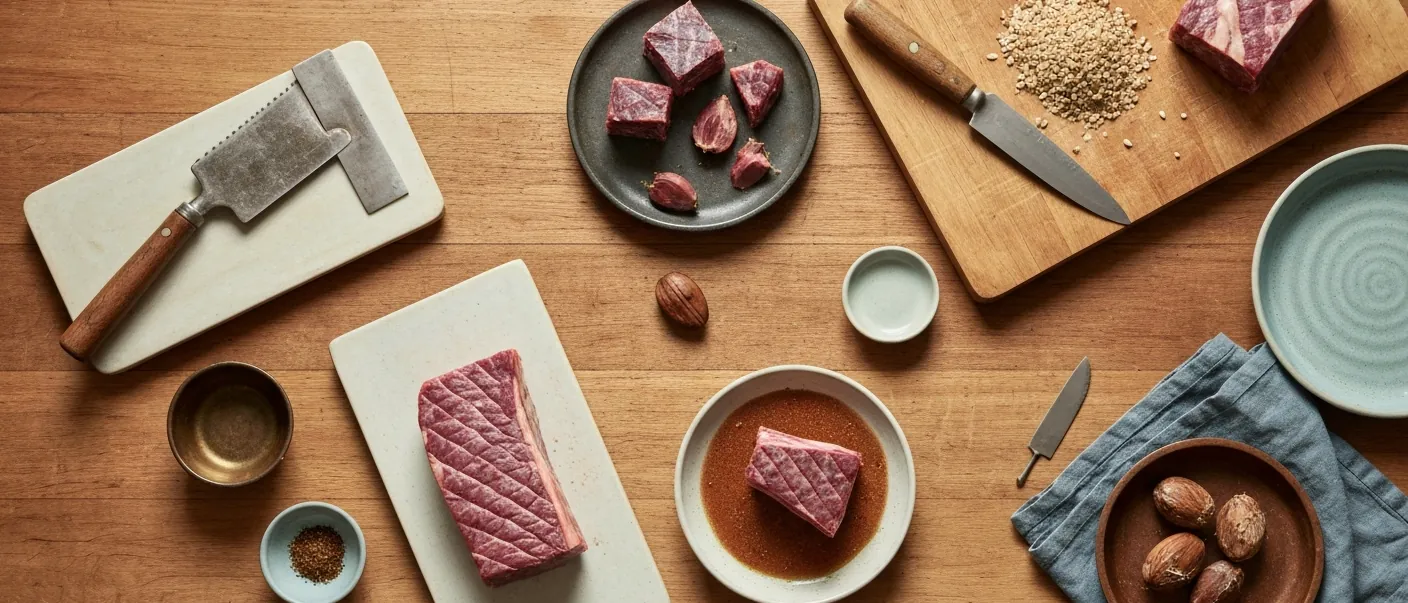
Dry-ageing means hanging whole cuts or sides of beef — unwrapped, exposed to moving air — in a cold room held at a precise temperature for weeks, not days. During that time, two things happen simultaneously, and both matter.
First, the beef's own enzymes break down the muscle fibres. This enzymatic tenderisation is entirely natural — the meat is essentially beginning to digest itself, slowly and under controlled conditions. The result is a texture noticeably softer and more yielding than fresh beef, without the looseness you'd associate with meat that's gone off. A well-aged steak cuts differently from the moment the knife goes in.
Second, moisture evaporates. As water leaves the surface of the beef, the remaining meat concentrates in flavour — fat, protein and the compounds that carry savoury depth are left behind in greater proportion. The taste becomes more intense, sometimes with a nuttiness or a slight mineral edge that fresh beef simply doesn't have. This is the detail that separates genuine dry-ageing from shortcuts.
Why it costs what it costs
The weight loss is where the economics become unforgiving. A cut that has hung for several weeks can shed a meaningful percentage of its starting weight through evaporation. That moisture doesn't return. The butcher selling you a dry-aged sirloin is selling you less beef by weight than they started with — and they've spent weeks maintaining the cold room, monitoring humidity and airflow, and storing a product that ties up capital.
The outer surface of a dry-aged cut also develops a dry, darkened crust — sometimes called the bark — during the process. This crust helps regulate how moisture leaves the meat, but it must be trimmed away entirely before the beef is sold or cooked. More loss. More cost. Taken together, these factors explain why genuinely dry-aged beef is rare in ordinary supermarket chillers, and why a butcher who offers it properly is worth paying attention to.
What gets sold in its place
Wet-ageing is the common alternative. Most beef sold in Britain — including plenty of good-quality beef — is wet-aged: rested in vacuum-sealed plastic bags, which prevents evaporation entirely. Enzymatic tenderisation still occurs, so wet-aged beef can be tender. But none of the moisture is lost, and the flavour concentration that defines dry-ageing doesn't happen. The two processes produce genuinely different results, and labelling matters.
Some products make vague claims about ageing without specifying the method or the duration. Duration matters enormously. A few days of hanging produces a quite different outcome from several weeks. When buying, ask your butcher directly: how long, and how was it stored?
How long is long enough
There is no single correct answer. Different producers and butchers favour different periods, and the best duration depends on the cut, the breed of cattle, and the conditions of the room. Shorter periods produce a subtler effect — closer to fresh beef in flavour but noticeably more tender. Longer periods develop the more pronounced, complex character dry-aged beef is known for. At the far end, very extended ageing produces something almost funky in the best sense: rich, deeply savoury, with flavours a fresh steak couldn't approach.
The cut matters too. Well-marbled beef, with fat running through the muscle rather than just around the edges, tends to respond particularly well to longer ageing. The fat carries and develops flavour during the process in a way that leaner cuts do not.
Eating it well
Dry-aged beef is traditionally served in ways that let the meat carry the meal. A thick-cut sirloin or rib eaten simply — perhaps with a good mustard and some watercress — needs little else. The consistent view among butchers and cooks is that the more you've spent on a properly aged piece of beef, the less you should do to it. Strong sauces compete with the very qualities you've paid for. The beef itself is the point.