The job of the affineur
Most people picture ageing as leaving a cheese alone somewhere cool and dark. In practice, it is closer to tending a living thing. The affineur monitors temperature, humidity and airflow continuously, because each variable pulls the cheese in a different direction. Too warm and unwanted bacteria take hold. Too dry and the rind cracks before the paste has developed properly. A cave or cellar earns its reputation not from romance but from the stability of its microclimate.
Turning is one of the most fundamental tasks. Young wheels and truckles are flipped regularly — sometimes daily — so that moisture distributes evenly and the rind forms uniformly. Leave a cheese on one face too long and it will bulge, soften unevenly, or develop a rind only where the air reaches it. The turning schedule changes as the cheese matures; a wheel needs closer attention in its first weeks than after several months of firming up.
Brushing, washing and what rinds actually do
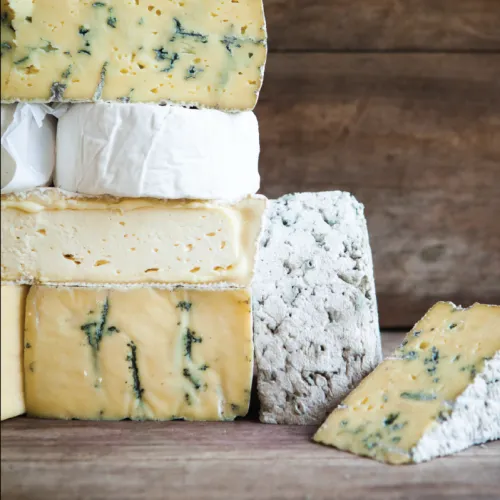
A rind is not merely packaging. It regulates how quickly moisture leaves the cheese, influences which moulds and bacteria colonise the surface, and contributes directly to flavour — both through what it produces itself and through what it allows to migrate inward.
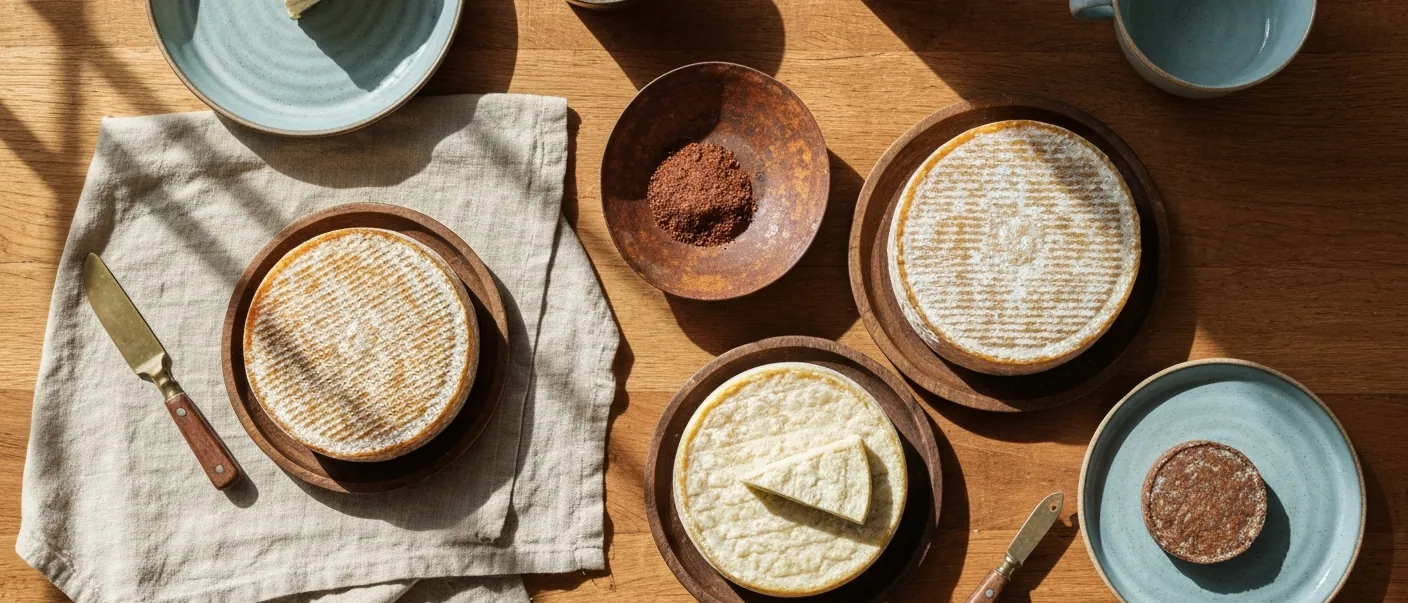
Brushing keeps unwanted surface growth in check and encourages the right kind of rind to develop. For a firm, natural rind like those found on many traditional British territorials, brushing and scraping build up a robust grey-brown coat over months. It hardens slowly, reducing moisture loss and allowing the interior to ripen gradually.
Washed-rind cheeses take a different path. Their surfaces are regularly treated with brine, beer, cider or similar liquids, creating conditions that the bacterium Brevibacterium linens prefers — the organism responsible for the orange-pink colouring and penetrating, savoury smell associated with cheeses such as Stinking Bishop. The washes cultivate an environment rather than adding flavour directly, and the choice of liquid matters less than the consistency of the treatment.
Cloth binding, closely associated with traditional Cheddar, takes a different approach. Wheels are wrapped in cloth rubbed with lard, which allows the cheese to breathe while protecting it from drying too fast. The result is a more complex, earthy rind; the cloth can itself harbour beneficial moulds. Waxed cheeses, by contrast, are sealed entirely, halting rind development and locking in moisture — which suits younger, milder styles but prevents the slow, complex ripening that cloth or natural rinds allow.
Why cave conditions matter
The phrase 'cave-aged' carries genuine meaning in some contexts and very little in others. Traditional cheese caves — whether cut into limestone or built from old stone — maintain a narrow band of temperature and humidity year-round without mechanical assistance. The microflora living in the walls, floors and air contribute to what the cheese becomes. A Roquefort cave and a Cheddar gorge cellar produce entirely different environments, and the cheeses made for them reflect that.
What 'cave-aged' does not guarantee is any particular standard of practice. It tells you where a cheese was matured, not how carefully, for how long, or under what conditions. A purpose-built modern facility calibrated to match cave conditions can produce results as consistent as a natural cave — sometimes more so. The label is a starting point, not a quality mark.
Humidity is the variable most people underestimate. The ideal range depends entirely on the style: a bloomy-rind cheese needs high humidity to keep its white coat alive and developing, while a hard grana-style cheese needs lower humidity to encourage the slow moisture loss that concentrates flavour and creates a granular paste. Getting it wrong does not merely slow ageing — it changes the character of the finished cheese entirely.
How ageing shapes what you taste
Ageing converts proteins and fats into smaller, more flavour-active compounds through enzyme activity — from the original milk cultures and from whatever microflora colonise the rind. This is why a young Cheddar tastes mild and milky while a cloth-bound one matured for a year or more develops sharper, sometimes crystalline qualities. Those crystals are the amino acid tyrosine, accumulating as protein breaks down over time.
The relationship between time and quality is not linear. Every cheese has a window in which its flavours are in balance, and holding it too long tips that balance — towards bitterness, excessive sharpness, or a paste that turns dry and chalky rather than pleasantly firm. An affineur's skill lies partly in knowing when to stop, a judgement no label can fully capture.
- Natural rind — develops through brushing and turning; allows slow, complex ripening over months.
- Washed rind — regular surface treatments encourage specific bacteria and the flavours they produce.
- Cloth-bound — permits breathing and mould development; associated with traditional British hard cheeses.
- Waxed — seals the cheese completely, preserving a younger, milder character.