Why Sevilles and nothing else
The orange you eat for breakfast and the orange that makes proper marmalade are barely the same fruit. Seville oranges are thick-skinned, intensely bitter, and almost impossible to eat raw — which is precisely what makes them so valuable. Their pith and peel are packed with pectin, the natural setting agent that gives marmalade its firm, glossy gel without commercial setting powders. The juice brings a sharpness that sweet oranges cannot replicate.
That bitterness is the point. Good marmalade holds a tension between sharp and sweet, and Sevilles provide the sharp half of the equation. Substitute a navel orange and you get something closer to a sticky, orange-flavoured jam — recognisable, perhaps, but not the same thing.
The shape of the season
The Spanish harvest dictates the British marmalade calendar. Seville oranges ripen in mid-winter and begin landing at UK importers in January, with supplies generally lasting into February. The window is rarely more than a few weeks at the retail level — long enough for experienced makers to stock up, short enough to catch out anyone who assumed they had more time.
This brevity reflects the genuine agricultural cycle of a fruit grown almost exclusively around Seville in southern Spain. The same Mediterranean climate that suits citrus also means a concentrated, predictable harvest: the fruit arrives fast and moves on fast.
Knowing the rough shape of the season — January arrival, February tail-off — is the most practical thing a marmalade enthusiast can hold onto. After that, it is a matter of watching your local deli, farm shop or grocer and acting when you see them.
What to look for in the fruit
Sevilles at their best feel heavy for their size and have a firm, slightly waxy skin. The colour tends toward a deep, uneven orange-green rather than the polished, uniform hue of supermarket eating oranges. Some surface blemishing is entirely normal and does not affect the fruit inside.
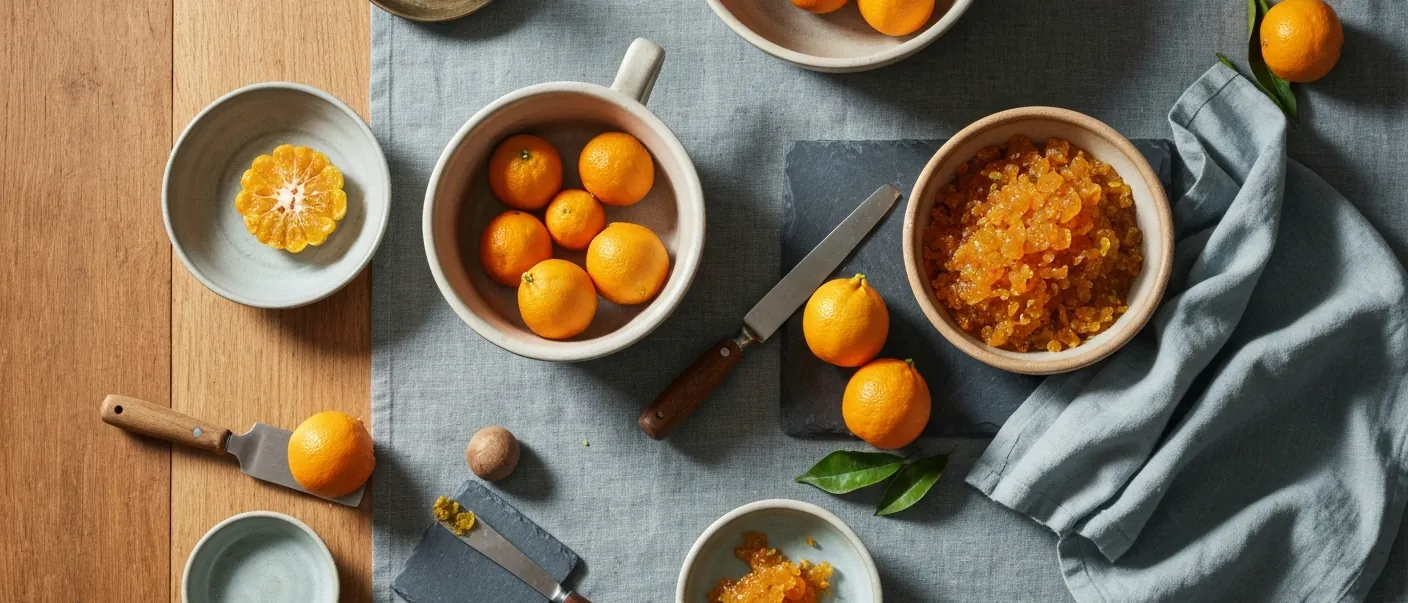
The peel matters as much as the juice. Most traditional methods use both, slicing the rind finely or coarsely depending on the style of marmalade — fine shred producing a more delicate set, chunky cut giving the robustly chewy quality associated with older Scottish and northern English traditions. The pith, which in a sweet orange you would discard, is where much of the pectin sits, so it earns its place in the pot.
A tradition with its own calendar event
The annual marmalade awards held in Cumbria draw entries from home makers across the country and beyond — warmly local and genuinely competitive. Usually held in late winter, you should check the official site for this year's dates before planning a visit.
The awards reflect how marmalade sits in British food culture: somewhere between everyday preserve and craft object. A well-made jar carries decisions in it — how thick the shred, how long the cook, how much sugar, whether to add whisky or ginger or leave it clean. The range of entries at any serious competition makes that breadth clear.
Buying versus making
Not everyone will make their own, and there is no obligation to. Independent preserves makers, many of them small producers selling through farm shops and specialist online retailers, time their Seville batches to the season in exactly the same way as home cooks. Buying from them is a sound way to get marmalade made from the right fruit in the right week, without managing several kilos of bitter oranges yourself.
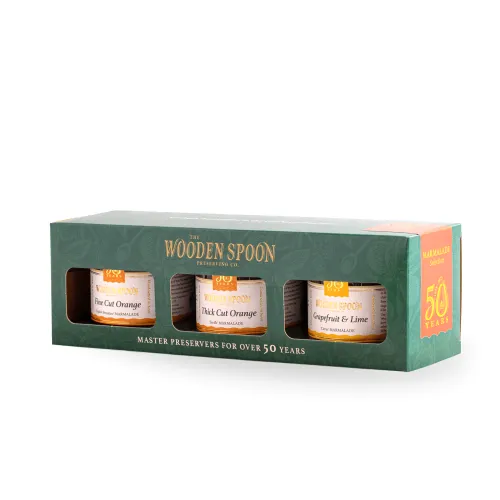
If you are buying rather than making, the label is your guide. Seville orange marmalade should say so clearly. If it simply reads orange marmalade without specifying the variety, that is worth a closer look — sweet orange marmalade is a different product. Some producers also specify the cut of the peel, which suggests they are paying attention to the details that matter.
Either way, the season rewards decisiveness. Sevilles do not wait.