Where the confusion starts
The two methods share a surface-level similarity: vegetables go in, something preserved comes out. Both produce that characteristic tang. But the processes are distinct in almost every meaningful way — the science, the timescale, the texture, and what the finished jar actually contains.
Conflating them matters. If you want the live-culture benefits associated with fermented foods, a jar of malt-vinegar pickled onions won't deliver them. If you want the clean, assertive sharpness of a British pickle alongside a ploughman's, a slowly fermented crock is a different thing entirely.
Vinegar pickling: acidity from outside
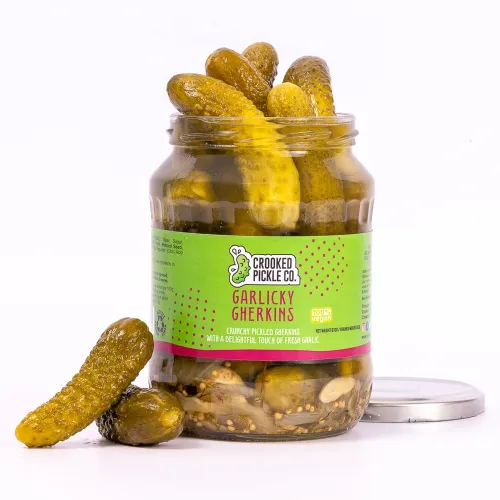
In vinegar pickling, the preserving work is done by acid introduced from an external source — usually malt, white wine or cider vinegar. The acidity is immediate and absolute. Bacteria, including any beneficial ones, cannot survive in it. The food is preserved because the environment is too hostile for microbial activity of any kind.
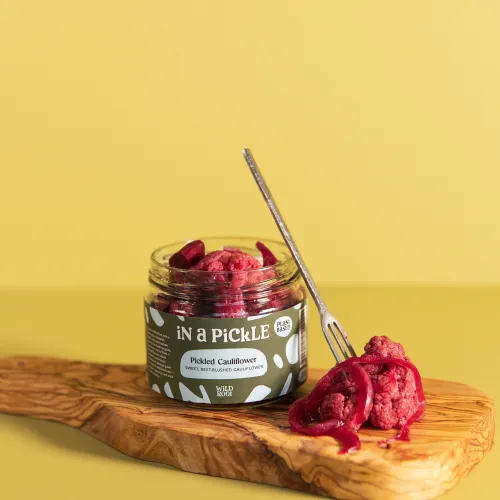
This is the tradition behind most of Britain's classic preserved condiments: pickled onions, pickled walnuts, Branston-style chunky pickle, piccalilli with its vivid turmeric brine. The vinegar is often cooked or combined with sugar and spices, giving British pickles their characteristic sweet-sour depth. Texture tends to firm up initially, then soften over time as the vinegar works through the vegetable.
Speed is a practical advantage. Vinegar pickling can be done in an afternoon; some quick-pickle methods produce something ready within hours. Once opened, the shelf life is also very stable — the vinegar keeps doing its work.
Fermentation: acidity grown from within
Lacto-fermentation works on an entirely different principle. Salt draws moisture from the vegetables and creates an environment where Lactobacillus bacteria — present naturally on the surface of most vegetables — can thrive. Those bacteria consume the natural sugars in the food and produce lactic acid as a by-product. That lactic acid preserves the food and gives it its sourness.
Nothing is added from outside except salt, and sometimes water for a brine. The culture is wild and already present on the vegetables. This is why ferments are described as living foods: if the process is not halted by heat — as it would be in pasteurisation — the bacteria remain active in the finished jar.
Sauerkraut is the most straightforward example: shredded cabbage and salt, pressed until submerged in its own brine, left to ferment over days or weeks. Kimchi follows the same fundamental logic, though the flavour profile — built around chilli, garlic, ginger and often fish sauce — is far more complex, and fermentation time and temperature are managed to develop a particular balance of sour and funk. Both are ancient, deeply regional preservation traditions shaped by climate, available ingredients and local taste.
The texture that results from fermentation differs from vinegar pickling. Sauerkraut retains a pleasant crunch even after weeks in the jar. Kimchi shifts considerably as it ages — young kimchi is bright and sharp; older kimchi is mellower and more sour, the vegetable softening but never collapsing entirely.
What each one is actually for
Both methods are genuinely useful, and neither is a lesser version of the other. They produce different things for different purposes.
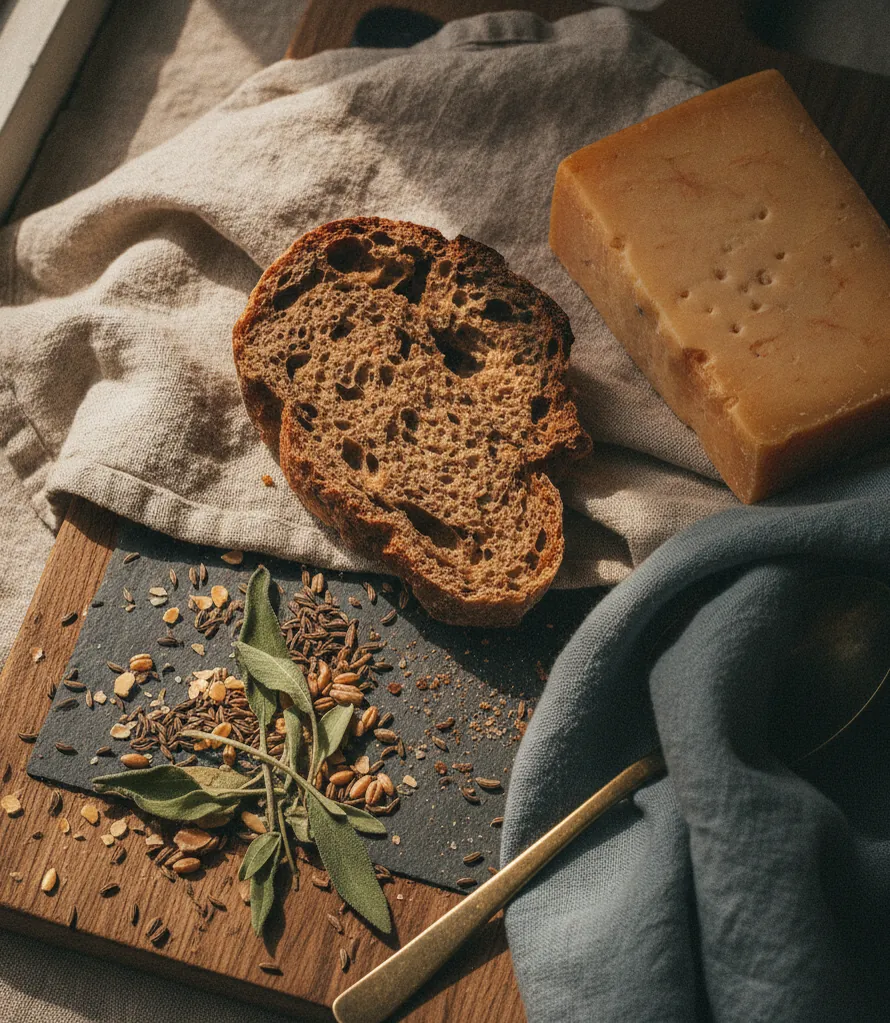
Vinegar pickles are condiments in the truest sense — designed to cut through richness, add sharpness to a sandwich, or bring contrast to a cheeseboard. The British pickle tradition is built around this role: a spoonful alongside something fatty or mild, never the main event.
Ferments sit differently on the palate. The lactic acidity is rounder and less aggressive than vinegar. Kimchi and sauerkraut can function as condiments, but they carry enough complexity to stand as a component of a dish in their own right. Aged kimchi fried with rice, or sauerkraut braised with pork, would lose something essential if you substituted a vinegar pickle.
The live-culture aspect of unpasteurised ferments is frequently discussed in relation to gut health. The science here is still developing, and firm claims would be premature — but what is straightforwardly true is that a well-made ferment contains active bacteria that a vinegar pickle does not.
Reading the label
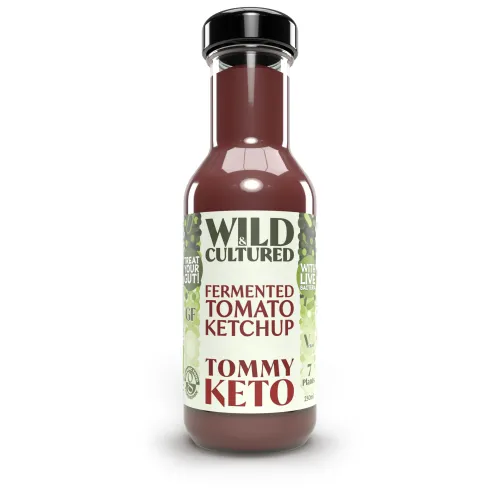
In a shop, the distinction is not always obvious from the front of a jar. If a product contains vinegar, it is a pickle. A true ferment will list only vegetables, salt and possibly water — no added acid. Some products described as kimchi or sauerkraut are in fact vinegar-acidified versions made for consistency and speed; they are perfectly reasonable products, but not ferments in the traditional sense.
Refrigerated ferments from specialist producers are more likely to be unpasteurised and genuinely alive. Room-temperature, long-shelf-life versions have almost certainly been heat-treated, which halts fermentation and stabilises the product — useful commercially, but the live cultures won't survive it. Knowing which you're buying means you can reach for the right jar.