The names are tangled, but the things themselves are not
French charcuterie has given British food culture a lot of vocabulary it uses loosely. Nowhere is this more obvious than the cluster of words around cooked, seasoned, spreadable meat — pâté, terrine, rillettes — which appear on labels and menus as though they mean the same thing. They don't, quite, though their histories are genuinely intertwined.
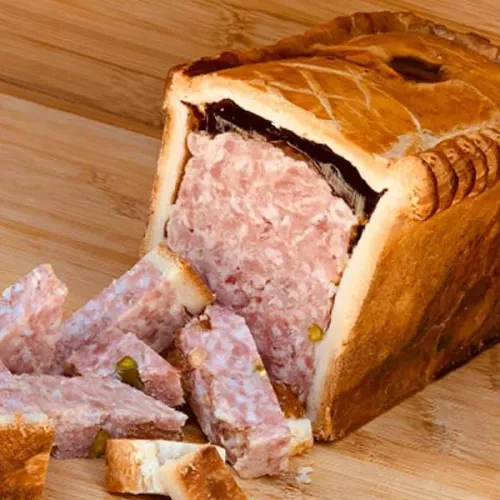
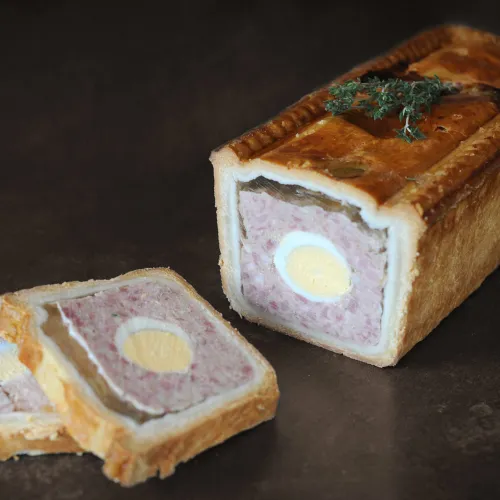
The clearest way to separate them is by texture and form. A terrine is, strictly speaking, anything baked in the deep, straight-sided loaf mould that gives it its name. The word refers to the vessel first, the contents second. That matters, because a terrine can be coarse, almost rough — bound pork, game or offal, layered and pressed, then sliced at the table. The texture is the point. You should be able to see the ingredients, feel some resistance, taste distinct pieces of meat in each mouthful.
Pâté tends to the smoother end: a seasoned paste, usually blended or sieved to something approaching uniformity. The historical full name for what we now call pâté was pâté en terrine — the paste cooked in the mould. Over centuries, the two halves of that phrase drifted apart and came to mean different things, which is why even professionals use them interchangeably.
Rillettes are different in kind, not just degree
Rillettes stand apart from the other two. Where a terrine is built and baked, rillettes are made by cooking meat low and slow in its own fat until the fibres fall apart, then shredding everything into a rough, spreadable pot. The fat is not a by-product — it is the medium and the preservative, worked back through the shredded meat so the finished pot is spreadable but still visibly fibrous. Duck and pork are the classic bases, though British producers have applied the technique to rabbit, goose and beyond.
There is no slicing a rillette. It comes in a pot and goes straight onto bread with a knife. The flavour can be the most concentrated of the three — hours of slow cooking in fat does something that oven-baking cannot.
Britain's own tradition runs alongside these
It would be wrong to treat all of this as purely French import. Britain has its own long tradition of potted meats — meat or fish cooked down, packed tightly and sealed under clarified butter — which occupies exactly the same territory as rillettes in spirit, if not in exact method. Morecambe Bay potted shrimps are the most celebrated surviving example: tiny brown shrimps set in spiced butter, spreadable from the pot and eaten on toast. The logic is identical to rillettes; the lineage is entirely English.
British producers are now making terrines, pâtés and rillettes in serious quantities, often working with rare-breed pork, game from local estates or offal that supermarkets ignore. The techniques are French, but the raw material is very much of here.
What to look for when buying
Quality in this category is largely visible. A good terrine has an honest, coarse texture — you can see the meat, the fat is distributed rather than pooled, and it holds its shape in a slice without being gelatinous. Anything uniformly smooth and sold as a terrine is trading on the wrong label.
- Fat is good. Visible fat in a terrine or rillette is not a flaw — it is flavour, and it is what the tradition requires. Be sceptical of anything labelled reduced-fat; the fat is doing structural and culinary work.
- Seasoning should be assertive. These are preserved, concentrated products. A mild, gentle pâté has been made for the broadest possible audience rather than for flavour.
- Check the ingredient list. A short one — meat, fat, salt, spice, possibly alcohol — is a better sign than a long one with stabilisers and emulsifiers. The traditional versions need very little besides honest ingredients and time.
One practical point: all three should be closer to room temperature than fridge-cold when eaten. Cold fat is firm and muted; given fifteen minutes on the board, the same product becomes soft, aromatic and far more expressive. It costs nothing.
How they are traditionally eaten
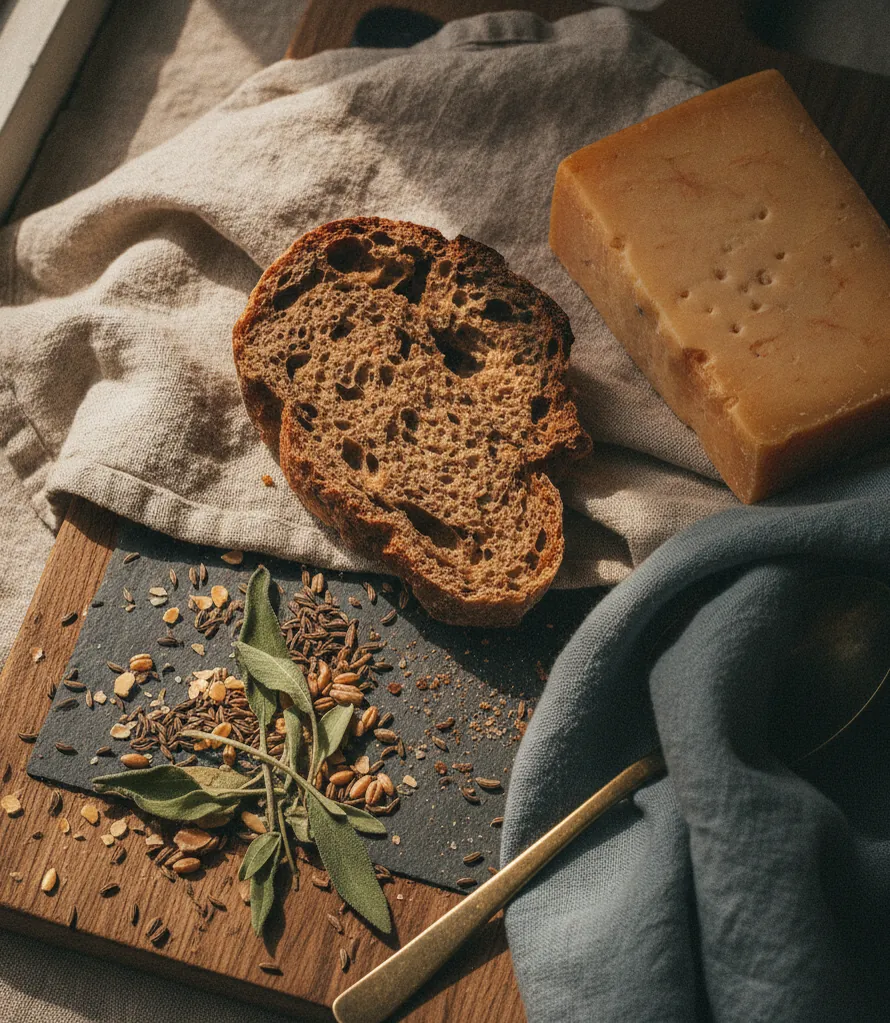
Terrines are usually sliced and served as a starter with cornichons, good mustard and bread — the sharpness of the pickle cutting the richness of the meat. Pâté works the same way, though its smoother texture suits generous spreading on toast or a baguette. Rillettes and their British potted-meat equivalents are at their best spread thickly on sourdough or a plain cracker, with something acidic alongside. None of them needs much else. The craft is already in the pot.