It starts with how the fruit is treated
Jam is the one most people think they know, and they're broadly right. Fruit is crushed or broken down, cooked with sugar, and set to a firm, spreadable consistency. The fruit largely disappears into the whole — what you get is a uniform texture, intense and sweet. British labelling rules require a minimum fruit content for a product to be sold as jam, which is why cheaper versions often taste thin and the good stuff doesn't.
A conserve takes a different approach. The fruit is kept as whole pieces, or at least large chunks, suspended in a looser, softer set. The texture is noticeably more yielding than jam, and because the fruit hasn't been pulped, you get something closer to its original flavour. Strawberry conserve spread thickly on a scone should still feel like eating a strawberry — just a very sweet, very jammy one.
The word preserve sits across all of this as a general term. Almost anything made to extend the life of fruit through sugar can technically be called a preserve. Some makers use it on the label to suggest a more traditional approach, but it carries no specific legal definition — so read the ingredient list rather than the name.
When the fruit disappears entirely
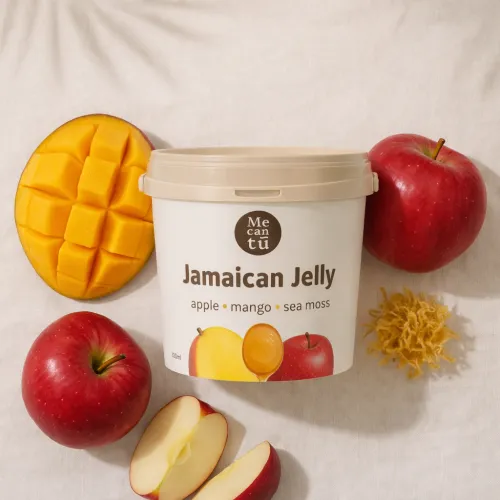
Jelly — not the wobbly dessert kind, but the preserve — takes jam one step further. The fruit is cooked down and strained through muslin or a fine sieve so that only the clear juice passes through: no fruit pieces, no pulp, no seeds. The result is translucent and often made from fruit that would be unpleasant or difficult to eat in solid form — crab apple, quince, bramble, redcurrant. Mint jelly, served alongside lamb, works on the same principle with herbs added to the strained liquid.
The clarity of a good jelly is a craft achievement. Too much heat or stirring and it clouds. The best examples hold the colour of the fruit up to the light — deep ruby, pale amber, vivid scarlet — which is part of why they're so pleasing on the table.
Marmalade belongs to the citrus family
Marmalade is technically a type of jam, but one made exclusively from citrus fruit with the shredded or sliced peel included in the set. Seville oranges are the classic base, with their high pectin content and pronounced bitterness, though you'll find marmalades built around lemon, grapefruit, lime, or combinations of all four. The bitterness that distinguishes a proper marmalade from a merely sweet citrus spread comes from the pith and peel — and the cut of that peel, fine-shredded or coarse-cut, determines the whole character of the finished jar.
In the UK, marmalade has its own labelling category, separate from jam. That distinction exists partly because of how differently the two are made, and partly because citrus peel behaves very differently from soft fruit during cooking.
Curd is the outsider
Lemon curd shares the jar and the breakfast table with jam, but it is made from entirely different ingredients by an entirely different logic. Where jam relies on fruit and sugar, curd is built on butter and eggs, with fruit juice and zest providing the flavour. The result is rich, smooth, and almost custardy — less a preserve than a thick, intensely fruity sauce that happens to come in a jar.
The practical consequence is shelf life. A well-made jam, properly sealed, will keep for a year or more in a cool cupboard. Curd, because of its dairy and egg content, has a much shorter life once opened and should be kept in the fridge and used within a few weeks. For all practical purposes, lemon curd and lemon jam are completely different products.
Most curds from British artisan makers are lemon, but passion fruit, rhubarb, and lime versions are common. The method doesn't change; the fruit does.
Why the distinctions matter in practice
Knowing what's in the jar changes how you use it. Conserves, with their looser set and identifiable fruit pieces, work well spooned over yoghurt or alongside cheese, where a stiffer jam might feel heavy. Jellies, with no solid fruit at all, are the right choice for glazing, for pairing with game, or anywhere you want flavour without texture. Curds belong on a Victoria sponge or a piece of good white toast — they're too perishable and too rich for most of the roles jam fills.
For makers, the distinctions reflect real differences in cost and craft. A conserve that keeps the fruit whole requires more careful handling and often more fruit by weight. A jelly requires patience and wastage — all that pulp is discarded. When you see a price difference between an own-brand jam and an artisan conserve or curd from a farmers' market, it usually reflects something real about what went into the jar.