The same start, different finishes
Every traditional boiled sweet begins with sugar and glucose syrup dissolved together and boiled until almost all the water has been driven off. Confectioners call this the hard-crack stage — the point at which a drop of the mixture, cooled in cold water, snaps cleanly rather than bending. Get it right and the finished sweet is glassy and brittle; fall short and it turns sticky. We cover the sugar stages in more depth in our piece on seaside rock. What matters here is that once the cooked mass has been poured onto a cooled slab and allowed to drop to a workable temperature, the maker has a narrow window to add flavour, colour and form. The sugar is still plastic — stiff but shapeable — and what happens next is what separates one sweet from another.
How a humbug gets its stripes
The humbug's appearance is a direct consequence of the making process, not applied decoration. After cooking, the confectioner divides the batch. One portion is pulled repeatedly on a hook or between the hands, stretching and folding the sugar until air is incorporated. This turns the sugar opaque and lighter in colour as millions of tiny air bubbles form within it. The other portion is left unpulled: dense, glossy, darker.
The two portions are then laid together and twisted so that pulled and unpulled sugars alternate along the length of the piece. When the rope is cut into individual sweets, each one shows the characteristic dark-and-pale banded pattern. The stripes are built into the structure, not painted on. Peppermint oil is added before the batch is divided, so both portions carry the same sharp, cool taste despite their different textures.
Barley sugar and sherbet lemons
Barley sugar has an old and slightly confusing name. Historically it was made with a barley water decoction, which gave a faintly malty character and an amber colour. Modern versions are generally made without actual barley — the name outlasted the ingredient — but the twisted oblong shape and amber-tinted body remain familiar. The flavour is gentle and slightly caramelised, less assertive than a mint sweet, with a burnt-sugar note from cooking the syrup at high temperature.
Sherbet lemons work on a different principle. The boiled sugar shell is a straightforward lemon-flavoured hard case, but inside sits a pocket of sherbet: citric acid and bicarbonate of soda. The fizzing sensation is a simple acid-alkali reaction triggered by saliva. Small makers sometimes struggle to get the pocket right — too little and the sweet loses its point; too much and the shell cracks.
What pear drops actually taste of
Pear drops are worth examining because their flavour is one of the more interesting cases in British confectionery. The distinctive sharp-sweet, almost solvent-like taste does not come from pear juice or pear extract. It comes from a flavouring compound — isoamyl acetate, also known as amyl acetate — the same ester responsible for artificial pear or banana notes in some chewing gums. Natural pears contain the compound in small quantities, which is why the flavour seems recognisable, but the intensity in a pear drop is entirely synthetic. The traditional bicolour finish — pink on one half, yellow on the other — is purely cosmetic and has no bearing on flavour.
The jar and the small maker
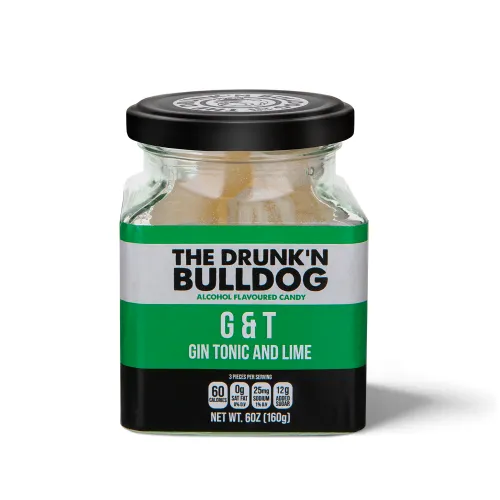
The tall glass jar on the sweet-shop counter was functional rather than decorative. Sugar is hygroscopic — it absorbs moisture from the air and turns sticky or cloudy if exposed. The ritual of lifting the jar down, weighing sweets into a paper bag and replacing the lid was as much about preservation as theatre, even if few customers thought of it that way.
That tradition has thinned as independent sweet shops have become rare, but it has not disappeared. Small confectioners around Britain still pull sugar by hand on marble slabs, cut individual humbugs with scissors or a drop-roller, and sell by weight from jars. Hand-pulled sugar behaves slightly differently from machine-processed sugar: the pieces are less uniform, and flavour compounds can be chosen with more flexibility than a large production run allows. Some makers use natural flavour concentrates; others prefer traditional synthetics on the grounds that they more faithfully reproduce the sweet-shop taste buyers remember.
Whether they work with old copper pans or modern induction-heated tables, the constraints are the same ones that have always governed boiled sugar: temperature, timing, and the brief moment when the cooked mass can still be persuaded into a shape before it sets hard.