A pastry built differently
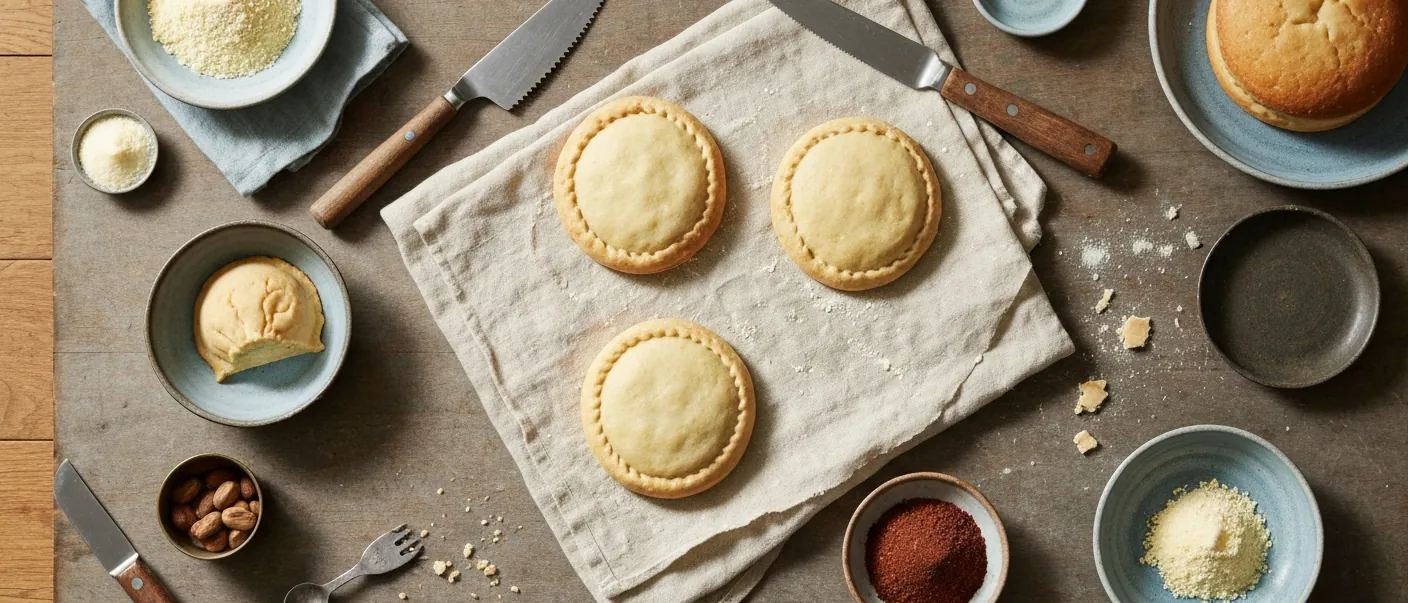
Almost every other pastry is made cold. Fat is rubbed or cut into flour while everything is kept as cool as possible, the aim being to produce something short, tender, and flaky. Hot water crust works from the opposite principle. Lard is melted into boiling water, and that hot liquid is poured straight into the flour. The heat part-cooks the starch, and the fat binds it in a way that cold butter never would. What comes out of the bowl is a warm, pliable dough — more like soft clay than anything you'd roll out for a tart.
That malleability is the point. The dough can be worked quickly while warm, pushed up the sides of a wooden mould or raised by hand against the fist into a thick-walled case. As it cools, it sets. By the time the filling goes in and the lid is pressed on, you have something rigid enough to bake and hold its shape through hours in the oven. No tin required — the pastry is the structure.
Why lard, and only lard
Butter produces a richer flavour in most pastry, which is exactly why bakers reach for it instinctively. For hot water crust, lard has properties butter cannot match. Its higher melting point means the finished crust stays firmer at room temperature. Its fat structure, once worked into the cooked starch, creates a dense, tight crumb rather than the layered flakiness butter encourages. The result is a pastry wall robust enough to contain a meat filling and its jellied stock without softening or collapsing.
The flavour of lard is also quieter than butter. It doesn't compete with the filling; it frames it. In a pork pie, the balance between seasoned meat and surrounding crust is part of what defines the thing.
The architecture of the pork pie
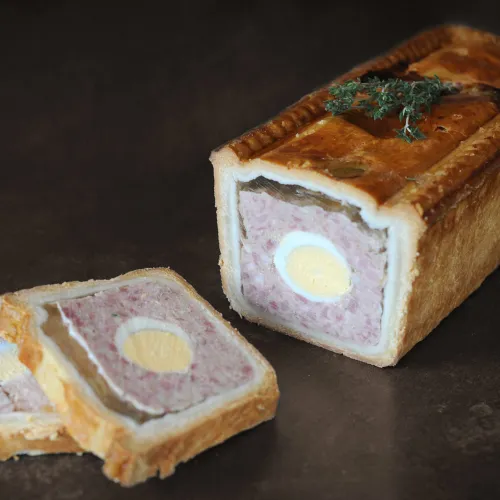
The hand-raised pork pie is the most recognised expression of this pastry. Because the crust is worked up by hand rather than pressed in a tin, it develops the rounded, bowed-out profile that is entirely honest about how it was made. A machine-pressed pie looks different. The crust tells you.
Underneath the lid, a small hole is left so that jellied stock can be poured in after baking, filling the gap that forms as the meat shrinks. The pastry holds that liquid as it sets — acting not as wrapping but as a vessel. It is a practical piece of engineering refined over generations.
Game pies and the grander tradition
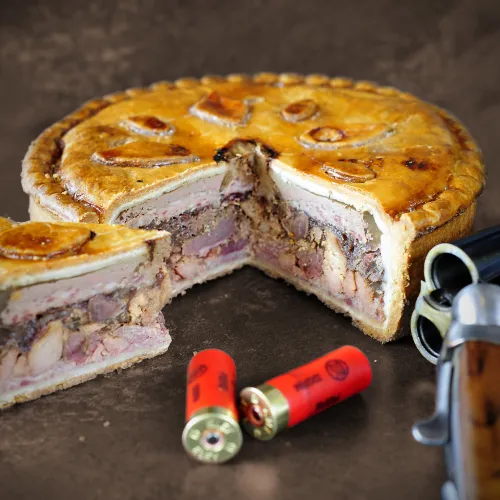
Hot water crust appears at the other end of the social scale too. The grand game pies associated with country houses and shooting estates are raised in the same way, though often in decorative hinged moulds that produce tall, oval loaves with fluted sides. Venison, pigeon, hare, pheasant — dense, assertive meats that need something robust around them. Here the thick walls insulate the meat so that it cooks gently and evenly through a long, slow bake.
These pies were traditionally eaten cold, sliced at the table to reveal the layered filling inside. The pastry becomes part of the presentation: the cut edge should be clean, the walls should hold their shape, the jelly should be set and clear. A soft or crumbling crust undoes all of it.
What distinguishes the craft version
The gap between a well-made raised pie and an average one is wider than it looks. A good hot water crust has walls of consistent thickness — not so thin that they crack, not so thick that the ratio of pastry to filling tips the wrong way. The base must be sturdy enough to carry the filled pie without flexing or leaking, yet not so heavy that the bottom is still raw when the sides are done. Getting the temperature right during raising, the timing right during baking, the moisture balance right in the filling — these variables separate craft from commodity.
Many independent pie-makers still hand-raise, which means no two pies are identical. The slight variation in shape, the hand-crimped lid, the occasional lean — these are marks of the process, not errors to be corrected.