Oak does the heavy lifting
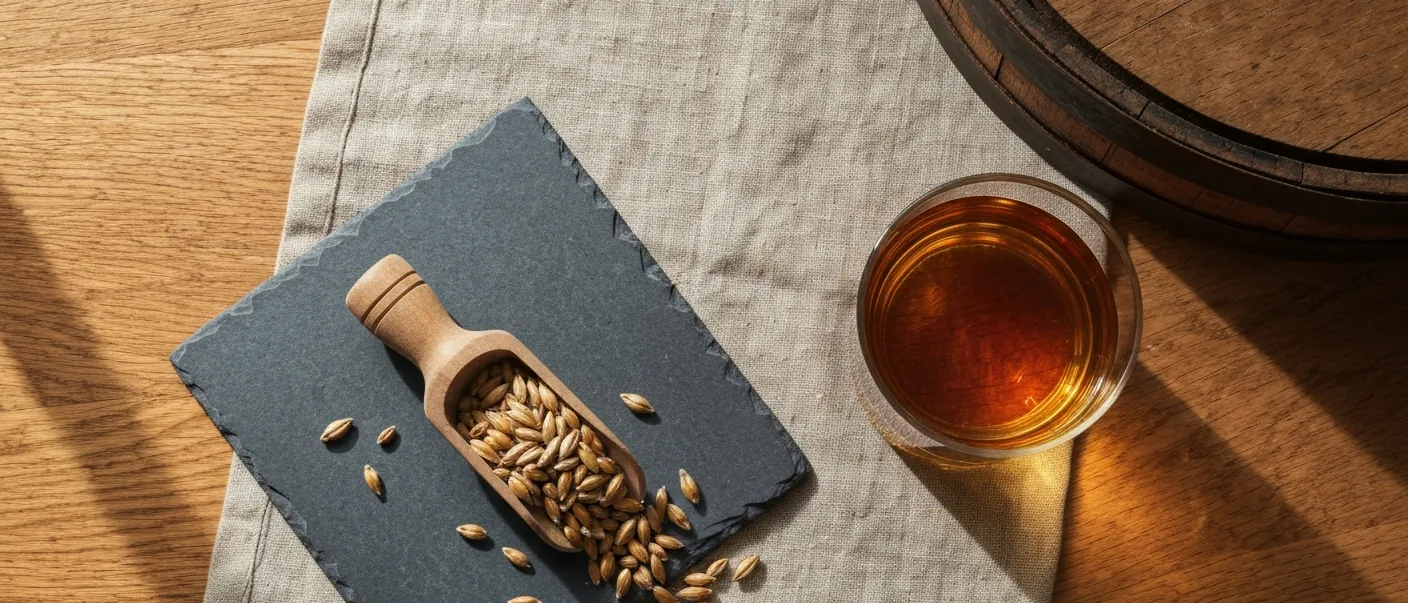
Ask most people where whisky flavour comes from and they'll point to the grain, the water, or some romantic notion of Scottish air. The honest answer is oak. There's broad agreement among distillers that the majority of a mature whisky's flavour — its colour, too — derives from the wood rather than the new-make spirit. The liquid off the still is colourless and raw; what emerges years later, amber and complex, has been fundamentally reshaped by the cask around it.
This happens through several processes. The spirit extracts compounds directly from the wood — vanillin, tannins, lactones — while oxygen moving slowly through the staves softens harsh alcohols. Residual compounds from the cask's previous contents leach back out. And a portion of the spirit evaporates each year, the so-called angel's share, concentrating what remains.
Ex-bourbon versus ex-sherry
The two cask types that dominate Scotch and Irish maturation arrived at their positions largely through practicality. American bourbon law requires new charred oak barrels, which means a steady supply of once-used casks flows outward from Kentucky and Tennessee to whisky producers elsewhere. Ex-bourbon barrels — typically American white oak — tend to produce lighter, vanilla-forward, coconut-tinged spirits. Charring the interior creates a carbon layer that filters rougher spirit compounds and a zone of caramelised wood sugars just beneath it that the maturing spirit gradually draws on.
Ex-sherry casks, usually European oak, do something quite different. European oak contains more tannins and fewer of the lactones responsible for that coconut character. Sherry-seasoned wood brings dried fruit, spice, dark chocolate notes and a richer, more resinous texture. Oloroso — a dry, oxidatively aged wine — is the most commonly used style, though Pedro Ximénez casks produce notably richer results.
First-fill versus refill
The number of times a cask has been used matters enormously. A first-fill cask — used to mature whisky for the first time after its original contents — is still active and full of residual compounds. Spirit matured in a first-fill ex-sherry butt will take on obvious sherry character fairly quickly.
Refill casks, used a second or third time, are quieter. Much of the extractable flavour has already been drawn out, so they impart wood influence more gradually. This suits distilleries that want grain character to come through clearly, or that are maturing spirit for a longer period where a first-fill cask might overwhelm rather than complement.
The fashion for finishing
Finishing — placing a whisky that has already matured in one cask type into a second, different cask for a further period — has moved from novelty to mainstream. Port pipes, rum barrels, red wine barriques, Madeira drums, Sauternes casks: the range of finishing vessels has expanded considerably, and so has the range of results.
A port finish typically adds a reddish hue and dark berry fruitiness, rounding off harder edges without transforming the spirit entirely. Rum cask finishing tends to emphasise tropical fruit notes and sweetness. Wine finishes are more variable — a light Burgundy cask will do different work to a heavily extracted Amarone barrel — which is part of what makes this area of whisky production worth following.
Duration is the critical variable. A few months in a finishing cask can add a secondary note without smothering what came before. Leave it too long and the finish dominates to the point where the original character disappears. The best finished whiskies feel integrated, the secondary cask audible but not shouting.
What this means for the drinker
Understanding cask influence changes how you approach a bottle. Ex-bourbon matured whisky can be approachable at a younger age because active first-fill wood works quickly. Ex-sherry matured spirit often rewards patience — the interaction between European oak and spirit takes time to settle into something coherent. With finished expressions, a label that specifies the finishing cask and duration is generally a better sign than vague language about secondary cask influence.
It's also worth noting whether a whisky has been coloured with caramel, which is permitted in many categories. Cask maturation produces colour naturally, but the range of amber shades across a distillery's range isn't always entirely the barrel's doing. Some producers are explicit about this; others are not.
Plenty of excellent whisky is matured simply, in one cask type, over a long period, without any finishing at all. The oak, given time, is quite capable of doing everything itself.