Alpine cheese is a different craft
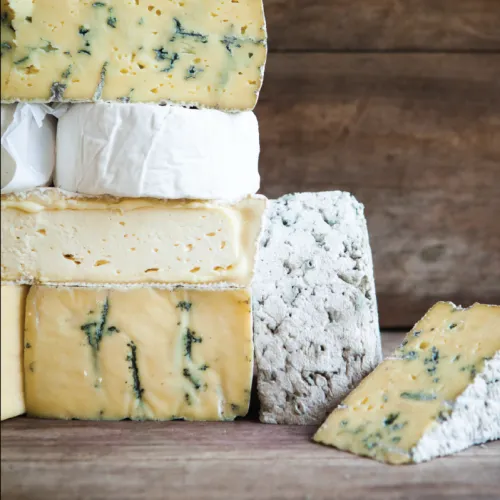
Most British territorial cheeses — Cheddars, Lancashires, crumbly blues — begin with a curd that is cut, drained, and pressed at relatively modest temperatures. The Alpine tradition takes a sharply different route. The curd is heated to a significantly higher temperature before pressing, a step known as scalding or cooking, and that single decision changes almost everything about the finished cheese.
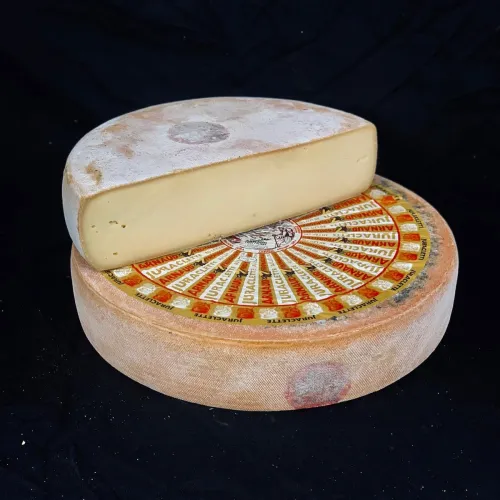
At higher heat, curd particles contract more firmly and release more whey, producing a paste that is dense, close-textured, and elastic rather than loose or open. This is the structural reason Alpine-style cheeses melt so smoothly: the protein matrix holds together under heat rather than breaking into greasy puddles. It also explains why these wheels must be large. The mass of a big wheel slows the rate at which the interior cools and acidifies during the early hours after making, giving the curd time to knit into that characteristic tight body.
What the mountains had to do with it
The original Alpine cheeses — Comté, Gruyère, Beaufort and their relatives — were shaped by geography as much as technique. High summer pastures produced milk that was richer and more complex than lowland grazing could offer. Cattle moving up to altitude ate a diversity of grasses, herbs, and wildflowers that left a direct imprint on the milk's flavour. The large-wheel format solved a practical problem too: one substantial wheel was far easier to carry down the mountain at the end of summer than dozens of smaller cheeses.
British cheesemakers working in this tradition do not have the Alps. What they do have is a serious understanding of what made that milk special, and many approach seasonality with real deliberation. Some work closely with specific farms or herds, timing their makes to catch the most expressive milk of the year — often late spring and summer, when cattle or sheep are on fresh pasture. The milk may not carry the floristic complexity of a high Alpine meadow, but a carefully managed British herd on good grazing produces milk with plenty of character. The cheesemaker's job is to preserve that character across a long maturation.
The rind and the wait
Most British Alpine-style cheeses are brine-washed during their early weeks, then regularly turned and brushed as they age. The brine wash discourages unwanted surface moulds while encouraging the hardy micro-organisms that give the rind its tan-to-ochre colour and contribute to the slow breakdown of the paste beneath. It is methodical, time-consuming work — wheels must be attended to consistently.
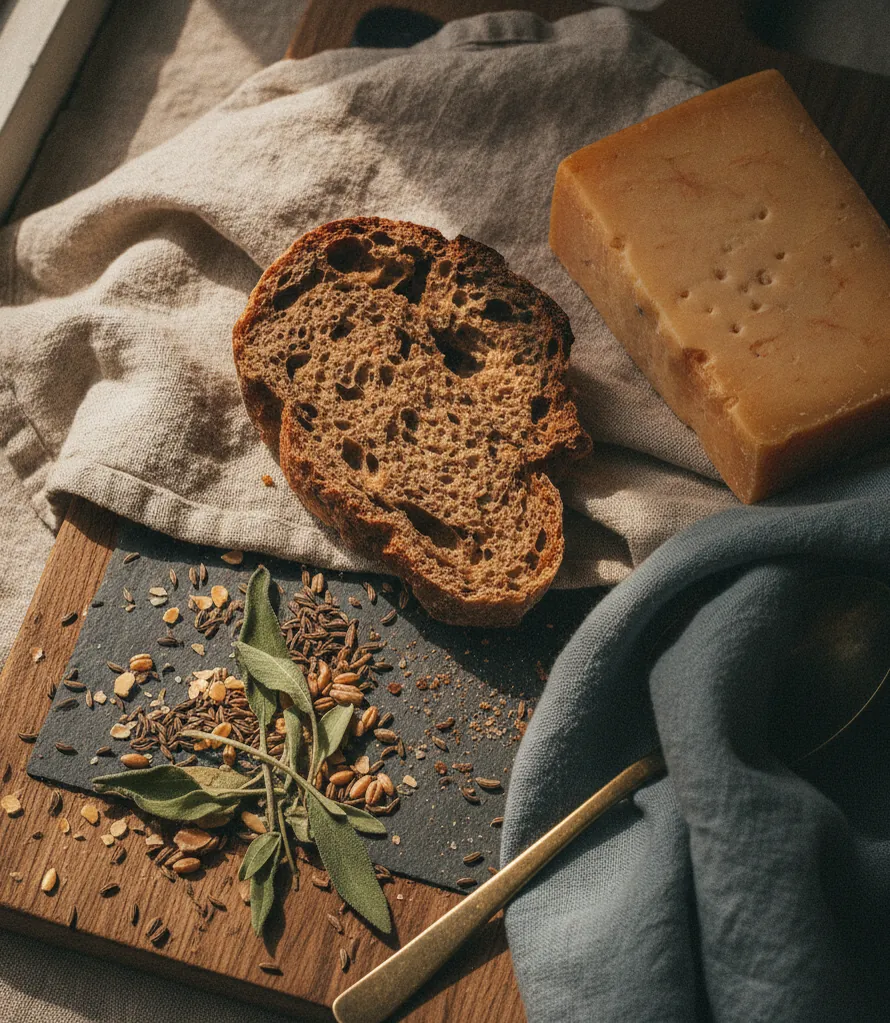
Maturation is where patience becomes a genuine ingredient. Over months — and serious examples are kept considerably longer — the paste deepens from pale ivory towards gold, the flavour builds from mild and milky towards notes of toasted grain, brown butter, or dried fruit, and small white crystals begin to form. Those crystals are deposits of the amino acid tyrosine, released as proteins slowly break down: the same thing you find in aged Gouda and old Comté, a gentle, almost sandy crunch that is one of the quiet pleasures of a well-matured hard cheese. Our piece on cheese maturation covers the broader science of what happens during ageing.
British makers working in this tradition
The group working seriously in this style remains small. What they share is commitment to the full discipline: large-format wheels, cooked and pressed curd, brine-washed rinds, and the willingness to tie up considerable time and milk in cheeses that will not be ready to sell for the better part of a year — a significant commercial commitment for any small dairy.
Results vary with milk source, starter cultures, and ageing length. Some British Alpine-style wheels are mild and supple at six months, with a clean, creamy flavour that works well sliced. Others, taken further, develop a deeper, more insistent quality — cheese that holds its own against strong flavours rather than being swallowed by them. The washed rind, discussed in more detail in our separate piece on rind styles, adds an earthy, faintly funky note at the edge that contrasts with the sweetness of the interior paste.
Cut a thin slice and hold it to the light, and you can see the close, smooth texture that distinguishes a properly made cooked-curd wheel from anything rushed. Find the crystals with your tongue. Notice how the flavour develops over a minute or two, starting mild and ending somewhere considerably more interesting. These cheeses are made slowly, and they are best appreciated that way.