The season is shorter than you think
British tomatoes are grown under glass for much of the year, but the fruit that matters arrives in late summer. Roughly July through September, longer days and stronger light push sugar production in a way that earlier or later crops cannot match. The greenhouse extends the calendar at both ends, but it cannot manufacture the quality that comes from a tomato ripening in real summer warmth.
Picked ripe changes everything
The difference between an August tomato from a British grower and a January one from almost anywhere is not subtle. A tomato left on the vine until genuinely ripe develops its sugars, acids and aromatic compounds in a way that cannot be replicated once the fruit is picked green and ripened in transit or in a warehouse. That process — technically called ethylene ripening — produces the right colour but not the right flavour. The flesh softens, the skin turns red, and the taste stays flat.
A vine-ripe British tomato in August has had time to build complexity. The acidity is brighter, the sweetness more pronounced, and there is often a faint savouriness in the skin that disappears entirely in out-of-season fruit. It is not nostalgia — it is chemistry.
Heritage varieties and why they matter
Much of what fills supermarket shelves year-round is bred for shelf life and uniformity rather than flavour. British specialist growers have pushed back by growing heritage and heirloom varieties that were largely abandoned by commercial producers. These are tomatoes selected over generations for how they taste rather than how they travel.
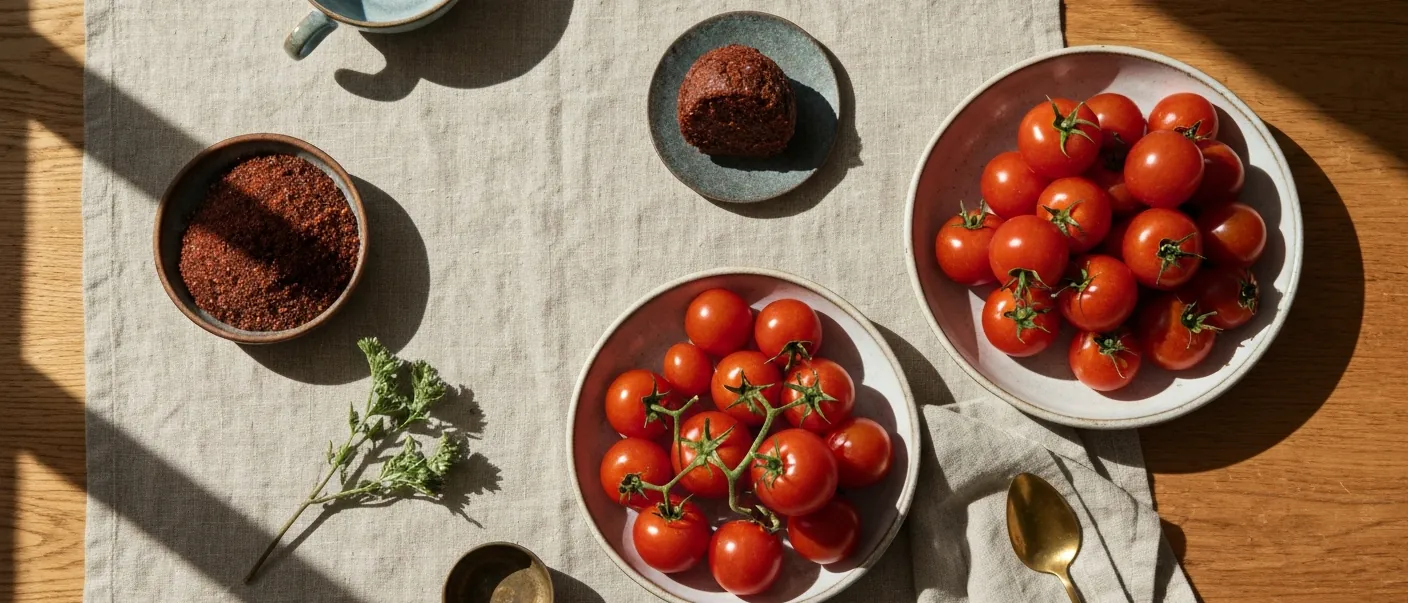
The range is extraordinary. Some heritage varieties run deeply savoury, almost meaty in texture. Others are intensely sweet with thin skins that split the moment you press them — which is precisely why they never made it into industrial supply chains. Colours shift from deep crimson to gold, orange-striped, near-black and pale yellow, and different pigments correspond to genuinely different flavour profiles.
Farmers' markets, farm shops and independent greengrocers are the most reliable places to find them during the season. A good grower will often let you taste before you buy — the differences between varieties side by side can be startling.
How to eat them well
The best late-summer tomatoes need almost nothing done to them. A ripe British tomato at room temperature — never cold, as refrigeration deadens both flavour and texture — with good oil and flaky salt is a serious thing to eat. The impulse to chill tomatoes comes from buying ones that were never ripe to begin with; a genuinely ripe tomato kept at room temperature and eaten the day it is bought needs no improvement.
Late summer is also the moment for dishes that depend entirely on tomato quality: a slow-cooked sauce, a bread and tomato salad in the Italian tradition, thick slices alongside good cheese. None of these work in January. All of them work in August, with the right fruit.
Making the most of the window
The season is brief and unforgiving. A wet August can blunt it; a warm September can extend it. The practical response is to buy in volume when you find tomatoes that are genuinely good and use them quickly — ripe fruit does not wait. If you have more than you can eat fresh, slow-roasting concentrates their flavour considerably and stretches your use of them by days rather than hours.
Pay attention to where your tomatoes come from. A named British grower, a specific farm, a variety on the label — these are signs that someone has thought about flavour. An anonymous bag of salad tomatoes of unspecified origin has almost certainly not been selected for taste. In late summer, the good stuff is available. It just requires a little looking.