A winter feast, not a spring one
There is a temptation to read St David's Day through daffodils and imagine something vernal. The reality on the plate is earthier. The first of March sits at the tail end of what growers call the hungry gap — that lean stretch between the last of winter's stored roots and the first genuine warmth of spring. Wales, shaped by upland farming and wet Atlantic weather, built its feast-day food around what actually exists in the larder at that moment: roots, slow-cooked meat, and the storecupboard grains and dried fruit that have been working through since autumn.
That grounding in genuine seasonality gives St David's Day food its character. It is not constructed nostalgia; it is what makes sense on a hill farm on a cold March morning.
The leek, and why it matters more than the daffodil
Both the leek and the daffodil serve as national emblems of Wales. The daffodil looks better on a lapel badge. But the leek has the older, more deeply rooted claim — and at the start of March, it has the considerable advantage of actually being in season.
Welsh regimental tradition holds that soldiers wore leeks in their caps or helmets as a mark of Welsh identity, a practice that goes back centuries and remains part of ceremonial life in Welsh regiments today. Whether the origin is a particular battle, a Shakespearean account, or something older still, the habit of wearing and eating leeks on this day is more than symbolic. A leek pulled in late February or early March is at its best: the white shaft is long, the flavour full without being harsh, and it is one of the few vegetables that genuinely belongs to this moment of the year.
In practical terms, the leek earns its place most powerfully inside cawl.
Cawl, and what surrounds it
Cawl — a slow broth of lamb or beef with whatever roots the season offers — is Wales's national dish and the anchor of any proper St David's Day meal. We have written about it at length elsewhere, covering regional variations and the tradition of eating broth and meat as separate courses. What matters here is how completely the dish fits this particular date: leeks in abundance, parsnips, swede and carrots held in cold storage since autumn, and a piece of mutton or salted beef that benefits from long, unhurried cooking. Nothing in that pot requires spring.
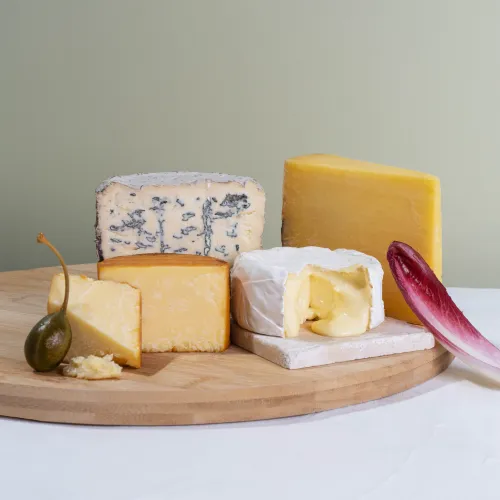
Caerphilly — Wales's crumbling, lightly lactic hard cheese — traditionally appears alongside cawl or as part of a Welsh rarebit. The properly made rarebit is built on a reduction of ale and mustard with melted cheese over bread; it shares almost nothing with a simple cheese on toast. We have covered the cheese and the rarebit separately. On St David's Day, the point is simply that they belong here: dairy from Welsh cattle, grain and beer from Welsh maltings, the storecupboard working hard at the year's bleakest moment.
Welsh cakes and bara brith
The sweeter side of the day runs to two bakes that differ entirely in method but share the same instinct for using what is available. Welsh cakes are cooked directly on the bakestone — a cast-iron griddle — and are done in minutes: small, spiced, studded with currants, good warm or cold. Bara brith is a yeast-risen or baking-powder loaf packed with dried fruit soaked overnight in tea, dense and fragrant and better for keeping a day before cutting. We have gone into both in detail elsewhere.
Together, they map the range of Welsh baking — the quick, everyday thing and the patient, storable one — and both feel right at a table set in early March.
The logic of the day
The St David's Day table holds together because no dish strains to be there. The leek is in season. The roots have kept well. The lamb or beef has had the winter to develop flavour. The dried fruit, the spices, the cheese — all of it is what a well-stocked Welsh kitchen would have to hand on the first of March without any special effort. The feast works not because it has been curated but because it grew directly from the land and the season that produced it.