A national day with room to breathe
Scotland has two great food occasions in the calendar. Burns Night, in January, comes with its own near-liturgical structure — the Address to a Haggis, the set order of courses, the whisky toasts. St Andrew's Day on 30 November is quieter in custom, which is part of its appeal. No fixed dishes, no obligatory order. What it offers instead is an invitation to gather around Scottish produce at one of its finest moments: late autumn, when game is in full season, root vegetables are at their sweetest, and the larder feels full.
If St David's Day calls for a Welsh table built around leeks and lamb, St Andrew's Day asks something similar of Scotland's larder — a loose menu that moves from sea to land, and finishes with the oat and the cream that Scottish kitchens have always done well.
Start with the sea
Cullen skink — the thick, smoked haddock and potato soup from the Moray Firth coast — is one of the most satisfying ways to open a winter meal. We cover it in more detail in our piece on named British soups; briefly, it manages to be both deeply savoury and clean-tasting, a generous starter that doesn't overwhelm what follows.
If you'd rather something lighter, or want to serve soup as a main, Scottish salmon — properly sourced, and there is a genuine difference between the best and the rest — works well with simple accompaniments. Cock-a-leekie, Scotland's leek and chicken broth, has a gentle, restorative quality that suits a November evening; its prune element (traditional, even if it sometimes surprises people) gives the broth an unexpected depth. Scotch broth, built from barley, root vegetables and lamb or mutton, can open a meal or carry one on its own.
The heart of the table
Venison says late-autumn Scotland more directly than almost anything else. Red deer come into their best eating condition at precisely this time of year. The meat is lean, dark and richly flavoured — closer to beef in character than the paler farmed venison you sometimes find on restaurant menus. A haunch or saddle, slow-cooked or roasted, makes a centrepiece that feels grounded in the occasion rather than borrowed from somewhere else.
Root vegetables, kale, swede and celeriac all suit venison well and are all in good form through November. Pull a decent Scottish ale into the cooking and the dish becomes about as anchored in place as a plate can be.
The cheeseboard and the oatcake
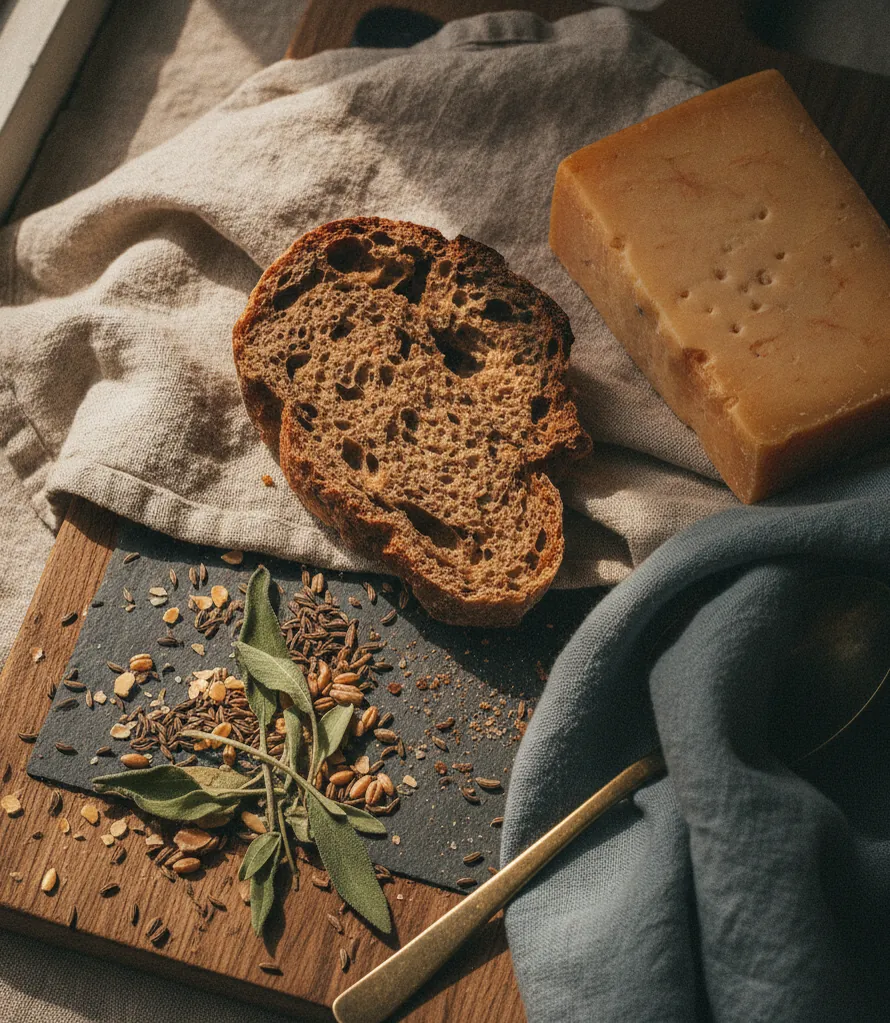
Scotland has a small but serious cheesemaking tradition, and a Scottish cheeseboard is one of the more satisfying ways to honour it. Styles range from the crumbly, lactic freshness of crowdie — made from skimmed milk and among Scotland's oldest cheeses — to firm, washed-rind and blue varieties from the islands and mainland. The common thread in serving them is the oatcake: flat, slightly rough-textured, made from oatmeal, it carries cheese without competing with it. A good oatcake is a modest thing, and that is precisely the point.
The Scottish cheeseboard is underrated beside its French or English equivalents. St Andrew's Day is a reasonable moment to make the case for it.
Finish with cranachan and shortbread
Cranachan is the dessert that arrives already carrying a flag. Toasted oatmeal, cream, Scottish raspberries and whisky, layered in a glass — simple to assemble, and excellent when the components are good. Raspberries are out of season by November, so this is a case where a good-quality preserve, or a jar put up in summer, earns its place. The flavour holds.
Alongside or after, shortbread is the natural companion. As we explored in our shortbread article, what looks like a plain biscuit rests on a precise ratio of butter, flour and sugar that the best Scottish makers treat with real seriousness — and it shows in the result.
None of this is a fixed menu. St Andrew's Day is as much an attitude as a prescription: a prompt to cook and eat Scottish, and to appreciate how much there is to draw on.