The orchards come into their own
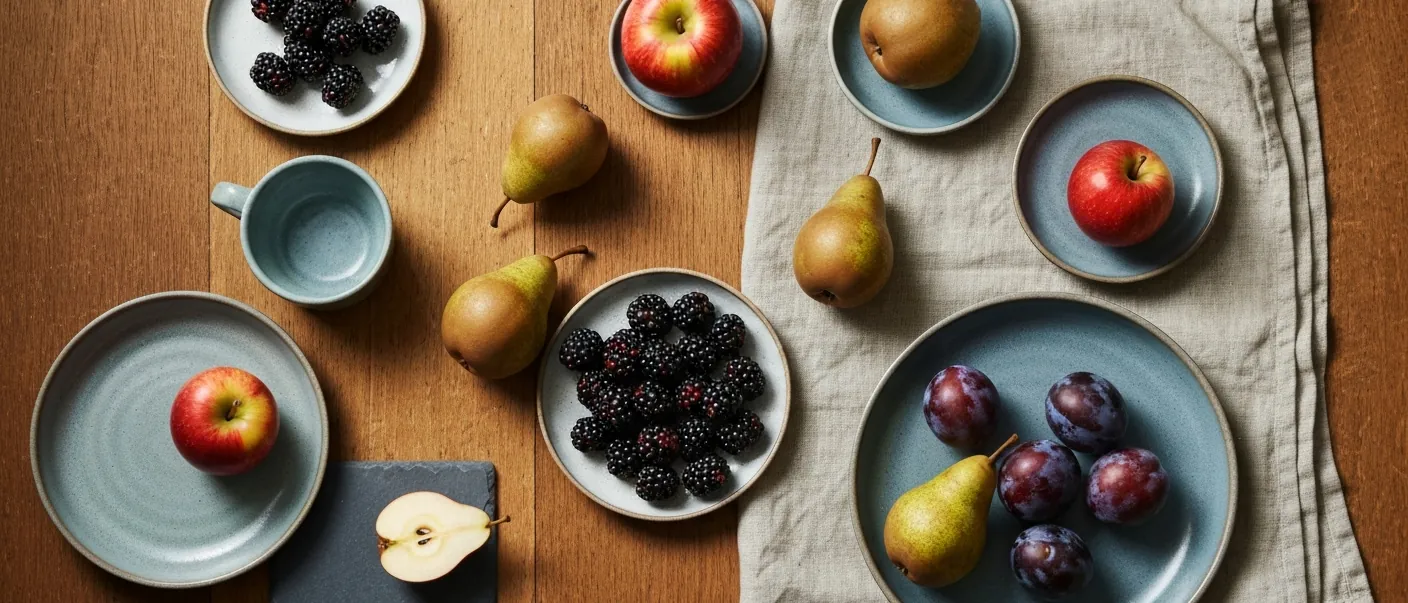
The apple harvest proper begins in September, and the range arriving from British orchards is genuinely startling if you've only ever bought supermarket fruit. Early-season varieties tend towards the aromatic and lightly tart — very different from the waxy, uniform apples that travel well across continents but taste of very little. Seek out a farm shop or farmers' market and you'll find varieties with names that read like lost village cricket teams, each with its own character.
Damsons and plums are also at their peak, and they don't hang around. The damson has a short window — intensely purple, mouth-puckeringly astringent raw, but transformed when cooked into preserves, cheeses and fools. If you spot them, buy more than you think you need. Quince is just approaching readiness by the month's end, hard and fragrant on the branch; watch for it in October.
Blackberries: free and fleeting
The blackberry season peaks in September, and there's an old country tradition that they shouldn't be picked after Michaelmas (the 29th) — the Devil is said to have spat on them, or worse, depending on who's telling it. The folklore is colourful; the underlying observation is sound. Berries picked earlier in the month, from sunny spots on bramble thickets, are sweeter and more flavoursome than those left on the vine in cooling, wetter conditions.
Wild blackberries from hedgerows and footpaths are among the last genuinely free foods available to anyone willing to walk somewhere green. They reward patience — south-facing slopes, field margins that haven't been sprayed — and are best eaten within a day or two of picking.
Native oysters return
September marks the opening of the native oyster season, defined by the old rule that oysters are only eaten in months containing the letter R. This isn't baseless superstition: native oysters spawn through summer, and the closed season allows stocks to recover. By September the water is cooling and the oysters are in good condition again.
The native oyster — Ostrea edulis — is a different creature from the Pacific or rock oyster available year-round. Flatter, rounder, with a flavour that's more mineral and complex, it's considered by many serious cooks and eaters to be among the finest shellfish available. British beds, from the Helford River in Cornwall to the Essex coast, carry a strong reputation. Tradition is to eat them raw with nothing more than a squeeze of lemon or a drop of shallot vinegar, though the choice of condiment prompts surprisingly firm opinions.
Game season opens
Partridge season opens on 1 September by statute — one of the fixed points in the British shooting calendar. The grey partridge is a native bird; the red-legged, or French partridge, was introduced later and is now the more commonly found of the two. Young birds early in the season suit simple roasting; older birds respond better to slower, covered cooking.
Partridge is among the milder-flavoured game options — less assertive than grouse, more delicate than pheasant — which makes it a useful starting point for anyone curious about British game cookery but cautious about something too strong. Butchers stocking game come into their own from September onwards; worth finding one if you haven't already.
Mushrooms, beginning
Wild mushrooms begin appearing in September, though the season builds through October and November. Ceps, chanterelles and hedgehog mushrooms show up at good greengrocers and markets, but supply is erratic and weather-dependent. A wet August followed by a warm September is generally good news.
The gap between a cultivated chestnut mushroom and a freshly picked wild cep is considerable. If wild mushrooms are unavailable locally, a mix of cultivated varieties — king oyster, shiitake, chestnut — gives far more depth than a single type alone.
September asks very little of the cook. The produce does most of the work.