The woodland arrives before the market does
Wild garlic is the surest sign that the season is shifting. It appears in damp, shaded woodland — often carpeting the ground in broad, glossy leaves well before any flower — and its scent is unmistakable: gentler than bulb garlic, green and fresh rather than sharp. The leaves are the thing to seek out in March, picked young before the white flowers open while the flavour is at its most delicate. It remains one of the genuinely exciting ingredients you can find without paying a premium, provided you know where to look.
A note of caution worth passing on: wild garlic leaves can be confused with lily of the valley and wild arum, both of which are toxic. The smell is your clearest guide — crush a leaf and if it doesn't smell unmistakably of garlic, put it back.
Spring greens and the case for the underrated
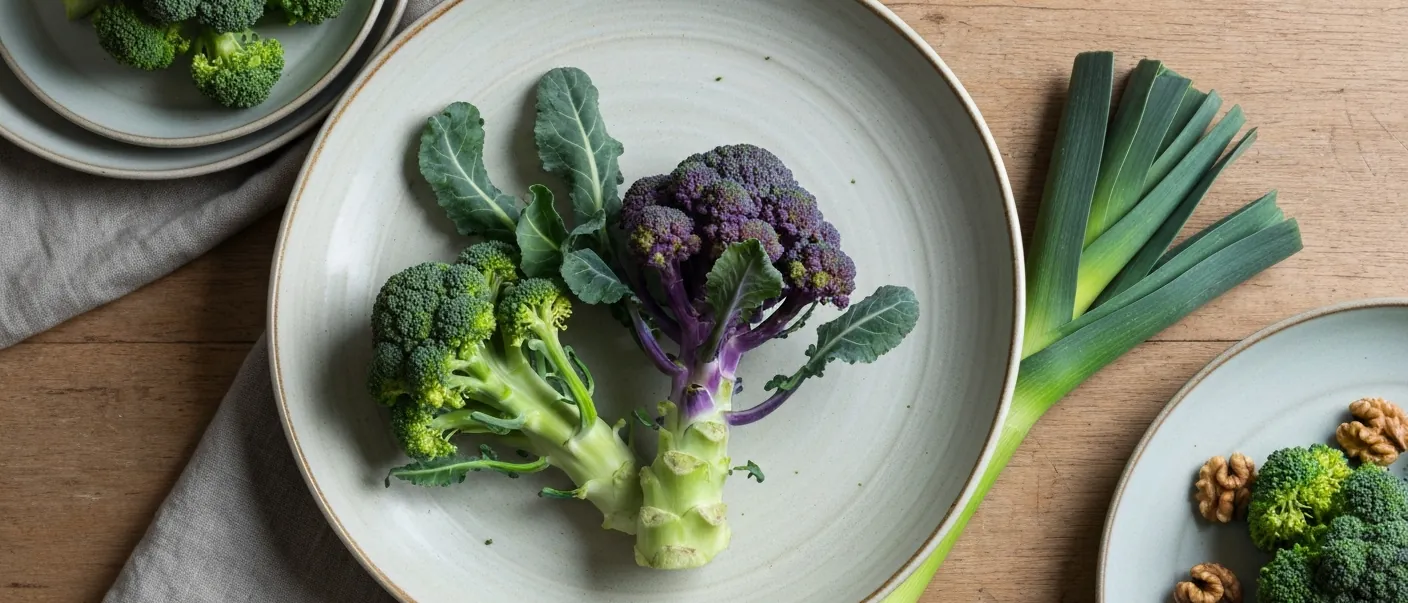
Spring greens are at their best now, and they deserve more credit than they typically receive. These are the loose-leafed, early brassicas that haven't yet formed a head — cabbagey in character but lighter, with a pleasant bitterness that softens quickly with heat. They've long been a staple of the British kitchen through late winter and into spring precisely because they're robust enough to survive cold snaps while still signalling something new is on the way.
Leeks remain excellent through March too. St David's Day on the first of the month gives the leek a moment of cultural prominence — it is one of the national emblems of Wales, worn and celebrated on that day each year. Their culinary relevance isn't merely ceremonial, though. Good leeks in March are sweet and yielding, with none of the woodiness that can come later in the year.
Rhubarb at the crossroads
March is the month when two kinds of rhubarb briefly overlap, and the difference between them matters. Forced rhubarb — grown in the dark in heated sheds within the so-called Rhubarb Triangle in West Yorkshire — produces vivid pink stalks with a candied, almost wine-gum sweetness. It arrives from January, but by March it's winding down.
As forced rhubarb fades, outdoor or field-grown rhubarb begins. The stalks are thicker, greener, more robustly tart. The first outdoor stems of the year appear towards the end of March in a mild season. The two aren't interchangeable — forced is delicate and almost jewel-like, outdoor is bracing. If you see forced rhubarb at a good greengrocer this month, buy it. Its season is genuinely short.
Mothering Sunday and what it means for the table
Mothering Sunday falls on the fourth Sunday of Lent, which means the date shifts each year — check closer to the time rather than assuming a fixed point on the calendar. What doesn't shift is its long association with baking, and specifically with simnel cake: a fruit cake layered and topped with marzipan, its eleven balls of almond paste traditionally representing the apostles. It is one of the older baking traditions still genuinely practised in British homes, rather than simply described in history books.
The connection between Mothering Sunday and simnel cake predates the modern commercialised version of Mother's Day by centuries. Domestic servants were historically given the day off to visit their mothers, often bringing a simnel cake baked from the household's provisions. That origin — cake as a gift carried home — feels apt for a month when the kitchen is still the warmest room in the house.
March on the plate
Root vegetables are past their peak, and the asparagus and new potatoes that define May are still weeks away. What March offers instead is a set of transitional ingredients that reward attention: wild garlic that needs to be found rather than bought, spring greens that ask only for confidence in cooking them simply, rhubarb that straddles two entirely different growing methods within the same month. Lean into the brassicas, keep an eye on the hedgerows, and don't let the last of the forced rhubarb pass you by.