The asparagus farewell
By long tradition, the British asparagus season closes at Midsummer — the 24th of June. That deadline isn't arbitrary; it gives the crowns time to build energy for next year's growth. What it means in practice is that the best asparagus eating of the year is behind you by the time summer properly announces itself. If you haven't made the most of it by mid-June, the window has already narrowed. This seasonal brevity is exactly why British-grown asparagus carries such weight: scarcity, freshness, and a concentrated period of availability give it a character that imported spears simply don't replicate.
So eat it soon, eat it simply, and remember that once Midsummer passes, it's gone for another year.
Strawberries and the shape of early summer
Outdoor British strawberries are one of the clearest signals that the season has shifted. They arrive later than their polytunnel cousins and taste markedly different for it — more intense, more fragrant, with an acidity that balances the sweetness. The association with Wimbledon is well established; the tournament traditionally falls in late June and into July, and the timing aligns neatly with the peak of the outdoor crop.
The difference between a strawberry grown outdoors in British summer light and one grown under glass in February is not subtle. Warmth, slower ripening, and good soil make a measurable difference to flavour. Bought from a farm shop or a pick-your-own, eaten the same day — this is the version worth waiting for.
Peas and broad beans
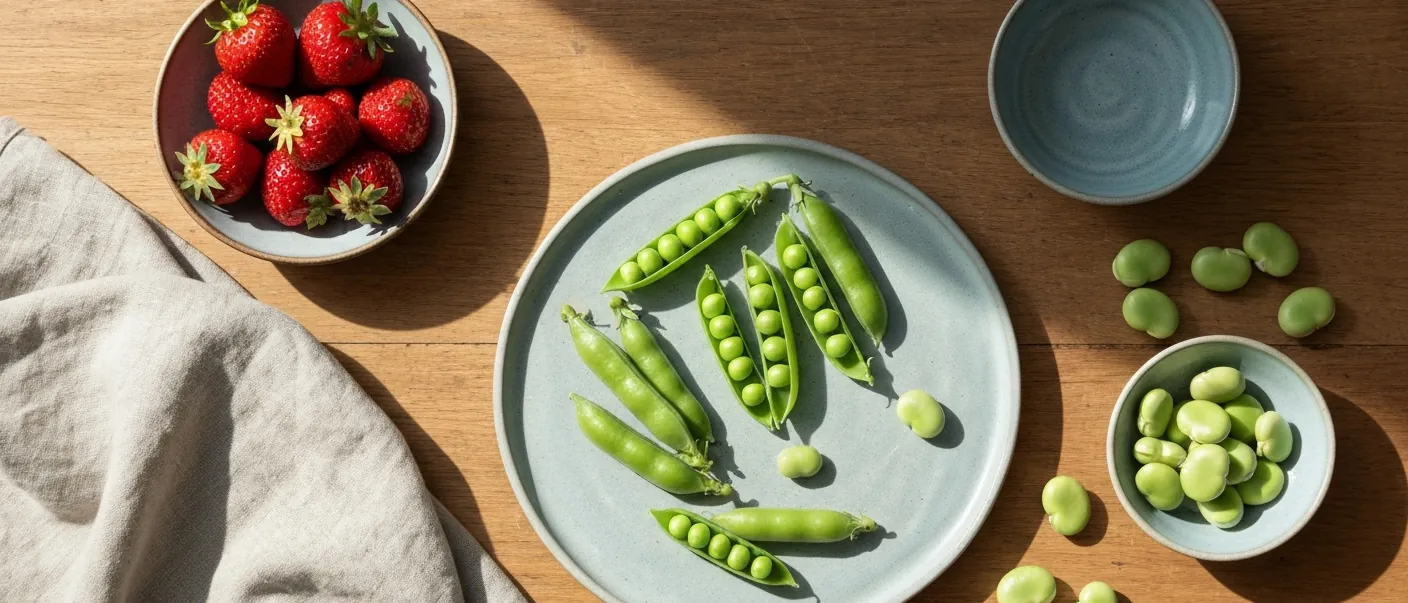
June is when peas and broad beans overlap, which is one of the more quietly satisfying things about the British growing calendar. Both are at their sweetest earliest — peas especially lose their sugar rapidly after picking, converting it to starch within hours. A pea bought from a supermarket and a pea eaten in a field are barely the same food.
Broad beans in June are still young enough that the inner skins stay tender. Later in the summer they toughen and turn bitter, which is why so many people think they dislike broad beans — they've only ever eaten them past their best. Seek out pods that feel full but not hard, with beans that are still a bright, pale green.
Elderflower and gooseberries
Elderflower is at its peak in early June, before the heat bleaches the blossom. The flowers carry a distinct muscatel fragrance — honeyed but not cloying — and they've been used in British food and drink for centuries. Cordial is the obvious application, though elderflower also appears in wines, sparkling drinks, and alongside fruit, particularly gooseberries.
That pairing is traditional for good reason. Gooseberries, sharp and grassy, soften the elderflower's sweetness; elderflower rounds the gooseberry's tartness. The two crops arrive at almost exactly the same time, which suggests the pairing is less a culinary discovery than a seasonal inevitability. Gooseberries are one of Britain's most underused fruits — partly because they need cooking to show their best, and partly because they've fallen out of fashion since their Victorian heyday. June is the time to reconsider them.
First cherries
British cherries are among the most fleeting of summer fruits. The season is short — a matter of weeks — and the fruit itself is fragile, bruising easily and deteriorating quickly once picked. Kent has historically been the centre of cherry growing in Britain, though the orchards that once defined the county's landscape have diminished significantly over the decades.
What remains is worth tracking down. A properly ripe British cherry, eaten fresh, has a depth that the imported varieties available year-round rarely match. The skin is taut, the flesh firm, the flavour a balance of sweetness and a faint, almost wine-like bitterness. They need nothing done to them. Buy a bag, eat them as they are, and treat the stones as an occupational hazard.