The fruit glut begins
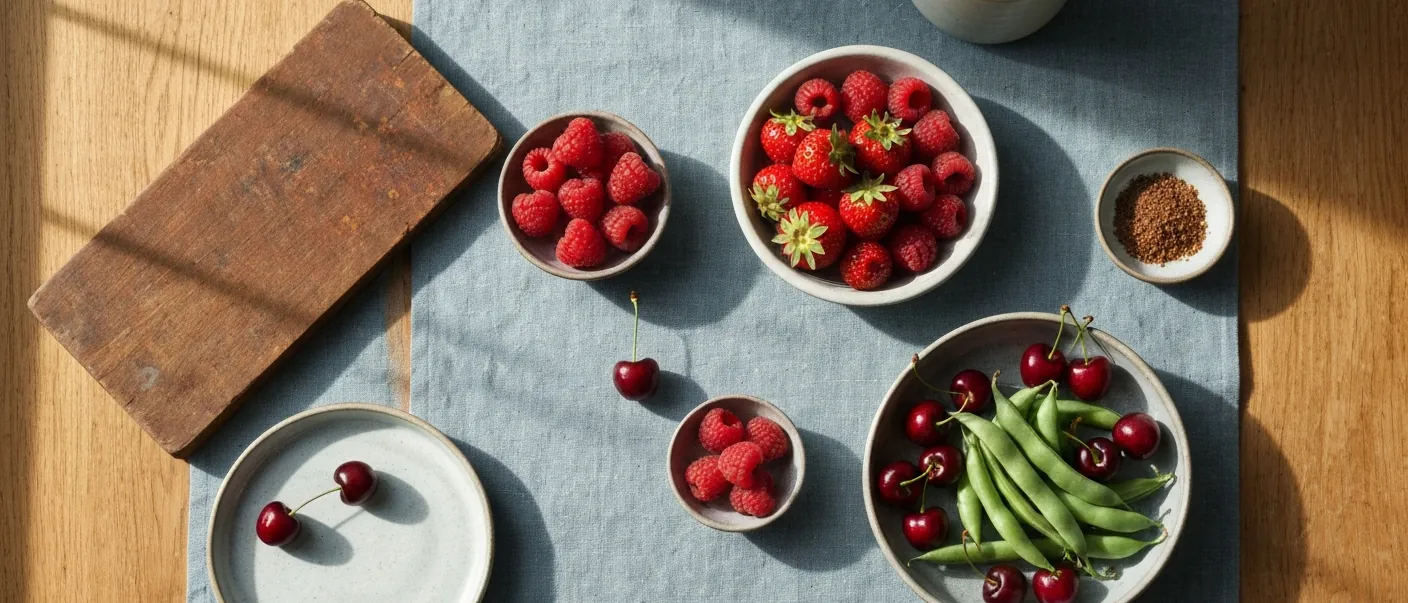
Cherries are at their best right now, and the window is shorter than most people expect. The British cherry season is intense and brief — a few weeks of deep, jewel-dark fruit that bears almost no resemblance to the imported cherries available all year. If you're near Kent or the Vale of Evesham, farm shops and pick-your-own orchards are the places to go. Eating them fresh, still warm from the tree, is reason enough to seek them out.
Alongside cherries, all three currants — black, red, and white — come into their own in July. Blackcurrants have a sharpness that feels almost medicinal, which is part of why they work so well with rich dairy and fatty meats. Redcurrants are the classic accompaniment to lamb, used as a jelly that cuts through the fat. White currants, the mildest and most unusual of the three, are worth seeking out from specialist growers — sweeter and more translucent, they're rarely seen in supermarkets.
Raspberries, too, peak now. Scottish-grown raspberries have a particular reputation, the cooler climate producing fruit with a sharper, more aromatic flavour than those grown further south. They don't travel especially well, so local is more than a principle here — it's practical.
From the coast: samphire
Marsh samphire — sometimes called glasswort, sometimes sea asparagus — grows along salt marshes and tidal flats around the British coast and is properly in season through July. It's one of the most distinctive things about eating in Britain in high summer. The texture is crisp, the flavour bracingly saline with a faint green bitterness underneath. It needs almost no preparation beyond a brief blanch, and it belongs alongside fish and shellfish in a way that feels entirely natural rather than contrived.
Look for it at fishmongers, coastal market stalls, or anywhere near the marshes of Norfolk, Suffolk, and the Thames Estuary. It should be bright green and firm, not yellowed or limp.
Courgettes and the vegetable garden at full pace
Courgettes are perhaps the most reliably abundant vegetable of the British July. Any gardener who has grown them knows the particular challenge: one day a courgette is the right size, and two days later it has become a marrow. The flowers are edible too, and a good greengrocer or farm shop will often have them — large, delicate, and briefly available.
The vegetables available in July speak to a garden at full productive pace. Beans, both broad and French, are plentiful. Salad leaves are still good before the heat turns them bitter. New potatoes, dug fresh, need very little done to them.
The first honey of the year
New-season honey begins to be pulled by beekeepers from around midsummer, and July is often when the first jars appear. This matters more than it might seem. Fresh raw honey — unheated, unfiltered, and recently extracted — has a fragrance and complexity that processed honey simply doesn't. The flavour varies significantly depending on what local flowers the bees have been working: a honey from heather moorland tastes entirely different from one drawn from orchards or wildflower meadows.
Small-scale beekeepers sell at farmers' markets and farm gates, and the range of British honeys available at this level is genuinely wide. It's worth asking the beekeeper where the hives are located — the answer tells you a great deal about what's in the jar.
Worth noting: Whitstable in July
By tradition, July is the month of Whitstable's oyster festival — one of the more characterful food events on the British calendar, centred on the town's long history of native oyster cultivation. If you're planning to go, check the official Whitstable Oyster Festival website for this year's exact dates, as they vary. The festival aside, Whitstable is one of the few places in Britain where native oysters can still be bought very close to where they were grown, which is reason enough to visit in any month.
Native oysters have a shorter season than Pacific rock oysters, and summer — before the traditional close — is a good time to seek them out from specialist fishmongers and coastal suppliers.