A month of two seasons
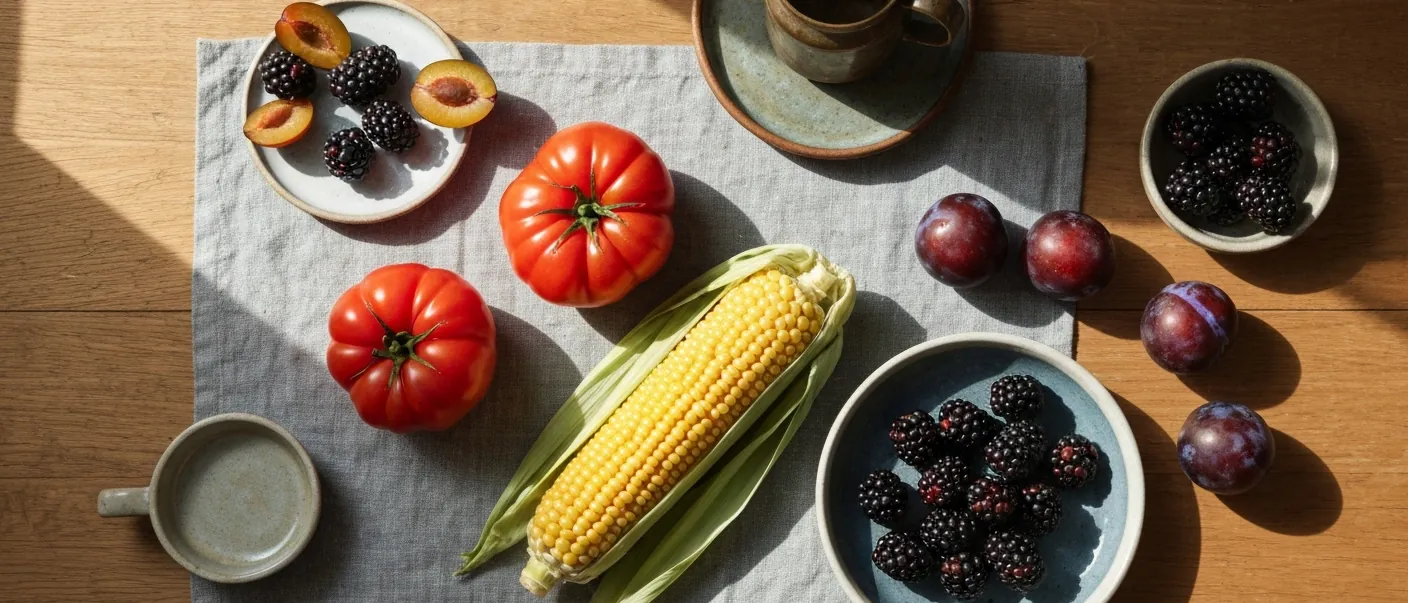
No other month splits the calendar quite like this. The long heat of July has done its work: tomatoes are at their sweetest, sweetcorn is finally worth eating, and stone fruit is coming fast. Look to the hedgerows by the final weeks and the blackberries are already darkening. The preserving pan comes down from the shelf. Something is ending and something is beginning.
The garden and the farm
Tomatoes reach their peak now — not just in polytunnels but outside, on south-facing walls and in kitchen gardens across the country. The difference between a tomato harvested in August sunshine and one bought in February is almost comic. Eat them simply, at room temperature, with good oil and salt.
Sweetcorn is another August revelation if you buy it fresh from a farm shop or market rather than pre-packed. The sugars begin converting to starch within hours of picking, so proximity to the grower genuinely matters. Look for tightly wrapped husks and pale, milky kernels.
Plums arrive in force through August. The range across British orchards is wider than most people realise — from small, tart greengages to deep purple damsons and the familiar Victoria. Early in the month the first specimens may be sharp enough to demand cooking; by late August the better ones are soft and honey-sweet straight from the tree.
Discovery apples deserve particular mention. One of the earliest English eating apples to ripen, they appear briefly in August with pale pink flesh and a delicate, almost strawberry-edged flavour that doesn't survive long storage. Buy them when you see them, eat them quickly, and don't expect to find them beyond early September.
The Glorious Twelfth and game
The twelfth of August is a fixed statutory date — the opening of the red grouse season, known to generations of field sportsmen simply as the Glorious Twelfth. Grouse shot on the moors of Scotland, northern England and parts of Wales begins appearing in butchers and on restaurant menus almost immediately. It is one of the few foods in Britain with a genuinely dramatic opening day.
Red grouse is entirely wild — it cannot be farmed — which makes it unusual among the meats we eat and gives it a flavour that reflects the heather moorland on which the birds feed. That flavour is pronounced and distinctly gamey, particularly later in the season. Birds taken in August tend to be younger and slightly milder, making early-season birds from a good butcher the sensible place to start if you haven't tried grouse before.
The hedgerow harvest begins
Late August is when foragers start watching the hedgerows closely. Blackberries don't all ripen at once — even on a single bramble the fruit can range from hard and red to plump and deeply black — so the picking season stretches from the final weeks of August well into September depending on location and the year.
This is the beginning of preserving season in earnest. Blackberry jam, bramble jelly, plum chutney, pickled greengages — August is when the storecupboard starts building its winter reserves. There is a practical logic to it that has nothing to do with nostalgia: fruit in peak condition now means something worth opening on a grey January morning.
Elderberries follow close behind the blackberries, and sloes — still hard and astringent in August — are worth noting for the sloe gin many people prepare in autumn. None of these are quite ready yet, but the hedgerow is alive with what's coming.
How to shop for August produce
Farm shops and weekly markets are where August's seasonal eating makes most sense. Supermarkets stock many of the same things, but often from further afield and harvested early to survive the supply chain. A tomato or a sweetcorn cob bought directly from a grower is a different ingredient.
For grouse, seek out a traditional butcher or game dealer. They will be able to tell you where the birds came from and how fresh they are — both matter considerably with game.
August rewards the cook who moves quickly. Discovery apples won't wait. Sweetcorn is best within a day or two of picking. Even blackberries are better eaten or preserved the day you find them. The month has plenty, but it doesn't hold still for long.