What the hungry gap actually is
The hungry gap runs roughly March through to May, when the previous season's stored crops are exhausted and the new harvest hasn't arrived. For most of Britain's history it meant genuine scarcity — cellars bare, livestock thin, communities living on whatever had been salted, dried, or otherwise put by.
Root vegetables that kept well through winter — parsnips, turnips, stored potatoes — would be running low or finished. Brassicas that overwintered in the ground, such as kale and purple sprouting broccoli, would be coming to an end. Lettuces, peas, broad beans, new potatoes: none of these were ready. The seeds were in the ground and the wait was the hardest part.
Why it still matters
Supermarkets have made the hungry gap largely invisible — asparagus appears in January, strawberries are available year-round. But for anyone buying from farm shops, box schemes, or farmers' markets, or growing their own, the gap remains real. The seasonal calendar doesn't bend for convenience.
If a market stall looks thin in April, that's not a failure of supply chains; it's the honest state of the British growing year. Producers who work within the seasons rather than against them will say the same: this stretch demands the most planning and the most patience.
The gap is also a useful corrective for anyone who thinks of eating seasonally as straightforwardly pleasant — tomatoes in August, squash in October — without reckoning with the months when the answer to "what's in season?" is, honestly, not much.
What people have always eaten through it
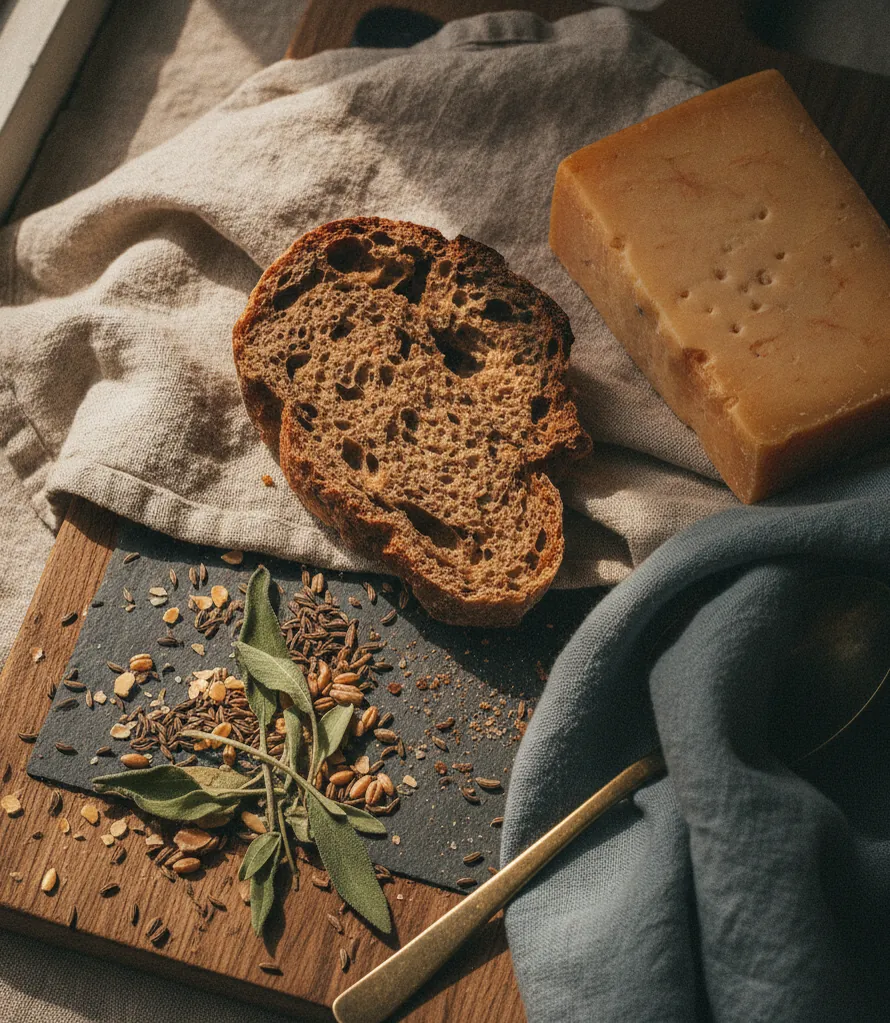
The foods that carry people through the gap are instructive. Eggs have always been central: spring is laying season, and hens that slowed through winter come back into production as the days lengthen. Dairy follows the same logic — spring milk, from cows and ewes turned out to the first flush of grass, has historically been the richest of the year. Traditional cheese calendars were built around it.
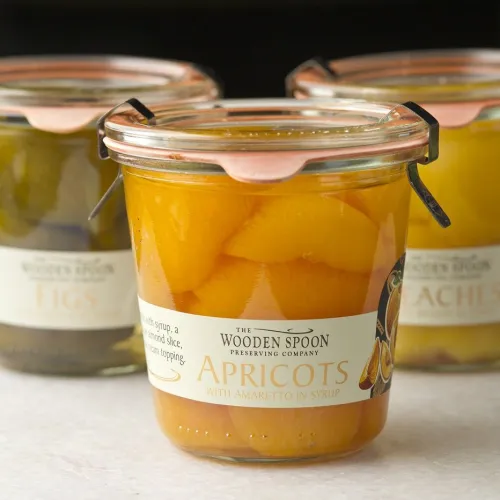
Preserved goods do the rest of the work. Pickles, chutneys, dried pulses, cured meats, smoked fish — anything put up in autumn and winter earns its place on the table now. A well-stocked larder isn't nostalgic; it's a practical response to a calendar with a hollow in it every spring.
Forced rhubarb, grown in heated sheds in darkness, arrives earlier than almost anything else and has filled the hungry gap's dessert course for generations. Its character — sharp, urgent, deeply pink — makes sense once you understand the circumstances of its production.
The gap as a lens on British food culture
Much of what feels distinctive about British food — the emphasis on preserving, the love of pickles and potted things, the dairy-forward cooking, the celebration of eggs — traces back to the logic of the hungry gap. These aren't random preferences; they're the accumulated answers of a farming culture to the question of how to eat well through a difficult stretch of the year.
Spring menus at restaurants working with British produce will often lean on exactly these things: aged cheeses, cured meats, dishes built around eggs, forced rhubarb on the pudding menu. It can read as restraint or minimalism, but it's really just honesty about what's available.
The gap also gives autumn its particular urgency. The impulse to glut on late-summer produce, to make jam and pickle cucumbers and fill the freezer, isn't sentimentality — it's the knowledge, however buried, that March is coming and the shelves will be thin.
Getting through it well
The hungry gap rewards a shift in thinking. Rather than cataloguing what's missing, ask what's actually here. Purple sprouting broccoli, spinach, spring onions, the first sorrel — these appear at the gap's edges. Wild garlic arrives and offers something fresh and green when little else does. A well-kept storecupboard carries real weight: good dried lentils, quality tinned fish, a jar of something fermented from the autumn.
The gap ends. Late May brings asparagus, new potatoes, peas — and after weeks of waiting, they taste like exactly what they are: the close of a long winter and the start of something better.