When sprats are in season
The sprat's season runs through the colder months — roughly autumn into the depth of winter — when these small, silver-bellied fish gather in dense shoals close to British shores. East coast ports, from Scotland down through the Humber to East Anglia, have long been the heart of the sprat trade, though they are landed at harbours around the south coast and the Bristol Channel too. They are at their fattest when the water is at its coldest, which is fortunate: that layer of oil is precisely what makes them worth eating.
Unlike many fish whose condition you have to take on trust, a sprat's quality is visible. At their best they are almost luminously bright, with tight scales and clear eyes. They deteriorate quickly — far faster than a thick fillet of something sturdier — so buying from a fishmonger who turns stock over fast, or directly from a harbour market, matters more than it does with most fish.
Sprat, whitebait, young herring: telling them apart
The confusion is understandable. Sprats, young herring and the fish sold as whitebait are all small, silver and oily, and they often end up in the same pan. A sprat is its own species, not a juvenile of anything else, and it stays small — most run to around ten or twelve centimetres. Young herring are simply herring at an early stage of growth; a grown sprat and a young herring can look almost identical to an unpractised eye, but the sprat has a sharper, more pronounced keel of scutes — small spiny scales — running along its belly.
Whitebait is not a species at all. It is a collective name for whatever very small fish happen to be netted together, traditionally fry of sprats and herring mixed, though composition varies by location and season. When you order whitebait in a pub, you are almost certainly eating sprat fry. When you buy sprats from a fishmonger, you are getting the fully grown article — something with enough substance to serve as a main course rather than a nibble.
Why eating sprats makes ecological sense
Sprats are what ecologists call a forage fish: a species low in the marine food chain, converting plankton into the fat and protein that larger fish, seabirds and marine mammals depend on. Eating them directly, rather than waiting for a cod or a tuna to do it first, is one of the more straightforward ways to reduce the footprint of eating fish. The stocks are generally healthy, the fish are small and fast-reproducing, and they have been eaten this way along the British coast for centuries.
None of that would matter if they tasted poor. They do not. The flavour is assertive — properly fishy in the way that divides opinion — with enough richness that a small plateful satisfies in a way that lean white fish rarely does at the same weight.
Fresh, salted, or smoked
The simplest preparation is whole, cooked fast over high heat or under a fierce grill, head removed if you prefer but skin and bones eaten as part of it. The bones soften enough to be edible, particularly in smaller fish.
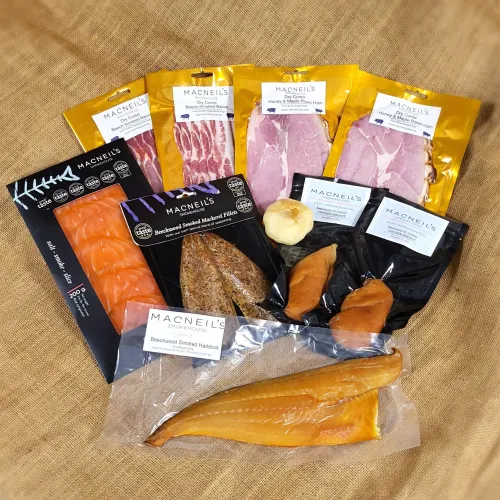
Smoking is where the sprat has its firmest tradition. The east coast of England has smoked sprats for generations. A properly cold-smoked sprat — cured lightly in salt, then given a long, cool smoke — is one of the underrated things you can pull from a fishmonger's counter in the middle of winter. The oil in the flesh carries smoke deep, producing something that keeps its richness without tasting cooked through. Hot smoking produces a more yielding texture, closer to a smoked mackerel fillet, and suits larger fish particularly well. We have written separately about the mechanics of cold and hot smoking, covering what each process does to flavour and keeping qualities.
Salted or pickled sprats are less common in Britain than in Scandinavia or the Baltic states, where the fish holds an almost totemic place in winter cooking. The principle is the same one that underpins the herring barrel tradition we have covered elsewhere — salt as a preservative that transforms rather than merely conserves.
Buying and using them
Ask your fishmonger when their sprats came in. If they hesitate, or the fish look dull and smell of ammonia rather than the sea, leave them. Sprats are cheap enough that there is no reason to compromise on freshness, and stale oily fish is one of the less forgiving things to try to rescue.
Look for them from early autumn, with supply usually peaking before the turn of the year. Smoked sprats from reputable east coast smokehouses are worth ordering by post if you are not near a good fishmonger — they travel far better than fresh, and a vacuum-packed smoked sprat in the depths of February is a proper seasonal pleasure.