Two birds, one season
The partridge season opens on 1 September and closes on 1 February. Within that window, the bird you are most likely to find at a butcher's counter or on a restaurant menu is not the one that belongs here by birthright.
Britain has two partridge species. The grey partridge is native — a bird of open farmland with a rufous face and a dark horseshoe mark on its belly. It has become considerably scarcer as the agricultural landscape has changed around it, and shoots protecting grey partridges tend to treat them carefully. The red-legged partridge — often called the French partridge, or simply the Frenchman — was introduced from continental Europe and now drives the commercial season. Stockier, with bold flank barring and bright coral-red legs, it is the partridge you will almost certainly be cooking.
Why it suits the uncertain cook
If pheasant has put people off game — the dryness from overcooking, the strong flavour of a badly hung bird — partridge is the antidote. The flavour is mild and clean, somewhere between a good free-range chicken and a pheasant, without the intensity that can polarise opinion. A single bird is roughly one generous portion, so there is none of the carving anxiety a larger bird brings. What you roast, you serve whole.
Readers curious about game but cautious about it would do well to start with partridge before moving to pheasant or grouse. The commitment is small; the reward is immediate.
Age matters more than species
The most important thing to establish before cooking is the bird's age. Young birds — those from the current season's hatch — have pliable breastbones and suit fast, high-heat roasting. A short blast in a very hot oven, a proper rest, and the breast stays juicy, the skin colours well, and the bird is on the table in under half an hour. Older birds are a different matter. Their flesh is firmer and benefits from slower cooking; a braise with stock, root vegetables and something aromatic will draw real depth from a bird that would turn dry and tough under direct heat. A good game butcher will tell you what you have. If they cannot, ask.
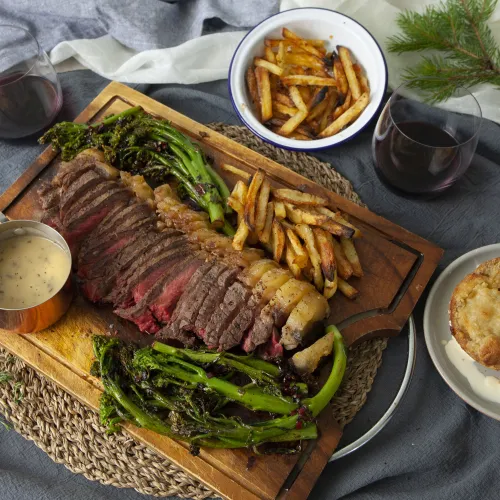
The classic accompaniments have held for good reason. Game chips — thin, crisp fried potato slices — cut through the richness of the bird in a way roast potatoes do not. Bread sauce, creamy and clove-scented, suits the mild meat rather than competing with it. A side of braised cabbage with bacon offers bitterness and salt that work with the gaminess in a way that feels earned rather than merely conventional.
Where to find and what to ask for
The best source is an independent butcher or farm shop with a proper game supply — ideally one that can tell you where the birds were shot and whether they are young or old. Farmers' markets with a game stall are worth seeking out in October and November, when supply is most plentiful. Some online game dealers ship direct, oven-ready, removing the plucking and drawing entirely.
Ask for oven-ready birds unless you want to do the preparation yourself, and check whether they are fresh or frozen. Frozen partridge is not a compromise — game freezes well — but a frozen bird needs thorough defrosting before cooking and will release more moisture in a hot oven.
The season's early weeks tend to offer the youngest birds. As winter deepens, the remaining partridges are older, and braising comes into its own over roasting. Pay attention to the calendar and adjust accordingly.
The wider game season
Partridge sits within a broader game calendar that includes pheasant, grouse, woodcock and others, each with their own opening and closing dates. The pheasant season runs later and overlaps with partridge through the winter months. We cover both pheasant and the wider game-season calendar in separate pieces elsewhere in the journal.
_jpgq80.webp)