The same tree, a different mood
If you followed our piece on elderflower, you know the elder is a generous hedgerow plant. By late summer, those creamy flower heads have gone, replaced by dense, drooping clusters of berries so deep a purple they read almost black. The same sprawling tree that smelled of summer now carries something altogether more autumnal.
Elderberries are tiny — barely larger than a peppercorn — but they hang in such abundance that a single branch can yield a substantial handful in minutes. The season runs roughly from August through to October, depending on region and weather. Northern parts of the UK tend to ripen later; a warm September in the south can push the harvest earlier. Watch the clusters rather than the calendar.
Knowing what you're picking
Confident identification matters more with berries than with flowers. Elder leaves are compound, with several pairs of pointed leaflets along a central stem, and the berries grow in flat-topped or gently domed clusters rather than the elongated spikes of, say, dogwood. The stems are a soft, pithy greenish-grey. If anything about a plant gives you pause, leave it alone and cross-reference with a reliable field guide.
Colour is your clearest quality signal. Fully ripe elderberries are deep, near-black purple; unripe ones are red or dull pink and should be left on the branch. Ripe berries come away from the cluster easily, which is why the traditional method — stripping them with a fork, running the tines down through the cluster over a bowl — works so well. It separates ripe fruit cleanly and keeps stalks out of the harvest.
That last point matters: elderberries must be cooked before eating. Raw berries, unripe fruit, stems, and leaves contain compounds that can cause nausea. Heat breaks these down, and every traditional use of the berry involves cooking. Do not taste as you go.
Pick away from busy roadsides where exhaust and spray settle on the fruit, and take only a share of what's there. The berries feed birds through autumn and into early winter, and those birds carry the seeds that keep the elder spreading across our hedgerows.
What the harvest becomes
Elderberry syrup and cordial are the most familiar preparations. The flavour is rich and slightly earthy, with a tartness closer to blackcurrant than to sweeter summer fruits — though the elder has its own distinct character. Simmered with sugar and a little lemon, it becomes a deep, near wine-coloured liquid good stirred into hot water, poured over a sharp sorbet, or mixed into sparkling water.
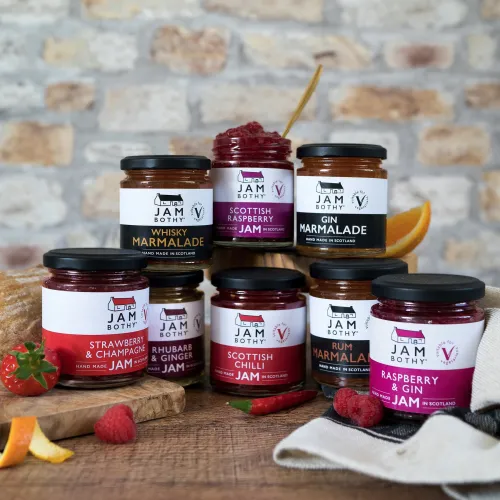
Elderberry and apple jelly is a classic hedgerow pairing. Apple provides the pectin the elder largely lacks, giving the preserve its set, while the elderberry supplies colour and depth. Independent preserves makers produce it seasonally across the UK, and it's worth buying from them: the window is short, and commercial scale does not suit this fruit.
Hedgerow jams — mixed-berry preserves that might include sloe, blackberry, rose hip, and elder — lean on the elderberry for body and colour. Its slight astringency plays well with sweeter companions; sloe and elderberry together produce something genuinely complex.
Elderberry wine has a long history in British home winemaking, producing a robust, deeply coloured result that benefits from time in the bottle. Some small-scale English winemakers still make it, though it remains less fashionable than elderflower-based wines or modern English sparkling. That relative obscurity is part of its appeal.
A little preparation goes a long way
Foraging elderberries requires knowing your tree in advance, arriving at the right moment, and having a bowl and hands you don't mind staining. The berries are relentless in their dye — wear something old.
For those who prefer to buy, independent British producers make elderberry cordials and preserves in small batches each autumn. Availability is genuinely seasonal: once the harvest is done, it's done. Look at farm shops, local markets, and producers who specify the season rather than selling elderberry products year-round from concentrate.
The elder's autumn harvest is quieter than the elderflower moment, less photographed and less celebrated. That seems like a missed opportunity.